Appellate Court Cannot Reverse Acquittal Unless Trial Court View Is Perverse: Supreme Court Restores Murder Acquittal
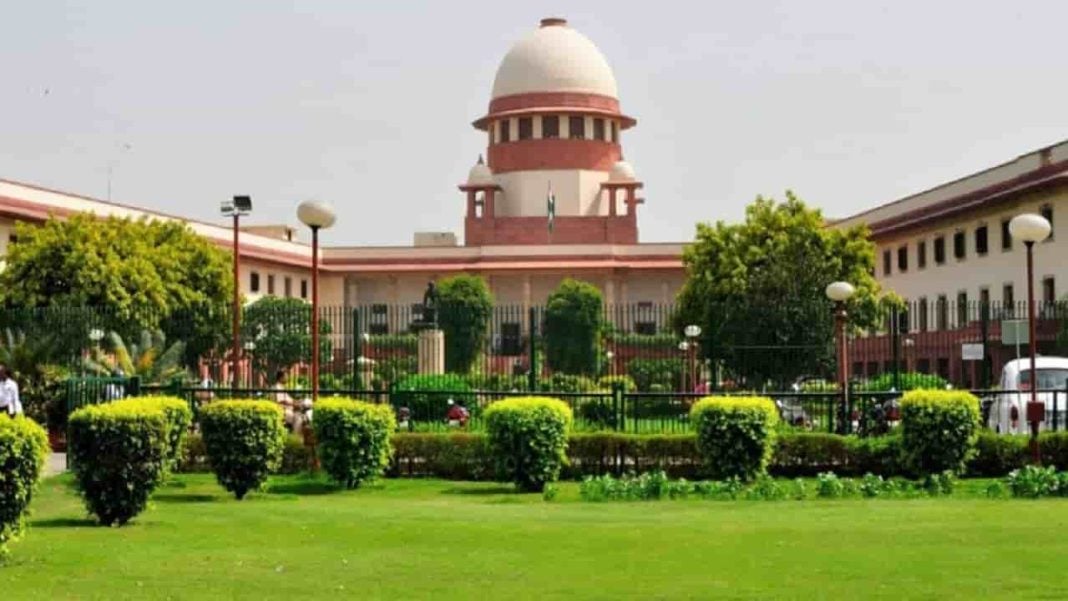
Case Name: Tulasareddi @ Mudakappa & Anr. v. State of Karnataka & Ors.; with Veerupakshagouda v. State of Karnataka
Citation: 2026 INSC 67
Date of Judgment/Order: 16 January 2026
Bench: Justice Sanjay Karol and Justice Vipul M. Pancholi
Held: The Supreme Court held that the High Court erred in reversing the acquittal recorded by the Trial Court in a case based largely on circumstantial evidence and a doubtful sole eyewitness. Reiterating the well-settled appellate interference with acquittal principles, the Court held that if the Trial Court’s view is a possible and plausible view based on the evidence, the High Court cannot substitute its own view merely because another view is possible. In the present case, the prosecution failed to establish a complete chain of circumstances, the testimony of the sole eyewitness (PW-5) was unreliable and delayed, the medical evidence did not fully support the prosecution theory, and the alleged conspiracy and recoveries were not satisfactorily proved. Therefore, the High Court’s reversal of acquittal was unsustainable.
Summary: The case arose from a missing complaint relating to one Martandagouda, who disappeared on 11.12.2011 and whose body was later recovered from a canal. The prosecution alleged conspiracy, abduction, murder and destruction of evidence against six accused persons, citing motive arising from land disputes and personal animosity. The Trial Court, after evaluating the evidence of 22 witnesses, acquitted all accused on 30.03.2019, holding that the prosecution failed to establish motive, conspiracy, last seen theory and recovery beyond reasonable doubt. The High Court, however, allowed the State’s appeal and convicted accused Nos. 1 to 4 under Sections 302, 120-B, 201 and 506 read with Section 34 IPC, while maintaining acquittal of accused Nos. 5 and 6. Before the Supreme Court, it was contended that the conviction was primarily based on the testimony of PW-5, whose statement was recorded after 21 days and who had inconsistencies and criminal antecedents, and that medical evidence regarding time of death did not align with the prosecution case. The Supreme Court examined the law governing appeals against acquittal, extensively referring to Chandrappa, Rajesh Prasad, H.D. Sundara, and Ramesh v. State of Uttarakhand, and emphasized the “double presumption of innocence” and the requirement that interference is justified only when the trial court’s view is perverse or wholly unreasonable.
Decision: The Supreme Court allowed the appeals, set aside the High Court’s judgment dated 28.11.2023, and restored the Trial Court’s acquittal dated 30.03.2019. The appellants were directed to be released forthwith if in custody and not required in any other case, and the appeals were accordingly allowed.