Excluding Academic Arrangement Employees from Regularisation Violates Article 14: Supreme Court Strikes Down Section 3(b) of J&K Civil Services Act
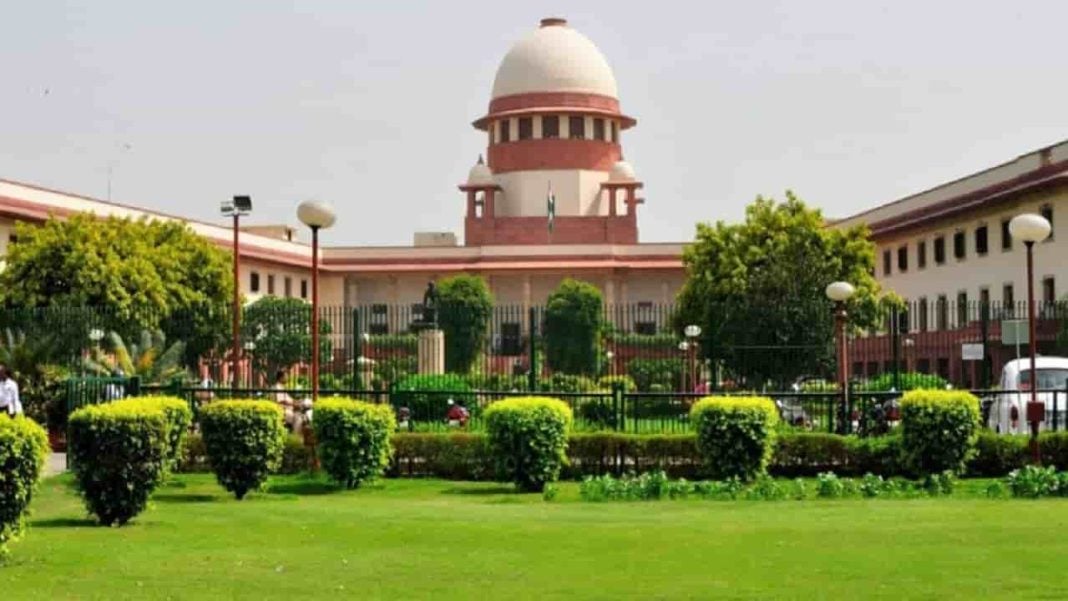
Case Name: Abhishek Sharma v. State of Jammu and Kashmir & Others
Citation: 2026 INSC 220; Civil Appeals arising out of SLP (C) Nos. 5108 of 2023, 5093 of 2023, 12238 of 2023 and 2477 of 2025
Date of Judgment/Order: 09 March 2026
Bench: Hon’ble Mr. Justice Vikram Nath and Hon’ble Mr. Justice Sandeep Mehta
Held: The Supreme Court held that exclusion of employees appointed on an “academic arrangement” basis from the benefit of regularisation under Section 3(b) of the Jammu and Kashmir Civil Services (Special Provisions) Act, 2010 is unconstitutional and violative of Article 14 of the Constitution. The Court ruled that where employees engaged on academic arrangement basis perform the same duties, under similar conditions and through comparable selection processes as those appointed on ad hoc, contractual or consolidated basis, denial of regularisation solely based on nomenclature constitutes impermissible classification lacking intelligible differentia or rational nexus with the object of the Act.
Summary: The appeals arose from a common judgment of the High Court of Jammu & Kashmir and Ladakh which had rejected the claim of nurses and multipurpose health workers appointed under the Jammu and Kashmir Medical and Dental Education (Appointment on Academic Arrangement Basis) Rules, 2009 for regularisation of service under the Jammu and Kashmir Civil Services (Special Provisions) Act, 2010. The appellants had been appointed between 2011 and 2013 on academic arrangement basis and had served for several years in Government Medical Colleges. The 2010 Act provided a mechanism for regularisation of employees appointed on ad hoc, contractual or consolidated basis but expressly excluded persons appointed on academic arrangement basis under Section 3(b). Challenging this exclusion, the appellants contended that the distinction between academic arrangement appointees and other categories of temporary employees was artificial and violated the equality guarantee under Article 14. The High Court dismissed the challenge without examining the constitutional validity of the exclusion. The Supreme Court analysed the scheme of the 2009 Rules and compared them with the 2003 Contractual Appointment Rules, observing that both frameworks were substantially similar in terms of mode of appointment, tenure conditions, termination clauses and contractual undertakings. The Court found that the only distinction was the nomenclature and the ceiling of six years prescribed for academic arrangement appointments. Since employees in both categories discharged identical duties and fulfilled the statutory conditions for regularisation under Section 5 of the 2010 Act, the exclusion created by Section 3(b) lacked any rational justification. Applying settled principles governing reasonable classification under Article 14, the Court held that the State had failed to demonstrate any intelligible differentia or nexus with the legislative objective of regularising long-serving irregular appointees. The Court further emphasised that the State must act as a model employer and cannot evade statutory obligations by repackaging contractual engagements under a different nomenclature to deny regularisation benefits.
Decision: The Supreme Court allowed the appeals, set aside the judgments of the High Court, declared Section 3(b) of the Jammu and Kashmir Civil Services (Special Provisions) Act, 2010 unconstitutional to the extent it excludes employees appointed on academic arrangement basis from consideration for regularisation, and directed the State to consider the cases of the appellants and all similarly situated employees for regularisation under Section 5 of the Act within four weeks.