State Takeover of Trust Property Without Justification is Manifestly Arbitrary: Supreme Court Strikes Down Bihar Library Acquisition Law
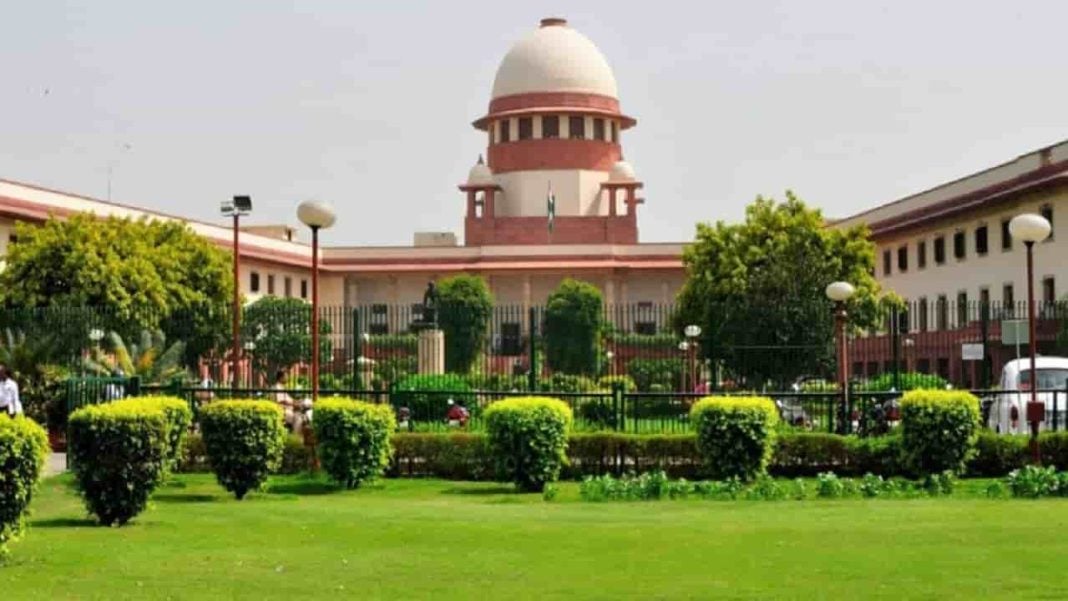
Case Name: Anurag Krishna Sinha v. State of Bihar & Another
Citation: 2026 INSC 219; Civil Appeal No. 13581 of 2025
Date of Judgment/Order: 10 March 2026
Bench: Hon’ble Mr. Justice Vikram Nath and Hon’ble Mr. Justice Sandeep Mehta
Held: The Supreme Court held that the Srimati Radhika Sinha Institute and Sachchidanand Sinha Library (Requisition & Management) Act, 2015 enacted by the State of Bihar was manifestly arbitrary and violative of Article 14 of the Constitution of India. The Court ruled that a legislative measure authorising the complete takeover of a trust institution, dissolution of existing trust arrangements, and vesting of all property in the State without demonstrated necessity, objective criteria, or fair compensation is constitutionally impermissible. A law that extinguishes long-standing rights, operates without guiding principles, and provides only illusory compensation amounts to arbitrary and confiscatory State action incompatible with Articles 14 and 300A.Summary:
The dispute concerned the historic Smt. Radhika Sinha Institute and Sachchidanand Sinha Library, established in 1924 by Sachchidanand Sinha in memory of his wife with the objective of promoting learning and public access to knowledge. The institution was governed by a Trust Deed executed in 1926 and had been managed by trustees, including members of the settlor’s family, for nearly a century while receiving financial assistance from the State Government. In 2015, the Bihar Legislature enacted the Srimati Radhika Sinha Institute and Sachchidanand Sinha Library (Requisition & Management) Act, 2015 providing for acquisition of the Institute and Library, dissolution of the Trust, and vesting of all rights and management in the State Government. The appellant, a descendant of the settlor and trustee of the institution, challenged the law before the Patna High Court, which upheld the legislation on the ground that the Trust was essentially public in character and that the takeover served public interest. Before the Supreme Court, the appellant argued that the Act was arbitrary, confiscatory, and repugnant to the Indian Trusts Act, 1882. The State defended the legislation on the ground that the acquisition was necessary for better management and development of the institution. The Supreme Court examined the constitutional doctrine of arbitrariness under Article 14, tracing its evolution through leading decisions such as E.P. Royappa, Maneka Gandhi, Ajay Hasia, Shayara Bano, and Joseph Shine. Applying the doctrine of manifest arbitrariness, the Court found that the Act authorised sweeping acquisition and dissolution of a century-old trust without any inquiry into mismanagement, without notice to trustees, and without establishing necessity for such drastic intervention. The Court also observed that the State had supervisory involvement in the institution through the State Librarian and could have supported the institution through grants, audits, or regulatory oversight rather than complete takeover. The compensation provision permitting payment of up to one rupee was held to be illusory and confiscatory.
Decision: The Supreme Court allowed the appeal, set aside the judgment of the Patna High Court dated 29 February 2024, declared the Srimati Radhika Sinha Institute and Sachchidanand Sinha Library (Requisition & Management) Act, 2015 unconstitutional for violating Article 14, and restored the Trust governing the Institute and Library to its legal position prior to the enactment of the Act, while clarifying that the State Government may continue to provide financial assistance or regulatory support in accordance with law.