Legal Heirs Step Into the Shoes of Deceased Party for Challenging Arbitral Awards Under Section 34
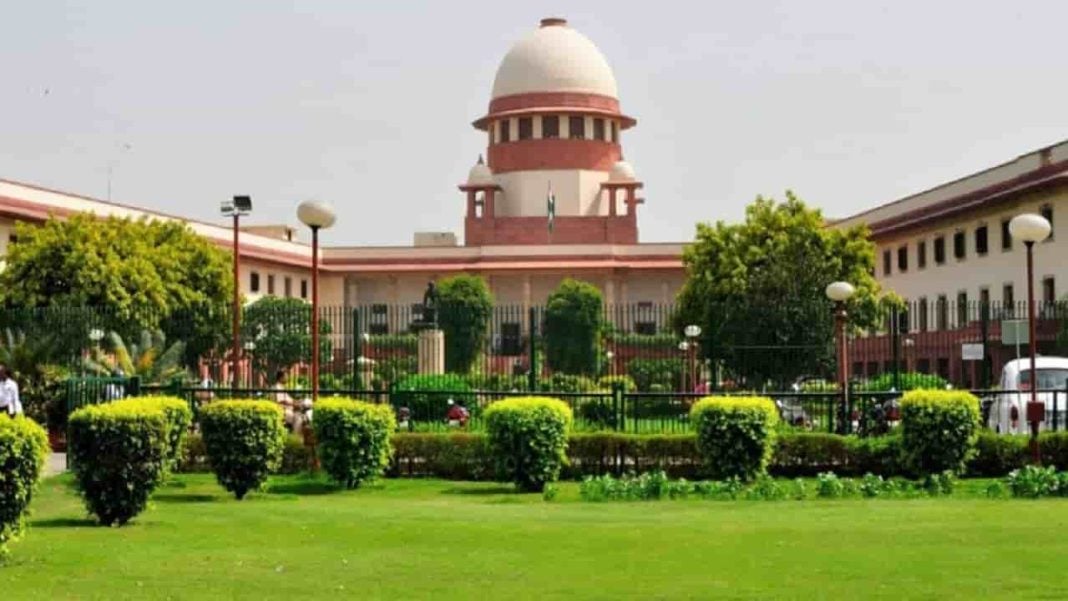
Case Name: V.K. John v. S. Mukanchand Bothra and HUF (Died) Represented by LRs. & Ors.
Citation: 2026 INSC 393
Date of Judgment/Order: 20 April 2026
Bench: Justice Sanjay Karol and Justice Vipul M. Pancholi
Held: The Supreme Court held that a legal representative aggrieved by an arbitral award must challenge the award under Section 34 of the Arbitration and Conciliation Act, 1996, and not by invoking Article 227 of the Constitution or Section 115 of the Code of Civil Procedure. The Court held that the Arbitration Act is a complete code and that judicial interference outside the statutory framework is permissible only in exceptional rarity. Since Section 40 provides that an arbitration agreement is not discharged by the death of a party and remains enforceable by or against the legal representative, and Section 35 makes an arbitral award binding on parties and persons claiming under them, a legal representative steps into the shoes of the deceased party and is entitled to pursue the statutory remedy under Section 34.
Summary: The dispute arose from a Deed of Agreement for Sale dated 20 April 2007 executed between Appu John and S. Mukanchand Bothra concerning the subject property. After Appu John died on 28 July 2007, arbitration proceedings were initiated against A. Philip, who was shown as the legal representative of Appu John, and an arbitral award dated 21 February 2011 directed execution of the sale deed. The appellant, V.K. John, claimed that he was the legal heir of Appu John and had a substantial claim over the property, particularly because he had earlier filed a partition suit in which a preliminary decree dated 2 January 2018 recognised his one-third share. He challenged the arbitral award through a civil revision petition under Article 227 of the Constitution, contending that he was not a party to the arbitration and therefore could not file a petition under Section 34. The Madras High Court dismissed the revision, holding that the appropriate remedy was under the Arbitration Act. The Supreme Court affirmed this view, explaining that the definition of “legal representative” under Section 2(1)(g), read with Sections 35 and 40, shows that arbitral proceedings and awards continue to bind legal representatives where the right survives, and therefore the corresponding right to challenge the award must also be available under the Act.
Decision: The Supreme Court dismissed the appeal and upheld the judgment of the Madras High Court dated 3 February 2023 in CRP No. 676 of 2013. The Court held that the appellant’s remedy, if any, lies under the Arbitration and Conciliation Act, 1996, and not under Article 227 of the Constitution or Section 115 CPC. However, the Court permitted the appellant to exercise remedies under the Arbitration Act and directed that any such petition, if filed, shall be decided on its own merits, with limitation for filing such petition to run from the date of the Supreme Court judgment. Pending applications were dismissed.