No Second Bite at the Cherry: Supreme Court Bars Successive SLPs After Withdrawal Without Liberty
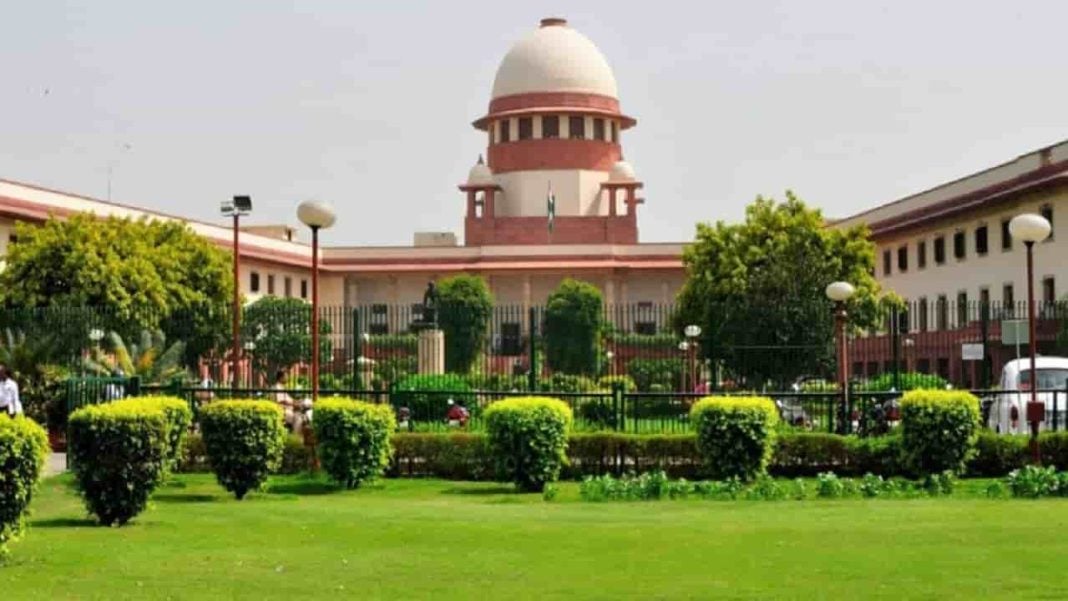
Case Name: Satheesh V.K. v. The Federal Bank Ltd.
Citation: 2025 INSC 1140
Date of Judgment: 23 September 2025
Bench: Justice Dipankar Datta and Justice K.V. Viswanathan (DB)
Held: The Supreme Court held that once a litigant withdraws a special leave petition without obtaining liberty to file a fresh one, he is barred from re-approaching the Court with a second SLP against the same order. Such an attempt amounts to abuse of process and runs contrary to the principle of finality in litigation. The Court also reaffirmed that no appeal lies from an order refusing review under Order XLVII Rule 7(1) of the Code of Civil Procedure, 1908.
Summary: The appellant, a borrower who had defaulted on loans obtained from the Federal Bank by mortgaging property in Kozhikode, challenged recovery proceedings initiated under the SARFAESI Act. The Kerala High Court on 1 October 2024 directed him to deposit ₹2 crore upfront and the balance in 12 monthly instalments, failing which the Bank could proceed under the Act. Instead of complying, the appellant filed a special leave petition before the Supreme Court, which he withdrew on 28 November 2024 after the Bench expressed disinclination to entertain it. No liberty was sought or granted to file a fresh petition. Thereafter, the appellant filed a review petition before the High Court, which was dismissed on 5 December 2024, and then instituted two civil appeals before the Supreme Court challenging both the original order and the rejection of review.
The respondent objected to maintainability, contending that the appellant could not be permitted to mount a fresh challenge after voluntarily withdrawing the earlier SLP. Reliance was placed on Upadhyay & Co. v. State of U.P. (1999) and Sarguja Transport Service v. STAT (1987), where the Court had extended the principle underlying Order XXIII Rule 1 CPC to writ petitions and SLPs, prohibiting successive filings after withdrawal without liberty. The appellant argued that Article 136 conferred extraordinary powers on the Court to advance justice and invoked Kunhayammed v. State of Kerala (2000) and Khoday Distilleries v. Mahadeshwara Sahakara Sakkare Karkhane (2019) to suggest that a second SLP could be entertained in certain circumstances. However, the Bench distinguished those cases, noting that here the earlier petition was withdrawn unconditionally, without leave to seek review or to re-approach the Court.
The Court emphasized that permitting such successive challenges would offend the maxim interest reipublicae ut sit finis litium—it is in the public interest that litigation must come to an end. The Court further clarified that rejection of a review petition does not alter or merge with the parent order; it merely affirms it, and hence no appeal lies from an order refusing review.
Decision: The Supreme Court upheld the respondent’s preliminary objection, dismissed the civil appeals as not maintainable, and reiterated that a second SLP cannot be entertained after unconditional withdrawal of the first. The appellant was left free to pursue remedies before appropriate forums in accordance with law.