Relocated MBBS Students Cannot Retain a Windfall of Government-Rate Fees When Private Colleges Educated Them, but the Defaulting Medical College Must Bear the Primary Burden
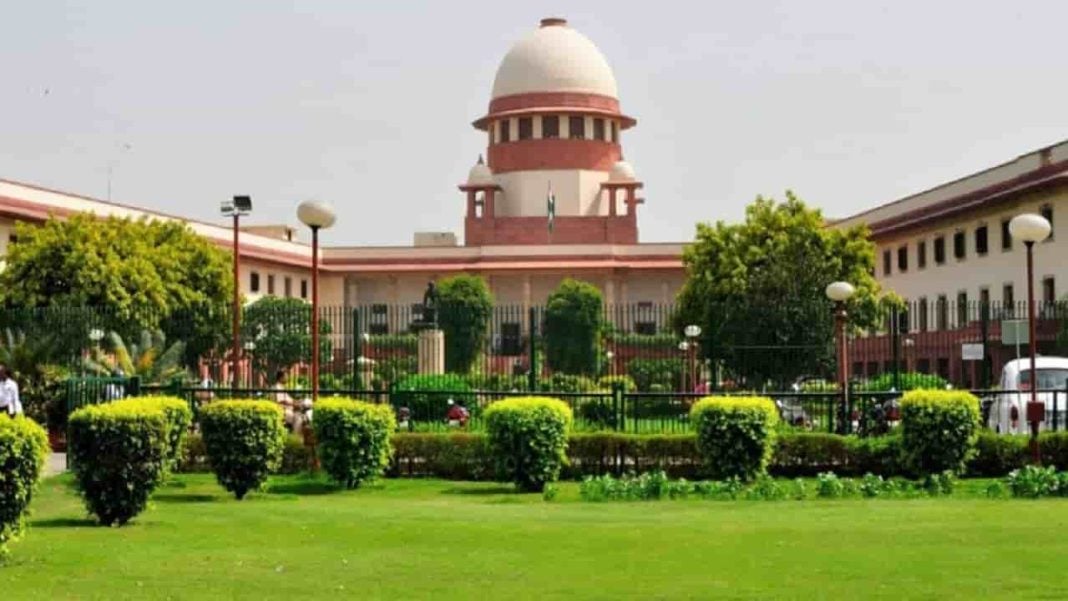
Case Name: Soumya Ranjan Panda & Ors. v. Subhalaxmi Dash & Ors.
Citation: 2026 INSC 488
Date of Judgment/Order: 14 May 2026
Bench: Justice Vikram Nath and Justice Sandeep Mehta
Held: The Supreme Court held that students initially admitted in a private medical college with a substantially higher fee structure cannot indefinitely claim the benefit of Government-rate fees merely because interim judicial orders temporarily permitted continuation of studies at subsidised rates after their transfer to other private colleges. The Court held that permitting such students to complete private medical education by paying only nominal Government fees would amount to unjust enrichment and confer an unintended windfall. At the same time, the Court held that the primary financial liability arising from the forced relocation of students due to infrastructural and regulatory deficiencies must be borne by the defaulting institution and its managing trust, applying the principle that no party can derive advantage from its own wrong. The Court further held that transferee colleges which accommodated and educated the relocated students pursuant to judicial directions were entitled to reimbursement of legitimate dues.
Summary: The litigation arose from the collapse of recognition of Sardar Rajas Medical College, Hospital and Research Centre (SRMCH), Odisha, managed by Selvam Educational and Charitable Trust, after inspections conducted by the Medical Council of India revealed serious deficiencies in infrastructure, faculty, and regulatory compliance. Students admitted during academic sessions 2013-2014 and 2014-2015 faced imminent risk of losing their academic careers. The High Court of Orissa initially directed relocation of students to recognised institutions, which subsequently led to proceedings before the Supreme Court. Through a series of interim orders, the Supreme Court ensured that 122 affected MBBS students were relocated through State-supervised counselling to three private transferee institutions—Kalinga Institute of Medical Sciences (KIMS), IMS & SUM Hospital, and Hi-Tech Medical College—without loss of academic years. The transferee colleges later approached the Court seeking reimbursement of fees, asserting that the students had paid only highly subsidised Government-rate fees pursuant to interim directions despite studying in private institutions with much higher fee structures. The Court examined earlier orders passed in Hind Charitable Trust v. Union of India, which had temporarily directed collection of Government-rate fees due to extraordinary circumstances prevailing in 2014-2015. The Court held that such interim arrangements could not permanently extinguish the financial obligations ordinarily attached to admissions in private medical institutions. The Court also noted that SRMCH had retained excess amounts collected from students and that the Trust had furnished bank guarantees worth approximately INR 10 crores before the MCI/NMC and separately deposited INR 2 crores before the Supreme Court. The Court concluded that the Selvam Trust, whose deficiencies led to the crisis, must bear the principal burden of reimbursement.
Decision: The Supreme Court directed that the bank guarantees of approximately INR 10 crores furnished by the Selvam Trust with the MCI/NMC, along with INR 2 crores deposited before the Supreme Court and accrued interest thereon, be released and equally distributed among the three transferee colleges within specified timelines. The Court further held that students who had completed their courses could not escape payment of legitimate outstanding fee liabilities calculated broadly at the rates originally chargeable by SRMCH. The transferee colleges were permitted to submit representations before the National Medical Commission specifying the exact deficit recoverable from each student, and the NMC was directed to facilitate recovery of the remaining dues while accounting for sums already paid by the students to SRMCH. The Court clarified that students complying with the determined liabilities would immediately become entitled to receive all academic records, certificates, and course-completion documents. The appeals and all pending interlocutory applications were disposed of accordingly.