SC Upholds Socialist & Secular in Preamble – Challenge After 44 Years Rejected
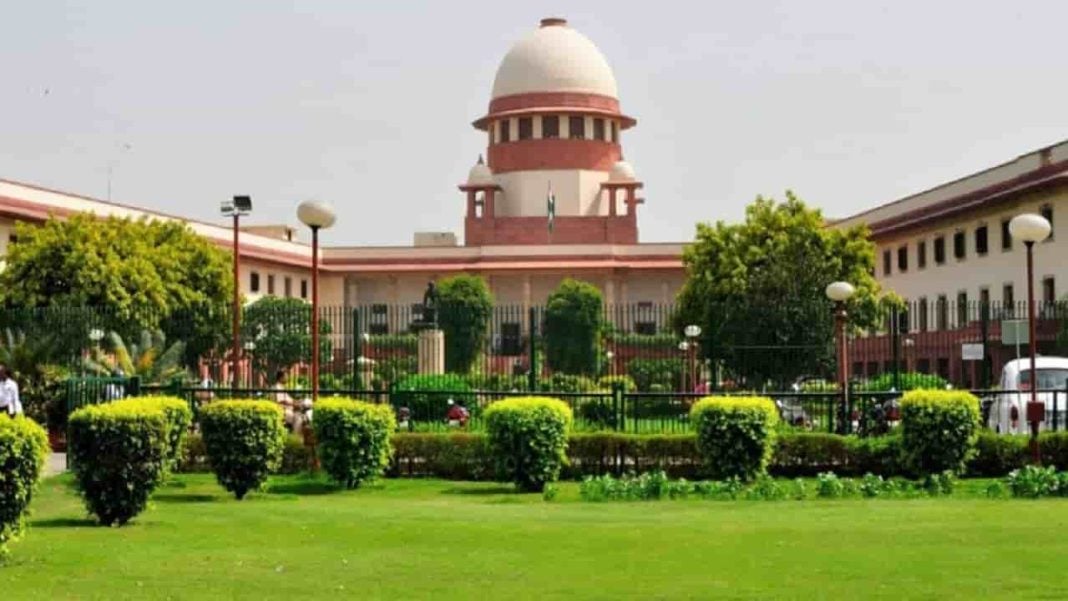
Case Name: Balram Singh v. Union of India
Citation: 2024 INSC 893
Date of Judgment: 25 November 2024
Bench: Chief Justice Sanjiv Khanna and Justice Sanjay Kumar
Held: The Supreme Court held that the insertion of the words “socialist” and “secular” into the Preamble by the Constitution (Forty-Second Amendment) Act, 1976, is constitutionally valid. The Court ruled that these terms, long interpreted as integral to the constitutional ethos, neither restrict legislative nor policy choices of elected governments nor impose a rigid economic model. The challenge, raised after four decades, was found to be meritless.
Summary: The petitions questioned the constitutional validity of adding “socialist” and “secular” to the Preamble during the Emergency through the Forty-Second Amendment Act, 1976. The petitioners argued that:
The Constituent Assembly deliberately refrained from including the word “secular”.
The term “socialist” unduly constrains economic freedom and policy flexibility.
The amendment was passed in 1976 during the Emergency, after the normal tenure of the Lok Sabha had lapsed, and thus did not reflect the “will of the people.”
The Court, however, dismissed these contentions, noting:
Delay in Challenge: The challenge was made 44 years later, despite the words being widely accepted in constitutional discourse and political practice.
Amending Power & Secularism: Parliament under Article 368 can amend even the Preamble. The omission of “secular” by the Constituent Assembly does not negate its constitutional essence, as Articles 14, 15, 16, 25, 26, 29, and 30 already embodied secular principles. Drawing on R.C. Poudyal (1993), Kesavananda Bharati (1973), and S.R. Bommai (1994), the Court reaffirmed secularism as a basic feature of the Constitution.
Meaning of Socialist: The word does not bind India to a rigid economic model. Instead, it reflects the goal of social and economic justice, without excluding private enterprise or a mixed economy. Reference was made to Property Owners Association v. State of Maharashtra (2024) where it was clarified that the Constitution allows flexible models of economic governance.
Decision: The Supreme Court dismissed the writ petitions, upholding the validity of the Forty-Second Amendment’s addition of “socialist” and “secular” to the Preamble. It reaffirmed that these terms are consistent with the basic structure and ethos of the Constitution, do not curtail economic or political freedoms, and remain binding principles guiding governance.