Election Commission Can Conduct Special Intensive Revision of Voter Rolls, But Citizenship Doubts Must Go to Competent Authority: Supreme Court
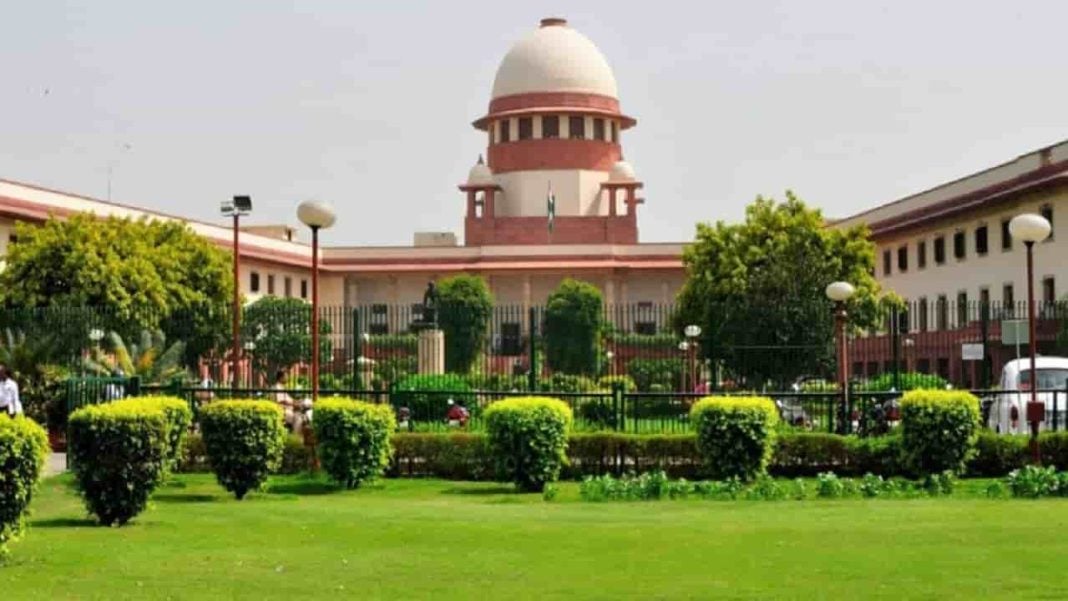
Case Name: Association For Democratic Reforms & Ors. v. Election Commission of India & Ors.
Citation: 2026 INSC 564
Date of Judgment/Order: May 27, 2026
Bench: Chief Justice Surya Kant and Justice Joymalya Bagchi
Held: The Supreme Court held that the Election Commission of India has the constitutional and statutory power to conduct a Special Intensive Revision of electoral rolls under Article 324 of the Constitution read with Section 21(3) of the Representation of the People Act, 1950. The Court held that Article 324 does not vanish merely because Parliament has enacted election laws; rather, the Election Commission must act consistently with such laws while retaining sufficient constitutional authority to protect free and fair elections. The Court further held that inclusion in the electoral roll creates a rebuttable presumption of validity, but does not prevent the Commission from verifying eligibility. However, the Commission’s enquiry into citizenship is only for electoral-roll purposes and cannot amount to a final determination of citizenship, which must be referred to the competent authority under the Citizenship Act wherever required.
Summary: The case arose from multiple writ petitions challenging the Election Commission’s order dated June 24, 2025 directing a Special Intensive Revision of electoral rolls in Bihar before the State Assembly elections. The petitioners argued that the exercise was unconstitutional, arbitrary, exclusionary, wrongly based on the 2003 electoral roll, and likely to disenfranchise lakhs of voters by requiring fresh documentation and permitting deletion for non-submission of enumeration forms. The Election Commission defended the exercise on the ground that Bihar had not undergone such intensive revision since 2003 and that rapid urbanisation, migration, duplicate enrolments, deaths and doubtful entries required a deeper verification process. The Supreme Court upheld the legality of the exercise, observing that accurate electoral rolls are essential to representative democracy and that the SIR was traceable to Section 21(3) read with Article 324. The Court also held that Aadhaar may be considered only as proof of identity and not as proof of citizenship or domicile, while EPIC and ration card could be treated differently because the Commission is entitled to prescribe a rational documentation framework for roll verification.
Decision: The Supreme Court disposed of the writ petitions by upholding the Bihar Special Intensive Revision exercise and holding that it did not conflict with the Representation of the People Act, 1950 or the Registration of Electors Rules, 1960. The Court held that the exercise satisfied proportionality, was founded on the legitimate purpose of restoring accuracy and integrity of electoral rolls, and contained sufficient safeguards against arbitrary exclusion. It directed that where the Commission is not satisfied about citizenship, such cases must be referred to the competent authority under the Citizenship Act, 1955, and for persons deleted from the 2003 roll on citizenship grounds, such reference must be made within four weeks; if the competent authority holds them to be citizens, they must be included in the electoral roll. Persons domiciled in Bihar whose names were wrongly deleted as absent, dead, shifted or duplicate were left free to seek judicial review. Pending interlocutory applications were closed.