Children’s Court Must Independently Decide Whether a Juvenile Should Be Tried as an Adult: Supreme Court
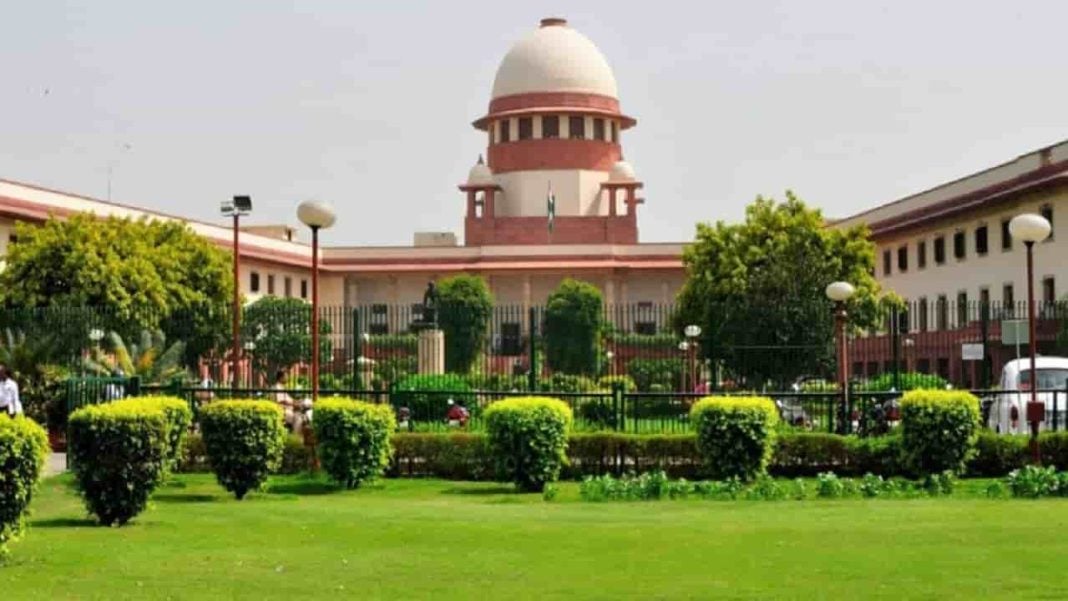
Case Name: Sagar v. State of Haryana
Date of Judgment: 13 July 2026
Citation: 2026 INSC 692 | Criminal Appeal arising out of SLP (Crl.) No. 8113 of 2024
Bench: Justice Aravind Kumar and Justice Prasanna B. Varale
Held: The Supreme Court held that a Children’s Court cannot try a child in conflict with law as an adult without first passing a reasoned order under Section 19(1) of the Juvenile Justice (Care and Protection of Children) Act, 2015. The Court ruled that the requirement under Section 19(1) is mandatory and not a mere procedural formality. Failure to comply with this statutory mandate vitiates the entire trial, even where the Juvenile Justice Board has already conducted a preliminary assessment under Section 15 and referred the matter to the Children’s Court.
Summary: The appellant, who was 16½ years old at the time of the alleged offence, was accused of committing murder. After conducting a preliminary assessment under Section 15 of the Juvenile Justice Act, the Juvenile Justice Board concluded that he possessed the mental and physical capacity to commit the offence and transferred the case to the Children’s Court for trial as an adult.
The Children’s Court proceeded to conduct the trial, convicted the appellant under Section 302 IPC and sentenced him to fourteen years’ rigorous imprisonment. The Punjab and Haryana High Court upheld the conviction.
Before the Supreme Court, the appellant contended that although the Juvenile Justice Board had transferred the case under Section 18(3) of the Act, the Children’s Court never passed the mandatory order under Section 19(1) deciding whether he should actually be tried as an adult. Accepting the contention, the Supreme Court held that Section 19(1) requires the Children’s Court to independently apply its mind and record a reasoned decision before proceeding with the trial. The Court observed that the nature of trial, applicable procedure and punishment depend upon such determination, making compliance with Section 19(1) mandatory.
Since no order under Section 19(1) had been passed, the Supreme Court held that the entire trial stood vitiated. Considering that the appellant was already 24 years old and had undergone more than six years of incarceration, the Court declined to remand the matter and instead set aside the conviction.
Decision: The Supreme Court allowed the appeal, set aside the judgments of the Children’s Court and the Punjab and Haryana High Court, and acquitted the appellant on the ground that the trial was conducted in violation of the mandatory requirement under Section 19(1) of the Juvenile Justice (Care and Protection of Children) Act, 2015. The Court also directed Children’s Courts across the country to pass a reasoned order under Section 19(1) before proceeding to try any child in conflict with law as an adult.