Stray Cattle Victims Cannot Be Left Remediless After Years of Litigation; Victim Cannot Be Sent to Civil Court After 15 Years of Litigation; Supreme Court Awards ₹15 Lakh and Calls for Compensation Mechanism and Mandatory Animal Tagging
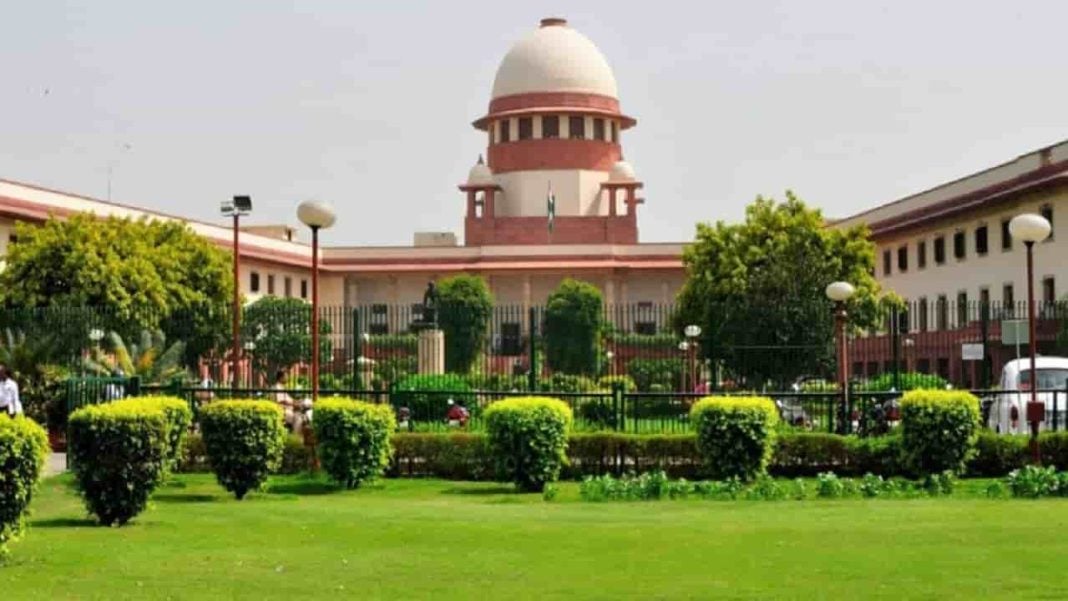
Case Name: Nisha v. Municipal Council Sangrur & Ors.
Date of Judgment: 31 July 2026
Citation: 2026 INSC 774
Bench: Justice Sanjay Karol and Justice Nongmeikapam Kotiswar Singh
Held: The Supreme Court held that a claimant in a stray cattle accident cannot, after years of litigation, be relegated to a fresh civil suit where the material facts concerning the accident were never disputed, as that would effectively leave the claimant remediless. In the peculiar facts of the case, the Court awarded ₹15 lakh as lump-sum compensation for a 2007 stray-bull accident, while clarifying that the Motor Vehicles Act method adopted by the Single Judge cannot be applied as a universal rule for quantifying compensation in cattle-related accidents. Recognising the wider problem, the Court also called upon the Centre and States to consider an effective compensation mechanism for pedestrian as well as vehicular accidents caused by bovines, alongside mandatory animal tagging, owner accountability, proper shelters, digitised records and nodal officers.
Summary: Vijay Kumar was walking on a road on 21 September 2007 when he was struck by a stray bull, sustaining a serious head injury and becoming unconscious. The incident was reported to the police and was never denied by the authorities. After attempts to obtain compensation administratively failed, proceedings were taken before the Punjab and Haryana High Court. A Single Judge awarded ₹29.32 lakh with 6% interest by applying principles used for compensation under the Motor Vehicles Act. The Division Bench set that award aside in 2025, holding that disputed questions of fact made the Article 226 writ petition inappropriate and directing the family to approach a civil court.
The Supreme Court found that approach unjust in the circumstances. The writ proceedings had commenced in 2010, the Single Judge decided them in 2019 and the Division Bench ruled only in 2025. Sending the widow to begin a civil suit after such an extraordinary passage of time would, in practical terms, leave her remediless. More importantly, the accident itself had never been questioned: Vijay’s application for compensation had been rejected not because the incident was disputed, but because the authority claimed it had no funds available for compensation.
The Court then examined the broader statutory framework governing stray cattle, including the Cattle-Trespass Act, 1871, the Prevention of Cruelty to Animals Act, 1960 and numerous State enactments and schemes. In Punjab specifically, the Punjab Municipal (Registration and Proper Control of Stray Animals) Bye-Laws, 2006 already contemplated a fund for compensating victims of stray cattle but did not prescribe the quantum. Later Punjab rules prescribed specific sums, but they could not retrospectively govern this 2007 incident. The Court also rejected treating the Motor Vehicles Act compensation formula as automatically applicable to every cattle accident and instead fixed ₹15 lakh considering the prolonged litigation and the severe injuries suffered by Vijay before his death.
Going beyond the individual dispute, the Court noted that bovine-related accidents are a recurring public-safety problem. It suggested that States fully enforce existing cattle laws; competent authorities frame or amend rules establishing compensation mechanisms for cattle-caused pedestrian and vehicular accidents; all animals be tagged; owners abandoning economically unproductive cattle be required to transfer them safely to authorised shelters; shelters maintain corresponding digital records; and each Corporation or Department consider appointing a nodal officer. Copies of the judgment were directed to all State Chief Secretaries, Union Territory Administrators and State Legal Services Authorities for appropriate action.
Decision: The Supreme Court allowed the appeal and awarded the appellant a lump sum of ₹15 lakh, to be remitted within four weeks. It expressly clarified that the ₹15 lakh figure was fixed on the peculiar facts including the age of the dispute and the serious injuries suffered by the deceased and would not operate as a precedent for compensation quantum in other cases. The Court simultaneously issued its broader suggestions on cattle-law enforcement, compensation schemes, tagging, shelters, digitisation and nodal officers, and ordered circulation of the judgment to authorities across the country.