B.Ed. Degree from an Unrecognised Institution Is “Not Worth the Paper on Which It Is Printed”: Supreme Court Rejects Teacher’s Reinstatement
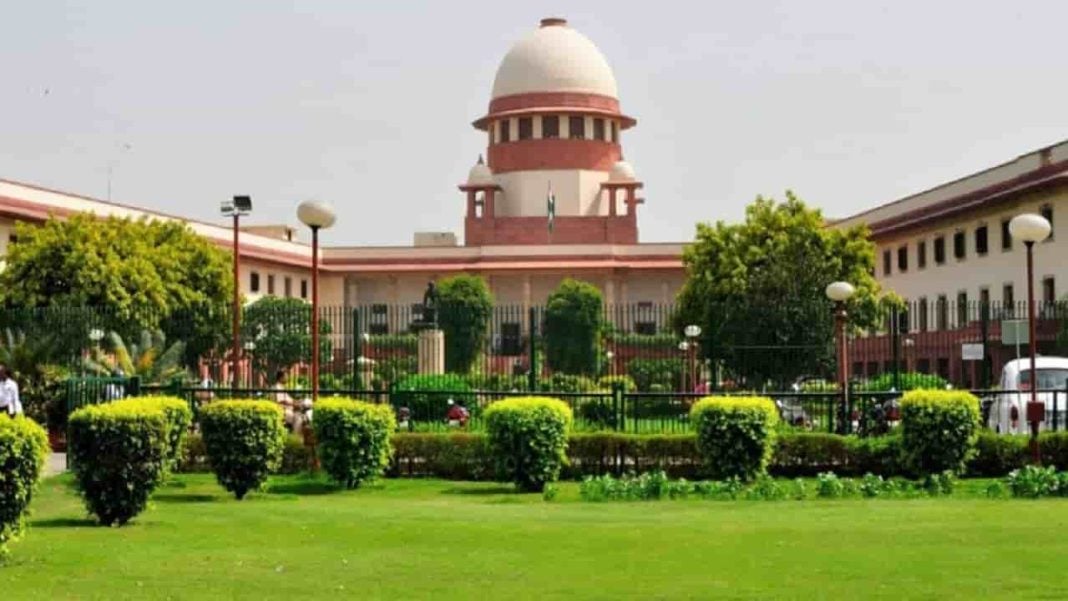
Case Name: M/s Bharatiya Vidya Bhavan’s Public School v. M. Vimala & Others
Date of Judgment: 6 August 2026
Citation: 2026 INSC 833
Bench: Justice Dipankar Datta and Justice Sheel Nagu
Held: The Supreme Court held that, under Sections 14, 16 and 17(4) of the National Council for Teacher Education Act, 1993, a degree relating to teacher training obtained from an institution not recognised by the National Council for Teacher Education has no legal effect. A person cannot claim appointment or continuance as a teacher on the strength of such a qualification. Describing the respondent’s B.Ed. degree as “not worth the paper on which it is printed,” the Court ruled that the institution’s subsequent recognition by the NCTE in 2022 could not retrospectively validate a degree obtained in 1997.
The Court further held that the respondent was a probationer whose appointment expressly provided that completion of probation would neither result in automatic confirmation nor permit her to continue without a fresh order. Her discharge was non-stigmatic, and the invalidity of her B.Ed. degree merely constituted the motive for discontinuing her probationary employment rather than the foundation of a punitive termination. Therefore, neither Section 79 nor Section 83 of the Andhra Pradesh Education Act, 1982 was attracted.
The Court reiterated that natural justice is a flexible principle and not an empty ritual. A breach of the audi alteram partem rule does not automatically invalidate an administrative decision unless actual prejudice is demonstrated. Where the material facts are admitted or indisputable and only one conclusion is legally possible, courts should not set aside an order or direct a futile enquiry. Since the respondent did not dispute that her institution lacked NCTE recognition when she obtained the degree, no enquiry could have produced a different result.
Summary: M. Vimala was initially appointed by Bharatiya Vidya Bhavan’s Public School as an ad hoc teacher in June 2003 and was reappointed for the succeeding academic years. By an appointment order dated 25 January 2006, she was placed on probation for one year with effect from 1 January 2006. The appointment order expressly stated that she would remain on probation until 31 December 2006, that her appointment would not continue thereafter without a fresh order extending probation, and that mere completion of probation would not amount to automatic confirmation.
During her employment, the school questioned the genuineness and legal validity of her educational qualifications. The respondent had obtained a B.Ed. degree in 1997 from Bharatiya Shiksha Parishad, Lucknow. Enquiries revealed that the institution was neither recognised by the NCTE nor included in the UGC’s list of recognised universities. The school accordingly informed her on 9 January 2007 that it could not accept her request for continued employment. By a subsequent communication dated 7 March 2007, she was permitted to continue only until the end of the 2006-07 academic year.
The respondent challenged her discontinuance before the Telangana High Court. She argued that she had acquired the status of a regular teacher upon completing one year of probation and that termination without an enquiry or prior approval of the competent authority violated Sections 79 and 83 of the Andhra Pradesh Education Act, 1982. The Single Judge accepted her case and set aside the school’s decision, holding that even a temporary employee could not be removed without compliance with the statutory procedure. A Division Bench affirmed the Single Judge’s ruling and dismissed the school’s writ appeal.
Reversing both decisions, the Supreme Court observed that the controversy concerned a teacher-training qualification and was therefore governed principally by the NCTE Act rather than the University Grants Commission Act, 1956. Since the respondent’s institution was not recognised by the NCTE in 1997, her B.Ed. qualification was legally ineffective, and she had no enforceable right to continue as a teacher.
The Court distinguished punitive dismissal from non-stigmatic discharge of a probationer. Relying on Dipti Prakash Banerjee v. Satyendra Nath Bose National Centre for Basic Sciences, it explained that where misconduct is established through a concealed enquiry and forms the foundation of termination, the order may be punitive. However, where the employer does not hold an enquiry and merely chooses not to continue a probationer, the underlying allegation may only be the motive for discharge. In the present case, the communication did not stigmatise or punish the respondent; it merely permitted her to serve until the end of the academic year and declined to continue her probationary appointment thereafter.
Decision: The Supreme Court allowed the civil appeal and set aside the judgment of the Telangana High Court Division Bench, into which the Single Judge’s order had merged. It held that the High Court had committed a gross error in directing protection of a teacher who lacked a legally valid B.Ed. qualification. Consequently, M. Vimala’s writ petition challenging the discontinuance of her probationary service was dismissed, and all pending applications were disposed of.