Private Unaided Schools Cannot Hide Behind Their Private Status to Deny Teachers Statutory Pay: Supreme Court Upholds Writ Jurisdiction
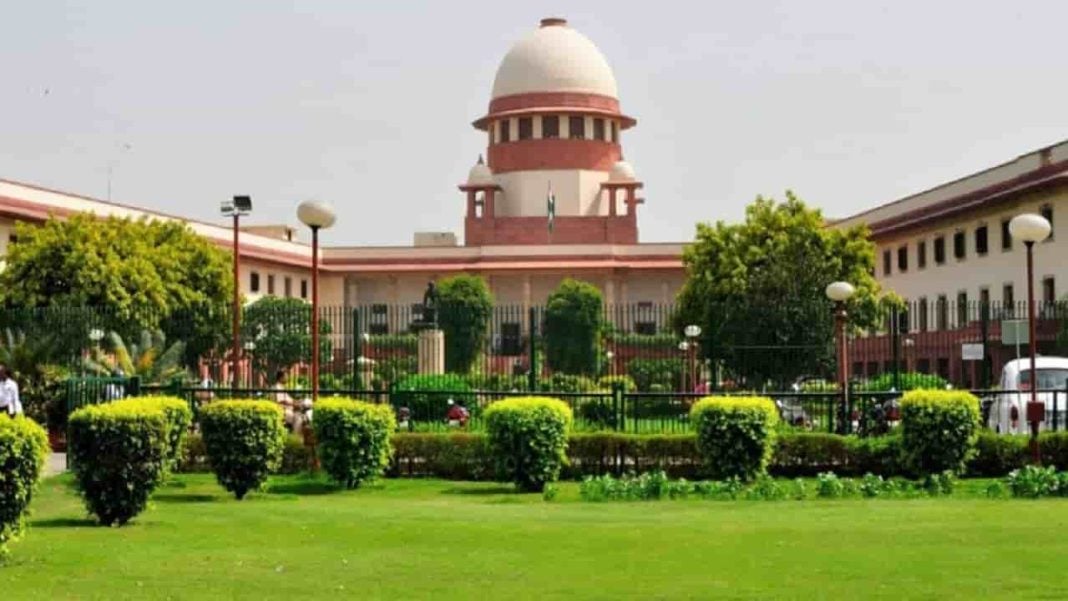
Case Name: Siyaram Education Society v. Chhaya D/o Baliram Dhave & Others, with connected appeals titled Maharashtra Academy of Engineering and Educational Research & Another v. Mahendra & Others and Maharashtra Academy of Engineering and Educational Research & Another v. Anil & Others
Date of Judgment: 5 August 2026
Citation: 2026 INSC 871
Bench: Justice Manoj Misra and Justice Vijay Bishnoi
Held: The Supreme Court held that a writ petition under Article 226 of the Constitution is maintainable against a private unaided educational institution where teachers seek enforcement of salary rights flowing from a statute or rules framed under it. Although a private unaided institution is ordinarily not “State” within the meaning of Article 12 and a purely private contract of employment cannot normally be enforced through a writ, imparting education is a public duty, and the work performed by teaching staff has a direct and inseparable nexus with that duty. Therefore, when a statute or statutory rule requires a recognised private unaided school to pay its teachers according to prescribed pay scales, a writ of mandamus can be issued to compel compliance.
The Court further held that amendments to the Maharashtra Employees of Private Schools (Conditions of Service) Rules, 1981 became operative from the date of their notification even though they had not been laid before the State Legislature in accordance with Section 16(4) of the Maharashtra Employees of Private Schools (Conditions of Service) Regulation Act, 1977. Since legislative approval was not prescribed as a condition precedent to the operation of the rules, non-laying constituted a curable defect and did not invalidate the amended pay scales.
Summary: The appeals arose from a common judgment of the Bombay High Court, Aurangabad Bench, directing private unaided educational institutions to fix the pay scales of their teachers in accordance with Schedule C of the Maharashtra Employees of Private Schools (Conditions of Service) Rules, 1981, as applicable before and after the 2016 amendment. The High Court also directed regular payment of the prescribed salary and payment of arrears arising from revised pay fixation while restraining the institutions from recovering alleged excess payments from the teachers.
The educational institutions challenged the directions on two principal grounds. First, they argued that they were private unaided institutions, were not instrumentalities of the State under Article 12 and were not subject to the State’s pervasive control. According to them, the relationship between the institutions and their teachers was a private contract of service that could not be enforced through a writ petition. Second, they contended that the amended pay-scale rules were legally inoperative because they had not been laid before both Houses of the Maharashtra Legislature as required by Section 16(4) of the 1977 Act.
The Supreme Court clarified that a writ petition is ordinarily not maintainable against a private unaided school where the relief sought concerns a purely contractual right having no public-law element. However, Article 226 is wider than Article 12 and empowers a High Court to issue writs to any person or authority performing a public duty. The decisive consideration is not the private character of the institution but the nature of the obligation sought to be enforced. A recognised institution performs a public duty by imparting education, and the teaching functions undertaken by its teachers are directly connected with the performance of that duty.
The Court found that the statutory framework imposed a specific duty upon private unaided schools to pay their teachers according to the scales prescribed under the 1981 Rules. Section 4(3) of the 1977 Act authorises the Director to require a school management to bring less favourable pay scales and allowances up to the level prescribed by the rules. Continued non-compliance may lead to withdrawal of the school’s recognition under Section 4(4). Consequently, enforcement of the prescribed salary was not merely the enforcement of a private employment contract; it was enforcement of a statutory obligation carrying a clear public-law element.
On the second issue, the Court examined the legal consequences of failing to lay delegated legislation before the legislature. Relying upon the larger Bench decisions in Atlas Cycle Industries Ltd. v. State of Haryana, (1979) 2 SCC 196, Jan Mohammad Noor Mohammad Bagban v. State of Gujarat, AIR 1966 SC 385, and K.T. Plantation Private Limited v. State of Karnataka, (2011) 9 SCC 1, the Court held that the effect of non-laying depends upon the language of the parent statute. Section 16(4) did not require prior legislative approval before a rule could come into force. It contemplated that the Houses could subsequently modify or annul a rule, without affecting actions already taken under it. Therefore, the amended rules remained effective from the date of notification unless and until modified or annulled by the Legislature.
The Court also held that the contrary view in Association of Management of Private Colleges v. All India Council for Technical Education, (2013) 8 SCC 271, could not be treated as binding to the extent that it failed to consider the governing decisions of larger Benches. Non-laying of the amended rules did not invalidate either the rules or the action taken under them.
Decision: The Supreme Court dismissed the appeals and affirmed the Bombay High Court’s conclusion that the teachers’ writ petitions were maintainable and that private unaided educational institutions were statutorily bound to pay salaries according to the prescribed scales. It also upheld the legal operation of the amended 1981 Rules notwithstanding their non-laying before the State Legislature. The Court clarified, however, that the High Court’s judgment did not automatically extend benefits to teachers who were no longer in service due to termination or otherwise. If disputes arose regarding the factual entitlement of an individual teacher, the institutions and the teachers would remain free to raise their respective pleas before the appropriate court or forum. All pending applications were disposed of, with no order as to costs.