No Proof That Lethal Injection Is More Humane Than Hanging: Supreme Court Rejects Challenge to India’s Sole Method of Executing Death Sentences
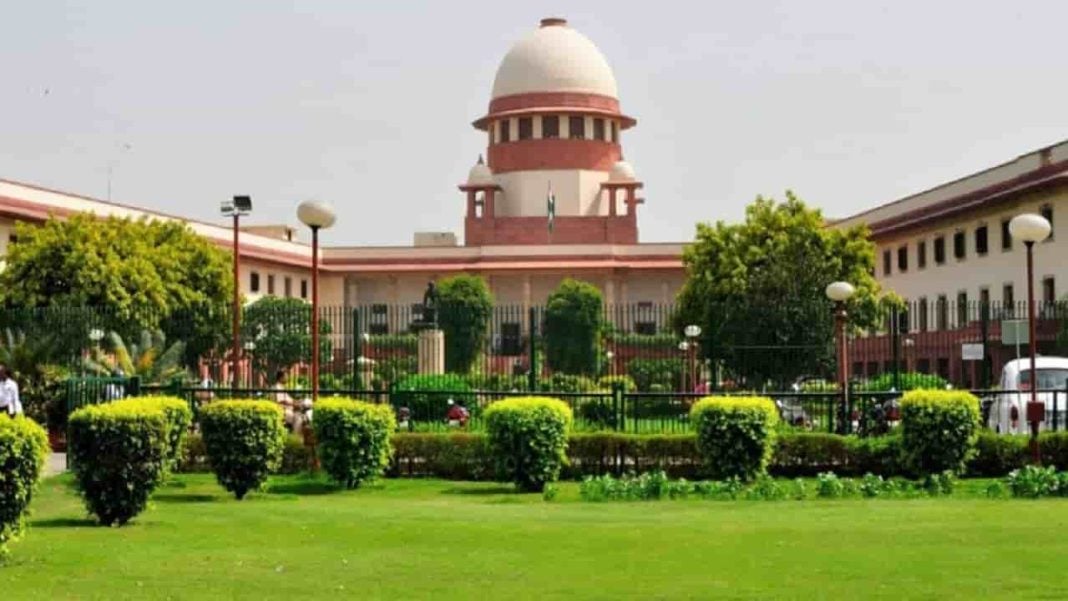
Case Name: Rishi Malhotra and Another v. Union of India
Date of Judgment:18 August 2026
Citation: 2026 INSC 873
Bench: Justice Vikram Nath and Justice Sandeep Mehta
Held: The Supreme Court declined to declare hanging unconstitutional as the prescribed method for executing a death sentence under Section 354(5) of the Code of Criminal Procedure, 1973, corresponding to Section 393(5) of the Bharatiya Nagarik Suraksha Sanhita, 2023. The Court held that the petitioner failed to produce credible scientific, medical or empirical evidence demonstrating that hanging necessarily causes unconstitutional pain or that lethal injection constitutes a demonstrably quicker, safer or more humane alternative.
The Court held that the constitutional validity of hanging had already been decided by a three-judge Bench in Deena v. Union of India, (1983) , and that decision was subsequently approved by the Constitution Bench in Shashi Nayar v. Union of India, (1992). A two-judge Bench could not depart from those binding precedents unless compelling constitutional developments, legislative changes or unimpeachable scientific evidence showed that their underlying basis had become obsolete.
The Court nevertheless clarified that the judgment does not permanently foreclose constitutional scrutiny of hanging. The method may be reconsidered if future scientific, medical or empirical evidence materially displaces the factual assumptions upon which Deena was decided. The Union Government also remains free to conduct a comprehensive expert review to determine whether another method would better minimise unnecessary suffering while preserving the dignity of the condemned prisoner.
Summary: The writ petition was filed as a public interest litigation under Article 32 of the Constitution challenging the constitutional validity of Section 354(5) CrPC, corresponding to Section 393(5) BNSS, insofar as it prescribes hanging by the neck as the sole method for executing a death sentence under ordinary criminal law. The petitioners sought a declaration that hanging violates Article 21 and that a condemned prisoner possesses a fundamental right to undergo execution through a dignified procedure.
The petition did not challenge the constitutional validity of the death penalty itself. That issue stands settled by Jagmohan Singh v. State of Uttar Pradesh, (1973) , and Bachan Singh v. State of Punjab, (1980) , which upheld capital punishment subject to rigorous procedural safeguards and confined its imposition to the “rarest of rare” cases. The narrower question before the Court was whether hanging, as the exclusive statutory method of execution, satisfies the requirement of a just, fair and reasonable procedure under Article 21.
The Supreme Court traced the statutory history of hanging in India. Hanging by the neck was first prescribed under the Code of Criminal Procedure, 1861, and was retained in the Codes of 1882 and 1898. It continued under Section 354(5) of the 1973 Code and has again been retained under Section 393(5) of the BNSS, despite the stated objective of modernising and decolonising India’s criminal laws.
The petitioners argued that hanging is physically painful, uncertain and inconsistent with the dignity guaranteed under Article 21. They submitted that an incorrectly calculated drop may result in prolonged death through strangulation or asphyxiation, while an excessive drop may cause decapitation. They relied upon developments in forensic science, the Law Commission of India’s 187th Report and the availability of alternatives such as lethal injection and shooting.
It was contended that lethal injection would provide a less painful and more dignified method of execution. Reference was also made to the Army Act, 1950, Air Force Act, 1950 and Navy Act, 1957, which recognise shooting as an alternative method of carrying out a death sentence for persons governed by military law.
The Union of India opposed the challenge and argued that the issue had already been conclusively decided in Deena. It submitted that the petitioners had not produced any credible material establishing that hanging, when conducted according to the prescribed procedure, causes lingering or unnecessary suffering. Nor had they identified a single verified instance of a botched judicial hanging in India under the existing legal framework.
The Supreme Court observed that the doctrine of stare decisis prevents a smaller Bench from departing from a decision rendered by a larger Bench merely because another view may appear preferable. The Court noted that Deena had comprehensively examined hanging, electrocution, lethal gas, shooting and lethal injection before concluding that none of the alternatives possessed a distinct or demonstrable advantage over hanging. That decision had remained binding for more than four decades and had received the approval of a Constitution Bench in Shashi Nayar.
The Court rejected the argument based upon military statutes. It held that the armed forces operate in a distinct legal field and constitute a separate class of persons governed by military law. The availability of shooting under military legislation could not, by itself, be used to invalidate the method prescribed for civilians under ordinary criminal law.
The Court also found that the material placed before it did not demonstrate that lethal injection is more humane or reliable. On the contrary, the record indicated complexities associated with obtaining appropriate drugs, administering them intravenously, requiring medical participation and ensuring that death occurs without prolonged suffering. Material relating to the United States disclosed numerous instances of botched executions by lethal injection. The Court consequently found no scientific basis for concluding that lethal injection possesses an inherent advantage over hanging.
The Court reiterated that Article 21 requires every execution to be carried out with decency and dignity and without unnecessary brutality. However, a statutory method could not be invalidated merely on the basis of general apprehensions or disputed scientific assertions. In the absence of compelling evidence disproving the conclusions reached in Deena, the Court found no justification either to strike down the provision or refer the precedent to a larger Bench.
Decision: The Supreme Court dismissed the writ petition and refused to refer Deena v. Union of India to a larger Bench for reconsideration. Consequently, Section 354(5) CrPC and Section 393(5) BNSS, prescribing hanging by the neck until death, continue to remain constitutionally valid.
The Court clarified that the dismissal does not immunise hanging from all future constitutional scrutiny. If credible scientific, forensic or medical evidence subsequently establishes that hanging causes avoidable suffering or that a demonstrably more humane and reliable method has become available, the issue may be reconsidered.
The Court also observed that the Union Government may constitute an expert body comprising specialists in law, forensic medicine, neuroscience, penology and allied disciplines to review the existing method of execution. Such a policy review may consider whether an alternative method better serves the constitutional objectives of minimising unnecessary pain and preserving the dignity of the condemned prisoner.