Matrimonial Discord Is Not Abetment of Suicide: Supreme Court Rebukes High Court for Reversing Acquittal on Evidence That Did Not Exist
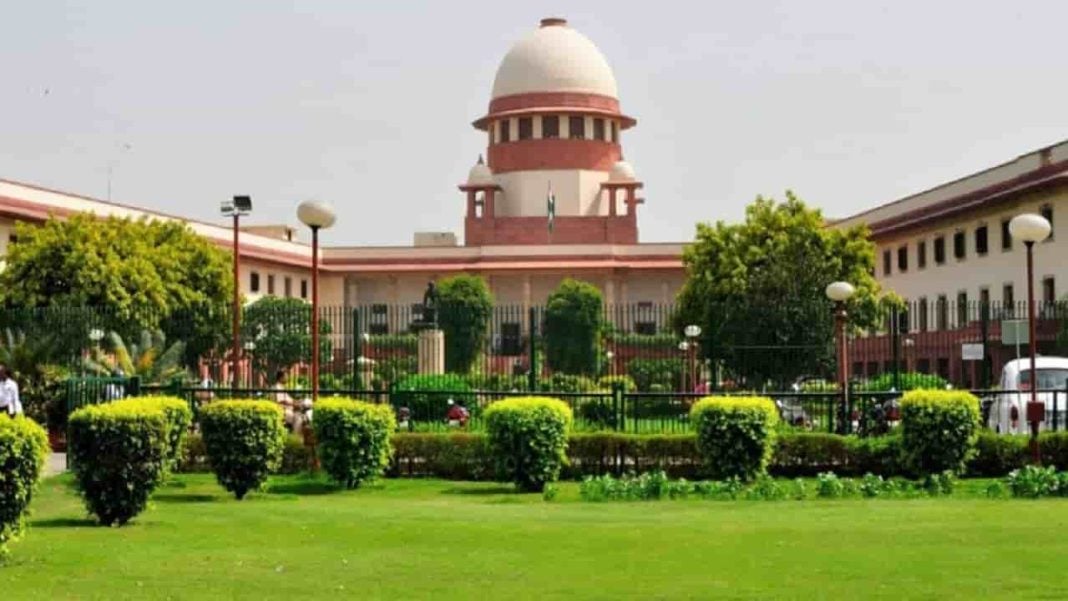
Case Name: Sanjay Kumar v. State of Himachal Pradesh
Date of Judgment: 3 September 2026
Citation: 2026 INSC 948
Bench: Justice Ujjal Bhuyan and Justice Atul S. Chandurkar
Held: The Supreme Court held that ordinary matrimonial discord, general allegations of harassment or an unhappy marital relationship are insufficient to establish abetment of suicide under Section 306 IPC. To sustain a conviction under Section 306 read with Section 107 IPC, the prosecution must prove a specific act of instigation, intentional aid or abetment, accompanied by the accused’s intention to drive or facilitate the deceased’s suicide. The fact that the deceased committed suicide following matrimonial disputes does not, by itself, satisfy these statutory requirements.
The Court further held that an appellate court considering an appeal against acquittal must give due weight to the trial court’s assessment of witness credibility, the reinforced presumption of innocence, the accused’s entitlement to reasonable doubt and the trial judge’s advantage of directly observing the witnesses. Although the appellate court possesses the power to reappreciate the evidence, it should not reverse an acquittal without demonstrating that the trial court’s view was perverse, impossible or unsupported by the evidence.
A conviction cannot be substituted for an acquittal through a brief or superficial appraisal of the evidence, particularly by relying upon alleged incidents that do not form part of the witnesses’ proved testimony. Where two reasonable views are possible, the view favourable to the accused must ordinarily prevail.
Summary: Sanjay Kumar married Lata in January 2008. The prosecution alleged that, after the marriage, Lata was subjected to harassment by Sanjay, his mother and his sisters. Her family members claimed that she was tortured, denied proper food and subjected to verbal and physical mistreatment. In July 2009, Lata gave birth to a daughter. On 16 November 2009, she consumed a poisonous substance and subsequently died during treatment.
Sanjay, his mother and his two sisters were prosecuted under Sections 498A and 306 IPC. The prosecution examined fifteen witnesses, including Lata’s mother, sisters and other relatives, a neighbour, a pharmacist, the medical officer and the investigating officer.
The Sessions Court examined the prosecution evidence and found that the allegations of dowry demand, cruelty and harassment were general, hearsay and unsupported by specific incidents. No complaint regarding physical torture had previously been made to any authority, and no external injury was found on Lata’s body. The allegations concerning demands for money or pressure upon Lata to obtain a loan were found to be afterthoughts.
The Sessions Court also noted that the relatives’ testimony contained significant omissions and improvements. Several witnesses admitted that Lata and Sanjay appeared happy when they visited her parental home. Her sisters stated that they had been received and treated properly whenever they visited the matrimonial residence. No witness gave reliable evidence of any particular unlawful demand, threat or act intended to provoke Lata into committing suicide.
The evidence concerning Sanjay’s conduct immediately after Lata consumed poison was also considered important. A neighbour testified that she had never heard of any dispute between the couple and that Sanjay had tried his best to save Lata. The pharmacist stated that Sanjay came to his shop, informed him that Lata was unwell and requested medical assistance. Upon discovering that she had consumed poison, Sanjay immediately arranged a vehicle and took her to the hospital.
The Sessions Court acquitted all four accused of the offences under Sections 498A and 306 IPC. The State of Himachal Pradesh challenged their acquittal before the High Court.
The Himachal Pradesh High Court maintained the acquittal of Sanjay’s mother and sisters but reversed Sanjay’s acquittal. It held that the prosecution had proved that he mentally and physically harassed Lata and that his conduct drove her to commit suicide within a short period of the marriage. Sanjay was sentenced to four years’ rigorous imprisonment with a fine of ₹10,000 under Section 306 IPC and two years’ rigorous imprisonment with a fine of ₹5,000 under Section 498A IPC. The substantive sentences were directed to run concurrently.
The Supreme Court found that the High Court failed to meaningfully engage with the detailed reasons given by the Sessions Court. Its reasoning for reversing the acquittal extended over only two paragraphs and did not identify any perversity, impossibility or material misreading in the trial court’s assessment.
The High Court referred to allegations that Sanjay abused and dragged Lata in the presence of her mother and sisters. The Supreme Court found that no such proved evidence existed on the record. On the contrary, the relevant witnesses had admitted during cross-examination that they had not made these assertions in their statements to the police. The High Court therefore reversed the acquittal on the basis of material that was either absent from the evidence or constituted an unproved improvement.
Reiterating the principles governing appeals against acquittal, the Supreme Court observed that the presumption of innocence does not weaken after acquittal; it becomes fortified. The appellate court must accord proper weight to the trial judge’s view regarding the credibility of witnesses and must remain slow to disturb factual findings reached by a judge who had the advantage of observing their demeanour. Where the trial court’s view is reasonably possible, the appellate court cannot replace it merely because another interpretation of the evidence may also be conceivable.
The Court also examined the requirements of Section 306 IPC. Abetment of suicide demands proof of an intentional act falling within Section 107 IPC. The prosecution must establish that the accused instigated, intentionally aided or otherwise abetted the suicide with the necessary culpable intention. The existence of disputes or discord between spouses does not automatically establish such abetment.
Even assuming that some differences existed in the couple’s matrimonial life, the Court found no evidence that Sanjay intended, encouraged or aided Lata to take her life. His conduct in immediately seeking medical assistance and taking her to the hospital was inconsistent with the prosecution’s allegation that he had deliberately driven her to suicide.
The prosecution evidence was also insufficient to prove cruelty under Section 498A IPC. General statements that Lata was tortured or harassed, without identification of specific acts, unlawful demands or reliable contemporaneous evidence, could not sustain a criminal conviction. The Sessions Court’s decision to extend the benefit of doubt was therefore both reasonable and legally justified.
Decision: It restored the Sessions Court’s view and acquitted Sanjay Kumar of the charges under Sections 498A and 306 IPC. As the appellant was already on bail, his bail bonds were cancelled following his acquittal.