Insurer’s Branch Office Cannot Create Territorial Jurisdiction for a Motor Accident Claim: Supreme Court Restricts MACT Forum Shopping Under Section 166(2)
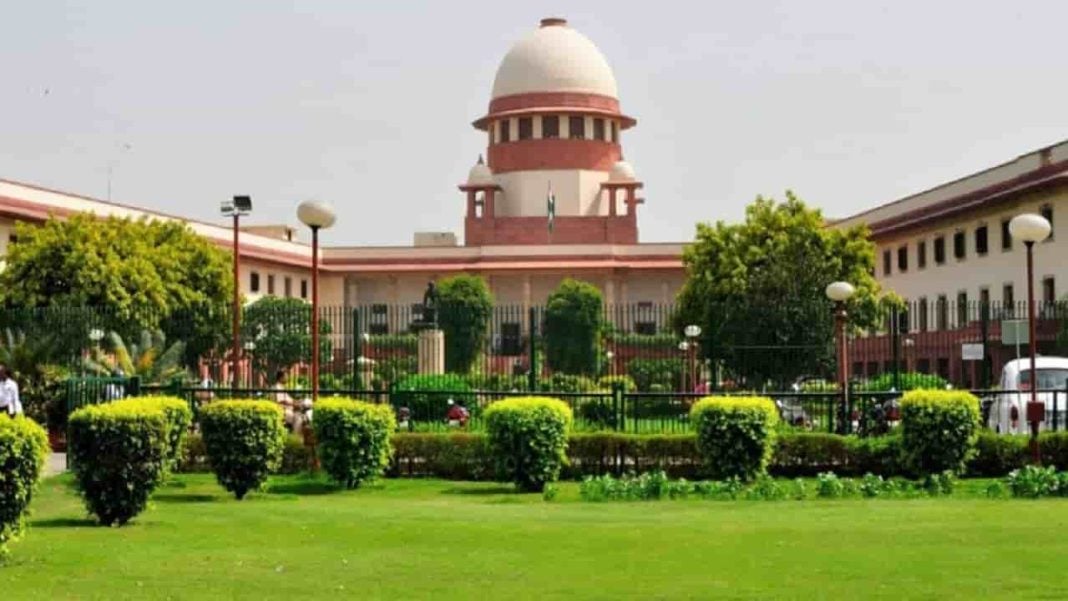
Case Name: K. Rashik v. National Insurance Company Limited and Another
Date of Judgment: September 16, 2026
Citation: 2026 INSC 996
Bench: Justice Ujjal Bhuyan and Justice Atul S. Chandurkar
Held: The Supreme Court held that the mere existence of an insurance company’s branch or business office at a particular place does not confer territorial jurisdiction upon the Motor Accidents Claims Tribunal situated there. Section 166(2) of the Motor Vehicles Act, 1988 deliberately permits a claim petition to be filed where the claimant resides or carries on business, where the accident occurred, or where the defendant resides. Significantly, the provision does not permit filing at a place where the defendant merely “carries on business.”
The term “defendant” under Section 166(2), for determining territorial jurisdiction, principally refers to the owner, driver or other persons directly answerable to the claim and does not include the insurer merely because it has been impleaded. An insurer is not a mandatory party to a motor accident claim, and the Tribunal is independently required to issue notice to it under Section 168(1).
The Court further held that when a claimant voluntarily impleads the insurer as a party-respondent, the insurer may raise every legally permissible defence, including an objection to the Tribunal’s territorial jurisdiction. Its objections are not restricted to the grounds specified under Section 149(2) of the Motor Vehicles Act.
A distinction must, however, be drawn between an objection raised at the initial stage and one raised after an award has been passed. When territorial jurisdiction is challenged before the Tribunal at the commencement of proceedings, the conditions contained in Section 166(2) must be strictly satisfied. If the objection is raised for the first time or pursued at the appellate stage, Section 21 of the Code of Civil Procedure applies, and the objecting party must additionally establish that the lack of territorial jurisdiction resulted in a failure of justice.
Summary: The appellant was riding a two-wheeler with his brother on October 25, 2022, when a mini-truck driven by the second respondent struck their vehicle in District Tirupati, Andhra Pradesh. He underwent treatment at a hospital in Tirupati, and the First Information Report was registered at Yerravaripalem Police Station in the same district.
The claimant filed an application for compensation under Section 166 of the Motor Vehicles Act before the Motor Accidents Claims Tribunal at Chennai. National Insurance Company Limited, which had been impleaded as a respondent, objected to the Tribunal’s territorial jurisdiction. It contended that the accident had occurred in Andhra Pradesh, the claimant resided in Chittoor and no part of the cause of action had arisen in Chennai.
The Chennai Tribunal rejected the objection on the ground that the insurer also carried on business in Chennai. The insurer challenged this ruling under Article 227 of the Constitution. The Madras High Court held that the Chennai Tribunal lacked territorial jurisdiction and directed that the claim proceedings be transferred to the competent Tribunal at Chittoor.
Before the Supreme Court, the claimant argued that he was residing and working in Chennai and that the insurer maintained an office there. He also contended that the Motor Vehicles Act was beneficial legislation and that no prejudice would be caused to the insurer if the claim were tried in Chennai.
The Supreme Court examined the claim application and found that the claimant had expressly stated his address to be in Chittoor District, Andhra Pradesh. The application contained no pleading that he resided or carried on business in Chennai. The accident occurred in District Tirupati, the claimant received treatment there, the FIR was registered there, and the driver of the offending vehicle also resided in Chittoor District. Thus, none of the jurisdictional conditions under Section 166(2) connected the claim with Chennai.
Interpreting Section 166(2), the Court observed that Parliament used different expressions for claimants and defendants. A claimant may file a petition where he “resides or carries on business,” but insofar as the defendant is concerned, jurisdiction is confined to the place where the defendant “resides.” Unlike Section 20 of the Code of Civil Procedure, Section 166(2) consciously omits the place where the defendant carries on business. The insurer’s branch office, therefore, could not furnish an independent jurisdictional basis.
Relying upon United India Insurance Co. Ltd. v. Shila Datta, the Court clarified that an insurer voluntarily impleaded by the claimant becomes a full party-respondent and may raise all legally available objections. It is not restricted to the statutory defences available to an insurer that is merely served with notice under Section 149(2).
The Court also distinguished Mantoo Sarkar v. Oriental Insurance Co. Ltd., Malati Sardar v. National Insurance Company Ltd. and Balveer Batra v. New India Assurance Company. In those cases, territorial jurisdiction was considered after the Tribunal had already adjudicated the claims. Consequently, Section 21 of the Code of Civil Procedure required proof that the absence of jurisdiction had occasioned a failure of justice.
In the present case, the insurer raised its objection before adjudication of the claim. Therefore, the claimant had to independently satisfy Section 166(2), and the additional requirement of establishing prejudice or failure of justice under Section 21 did not arise.
The Court acknowledged the beneficial character of the Motor Vehicles Act but held that purposive interpretation cannot be used to create jurisdiction unsupported by the statutory language. Beneficial legislation cannot justify rewriting an express jurisdictional provision.
Decision: The Supreme Court dismissed the claimant’s appeal and upheld the Madras High Court’s order . It affirmed the direction transferring the entire claim proceeding from the Motor Accidents Claims Tribunal at Chennai to the competent Tribunal at Chittoor.