Supreme Court Strikes Down Maharashtra Methanol Rules: Adding Colour and Bitterant to Methanol Is Like “Rearranging the Deck Chairs on the Titanic”
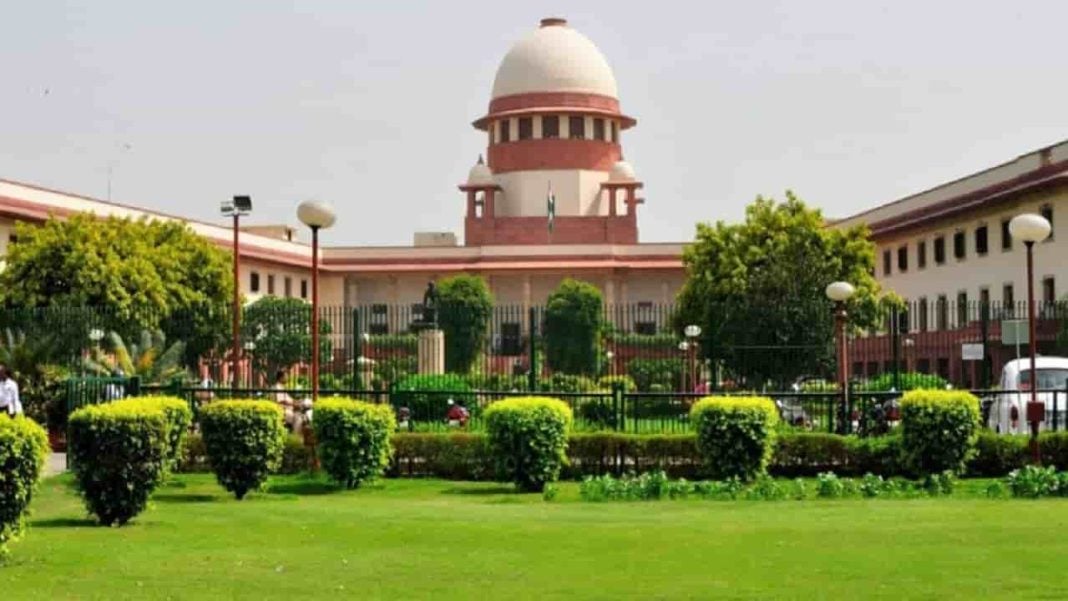
Case Name: M/s Balaji Formalin Pvt. Ltd. & Anr. v. Union of India & Anr., with The Chemical and Alkali Merchants Association & Anr. v. Union of India & Anr. and Indian Chemical Council v. State of Maharashtra
Date of Judgment: 18 September 2026
Citation: 2026 INSC 1009
Bench: Justice J.B. Pardiwala and Justice K. Vinod Chandran
Held: The Supreme Court struck down Rules 18A and 18B of the Maharashtra Poisons Rules, 1972, inserted through the Maharashtra Poisons (Amendment) Rules, 2011, as violative of Articles 14 and 19(1)(g) of the Constitution. The Court held that requiring purchasers of methanol to possess a Form A licence was irrational because Form A applied to persons selling or possessing poison for sale, whereas genuine industrial consumers ordinarily purchased methanol as a raw material. The requirement rendered the Form B permit ineffective and failed to establish the intended use of methanol.
The Court further held that the compulsory addition of methylene carmine and denatonium saccharide to methanol before its sale to non-drug manufacturers was manifestly arbitrary and disproportionate. Although preventing deaths caused by methanol-laced liquor was a legitimate State objective, the additives merely made methanol identifiable and did not prevent its diversion, pilferage or use in illicit liquor. Their colour and residue also made methanol unsuitable for several legitimate industrial applications.
Rule 18B, which authorised confiscation of methanol found without a Form A licence, was also held unworkable because even a person lawfully possessing methanol under a Form B permit could face confiscation. The restrictions imposed a substantial and continuing burden upon lawful industries without producing any corresponding or demonstrable public benefit.
Summary: The petitions challenged Maharashtra’s 2011 regulatory framework governing methanol, introduced following a liquor tragedy in which methanol had been consumed as spurious liquor. Rule 18A required a seller to verify that the purchaser held a Form A licence and, except where methanol was purchased for drug manufacturing, mandated the addition of a prescribed colourant and bitterant before sale. Rule 18B provided for confiscation of methanol possessed without a Form A licence.
The petitioners contended that methanol was an essential raw material for manufacturing formaldehyde, paraformaldehyde, methyl amines, dyes, resins, paints, disinfectants and pharmaceutical products. The mandatory additives contaminated the resulting products, damaged catalysts and equipment, affected product quality and made the products commercially unacceptable. They argued that the restrictions were arbitrary, excessive and destructive of legitimate industrial activity.
Applying the tests of arbitrariness, reasonableness and proportionality, the Supreme Court found that the rules targeted lawful sales but failed to address the real causes of hooch tragedies, including illegal diversion, pilferage, corruption and transactions through unlicensed channels. The Court sharply observed that merely adding colour and bitterness to methanol was akin to “rearranging the deck chairs on the Titanic”, since it addressed only a surface-level concern while leaving the underlying problem untouched.
The Court clarified that judicial restraint in policy matters does not protect a measure that lacks rational justification or violates constitutional rights. It suggested less restrictive and more effective safeguards, including stricter scrutiny of licences, reconciliation of methanol stocks, return of unused quantities, tamper-evident transport seals, dedicated tankers, coordinated enforcement and stronger action against licence violations. It also called upon all States and Union Territories to reconsider their regulatory mechanisms for preventing hooch tragedies.
Decision: The writ petitions were allowed. Rules 18A and 18B of the Maharashtra Poisons Rules, 1972, were declared unconstitutional for violating Articles 14 and 19(1)(g).