Mere Recovery of Bribe Money Cannot Sustain Conviction Without Proof of Demand and Acceptance: Supreme Court Clears Public Servant After Sentence Served
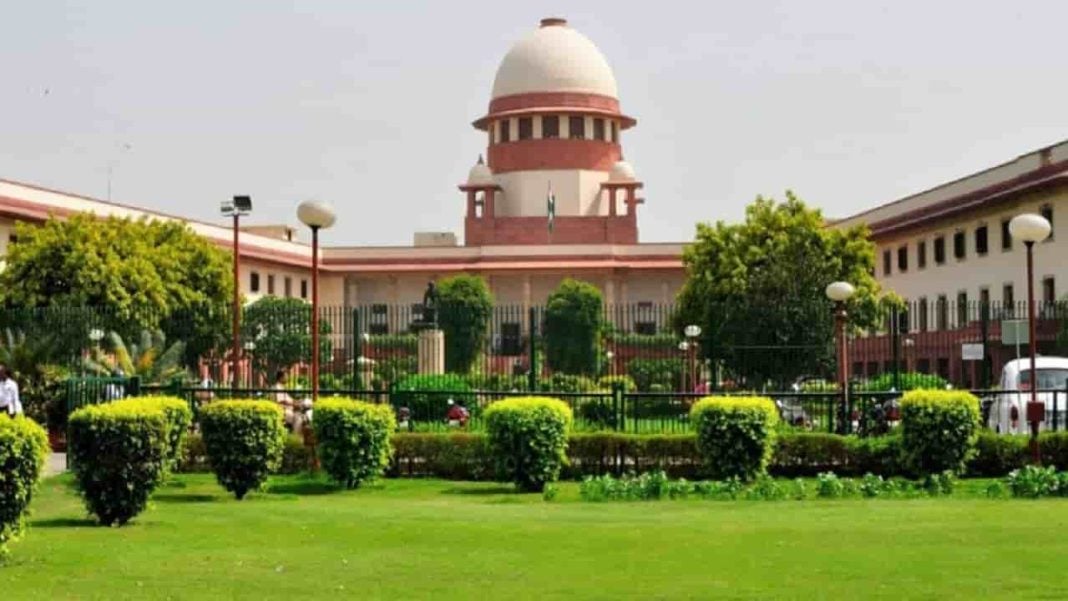
Case Name: Ajit Kumar v. State of Jharkhand,
Date of Judgment: 5 October 2026.
Citation: 2026 INSC 1084.
Bench: Justice Ujjal Bhuyan and Justice Atul S. Chandurkar.
Held: The Supreme Court held that proof of demand and acceptance of illegal gratification is essential to establish the offences under Sections 7 and 13(1)(d), punishable under Section 13(2), of the Prevention of Corruption Act, 1988, as applicable to the prosecution. Mere recovery of tainted currency cannot sustain a conviction when the prosecution fails to establish these foundational facts beyond reasonable doubt. On examining the evidence, the Court found that the alleged demand and acceptance had not been proved and consequently cleared the appellant of the charges.
Summary: The case arose from an allegation that Ajit Kumar, an Assistant in the District Education Office at Saraikella, demanded ₹5,000 from Durgapad Singh Munda for securing the release of his unpaid salary. Munda, who had joined a government school as an orderly on 1 February 2010, lodged a complaint with the Vigilance Bureau on 19 April 2010. Following verification, a trap was organised on 20 May 2010 using chemically treated currency notes.
According to the complainant, he handed over the money at Kumar’s residence, where Kumar kept it beneath his bed. The prosecution alleged that Kumar was subsequently apprehended and the marked currency recovered from his residence. A chemical test of his hands produced a pink colour. The Special Judge convicted Kumar on 27 February 2021 and imposed four years’ rigorous imprisonment and a fine of ₹10,000 for each of the two offences, with the prison sentences running concurrently. The Jharkhand High Court affirmed the conviction and sentence on 21 July 2022.
The Supreme Court found substantial inconsistencies in the prosecution’s account concerning the location of the alleged payment, the sequence of apprehension and recovery, and the place where the hand-wash test was conducted. Although the verification officer claimed to have overheard an earlier demand, his report was submitted almost a month after the verification visit. His explanation that the complainant had been unable to arrange the money did not, the Court observed, explain the delay in reporting whether the complaint was true.
The Court further noted that the alleged payment was not witnessed by the trap team and that the prosecution’s account rested on the complainant’s uncorroborated testimony. The witnesses relied upon for the recovery also weakened the prosecution’s case: one stated that he remained outside the residence and signed documents at the vigilance officials’ direction, while another admitted that he had not seen any money and did not know the contents of the papers he signed.
Decision: The Supreme Court allowed the appeal and set aside both the Special Judge’s judgment and the Jharkhand High Court’s judgment. It declared that the charges against Ajit Kumar had not been proved and cleared him of those charges. Although Kumar had already served his prison sentence and paid the fine, the Court examined his challenge on merits, enabling him to obtain relief from the conviction.