Higher Exam Marks Cannot Cure Ineligibility: Supreme Court Rejects NIOS Certificate Under Goa Plumber Instructor Recruitment Rules, Restores Original Selectee’s Appointment
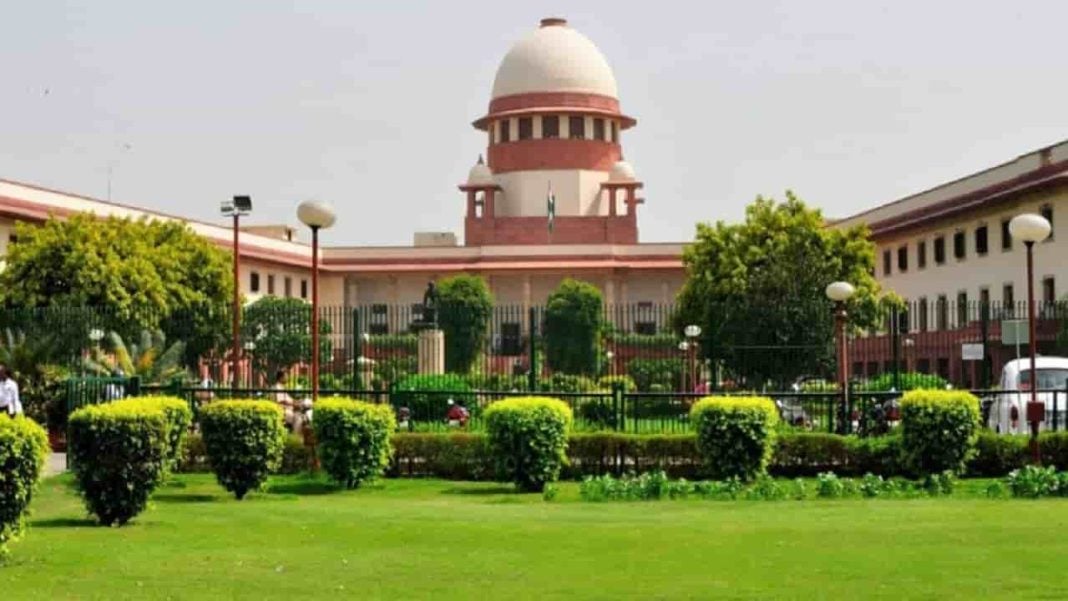
Case Name: Santosh B. Naik v. State of Goa & Others.
Date of Judgment: 6 October 2026.
Citation: 2026 INSC 1089.
Bench: Justice Aravind Kumar and Justice Vipul M. Pancholi.
Held: The Supreme Court held that a recognised educational qualification does not automatically satisfy a distinct academic requirement prescribed by recruitment rules. For the Goa post of Vocational Instructor (Practical) in the Plumber trade, the requirement of having “passed 10th standard under 10+2 system of education” had to be applied in its entirety. In the absence of a provision in the applicable rules treating the NIOS Secondary School Certificate as satisfying that requirement, the respondent candidate could not be declared eligible on the strength of its general recognition. The Court further held that higher written-examination marks cannot cure the absence of an essential qualification, since comparative merit arises only among eligible candidates.
Summary: The Supreme Court set aside a Bombay High Court at Goa judgment that had directed consideration of an NIOS-qualified candidate for appointment as Vocational Instructor (Practical) in the Plumber trade. The dispute arose from an advertisement dated 5 November 2021 issued by Goa’s Directorate of Skills Development and Entrepreneurship. The applicable Recruitment Rules required candidates to have passed Class 10 under the 10+2 system of education, possess a National Trade or National Apprenticeship Certificate in the relevant trade, and have at least five years’ practical industry experience.
In the written examination held on 9 November 2022, the third respondent secured 96 marks, while Santosh B. Naik secured 94 marks. Selection, however, was expressly subject to verification of the prescribed qualifications. On 23 March 2023, the Departmental Selection Committee found the third respondent academically ineligible and selected Naik, who was offered the post on 24 March 2023.
The third respondent challenged that decision, relying on a Secondary School Certificate obtained through NIOS in June 2004. The candidate had cleared English, Home Science, Science, Economics and Hindi, and possession of the required technical qualification and experience was undisputed. Accepting the argument based on recognition of the NIOS qualification, the High Court quashed the selection decision and directed consideration of the candidate according to the written-examination marks. An appointment followed pursuant to that judgment.
Reversing the High Court, the Supreme Court distinguished general recognition of a certificate from compliance with the specific qualification prescribed for a particular post. It held that the words “under 10+2 system of education” formed an integral part of the eligibility condition and could not be ignored. Recognition by the Goa Board or other educational authorities could not, by itself, amend or enlarge the Recruitment Rules.
Relying on Zahoor Ahmad Rather v. Sheikh Imtiyaz Ahmad, (2019) ; Unnikrishnan C.V. v. Union of India, Shifana P.S. v. State of Kerala, (2024) ; and Maharashtra Public Service Commission v. Sandeep Shriram Warade, (2019) , the Court reiterated that prescribing essential qualifications falls within the employer’s domain. Courts ordinarily cannot alter those qualifications or introduce equivalence through judicial review. The requirements also had to be understood in the context of the duties of a technical teaching post.
The Court noted that the Department had applied the same interpretation during recruitment in 2015, when Naik himself had been rejected because his National Open School qualification did not satisfy the prescribed requirement. That earlier decision was relevant as evidence of consistent departmental interpretation, rather than as a binding precedent.
The Court also rejected reliance on the third respondent’s superior examination score. Eligibility had to be established before comparative merit could be assessed. It expressly confined its conclusion to the Recruitment Rules governing this post and the advertisement dated 5 November 2021, leaving the validity, recognition and equivalence of NIOS qualifications for other purposes or under other recruitment rules undecided.
Decision: The Supreme Court allowed Naik’s appeal and set aside the High Court’s judgment dated 11 January 2024 in Writ Petition.