Order VI Rule 17 CPC: Supreme Court Allows Post-Trial Plaint Amendment to Challenge Newly Discovered Compromise Decree; Leaves Limitation and Maintainability Open
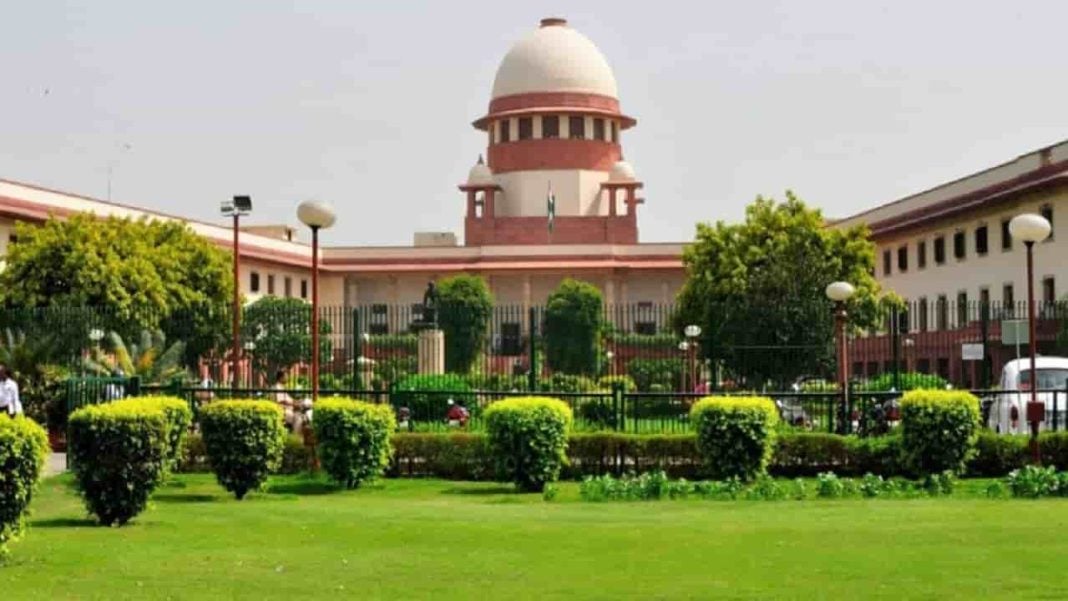
Case Name: Haramani Sahoo and Others v. Lalita Nayak and Others
Date of Judgment: 12 October 2026.
Citation: 2026 INSC 1112.
Bench: Justice B.V. Nagarathna and Justice R. Mahadevan.
Held: The Supreme Court held that a belated amendment of the plaint after commencement of trial may be permitted under Order VI Rule 17 of the Code of Civil Procedure, 1908, where the applicant satisfies the requirement of due diligence and the proposed amendment directly concerns the existing dispute without fundamentally altering the nature of the suit. On the facts, the subsequent discovery of a compromise decree affecting the suit property, the original plaintiff’s non-participation in those proceedings, and the absence of disclosure of the vendors’ source of title furnished sufficient grounds to satisfy the statutory requirement.
The Court further held that an amendment need not be rejected at the threshold where limitation depends upon disputed facts, including the date of knowledge of the relevant decree. Permitting the amendment does not establish the validity or maintainability of the additional relief. Questions concerning limitation, the bar under Order XXIII Rule 3A CPC, and the validity and binding effect of the compromise decree were expressly reserved for adjudication by the trial court.
Summary: The Supreme Court allowed an appeal by the legal heirs of Rabindranath Sahoo against the rejection of an application to amend the plaint in a property dispute. The original plaintiff had sought declaration of title, recovery of possession, rectification of registered sale deeds dated 15 February 1971 and 28 July 1978, and consequential reliefs. During the proceedings, he sought to introduce pleadings concerning a compromise decree passed in T.S. No. 105 of 1998 and a prayer declaring that decree null and void, contending that it affected a portion of the property already under dispute.
The plaintiff maintained that he was neither a party to the compromise proceedings nor aware of the decree. According to his case, the written statements of the contesting defendants did not disclose their vendors’ source of title, and the compromise proceedings came to light following a search of the revenue records. Certified copies of the plaint and final decree were obtained on 22 June 2020. The trial court rejected the amendment on 21 September 2022, and the Orissa High Court declined to interfere on 10 April 2023.
Opposing the amendment, the respondents relied on the prolonged history of the litigation and repeated amendments to the plaint. They argued that the proposed challenge would fundamentally change the suit, introduce a time-barred claim, and circumvent the prohibition on a separate suit challenging a compromise decree under Order XXIII Rule 3A CPC.
The Supreme Court found that the proposed amendment concerned the same property and had a direct bearing on the title and possession already claimed. Although it would enlarge the factual and legal issues requiring adjudication, that consequence did not amount to a fundamental change in the nature of the suit. The Court accepted the explanation for the subsequent discovery as sufficient for the limited purpose of satisfying the due diligence requirement, while leaving the correctness of the asserted date of knowledge open to examination at trial.
On limitation, the Court distinguished a claim clearly barred by law from one whose maintainability depends on disputed facts. Since the date of knowledge of the compromise decree remained contested, it considered a final determination of limitation inappropriate at the amendment stage. It similarly declined to decide the applicability of Order XXIII Rule 3A CPC or the legal consequences of the plaintiff having been a stranger to the compromise proceedings.
The Court also held that requiring the respondents to answer additional pleadings did not, by itself, justify refusal of an amendment necessary for complete adjudication. Their interests could be protected through additional written statements and costs. Refusal, conversely, could fragment the dispute concerning title to the same property and create the possibility of inconsistent findings. The respondents’ reliance on Basavaraj v. Indira was distinguished on the particular circumstances establishing due diligence in the present case.
Decision: The Supreme Court allowed the appeal and set aside the orders of the trial court and the Orissa High Court. It permitted the amendment subject to payment of ₹25,000 to the contesting respondents within two weeks of the judgment.
All questions concerning limitation, maintainability, the applicability of Order XXIII Rule 3A CPC, the validity and binding nature of the compromise decree, title, possession, and the merits of the parties’ claims were left open.