Homebuyer Cannot Receive Entire Builder Refund While Housing Loan Remains Unpaid: Supreme Court Awards ₹1.27 Crore with 12% Interest, ₹15 Lakh Compensation; Upholds HDFC’s Service Deficiency
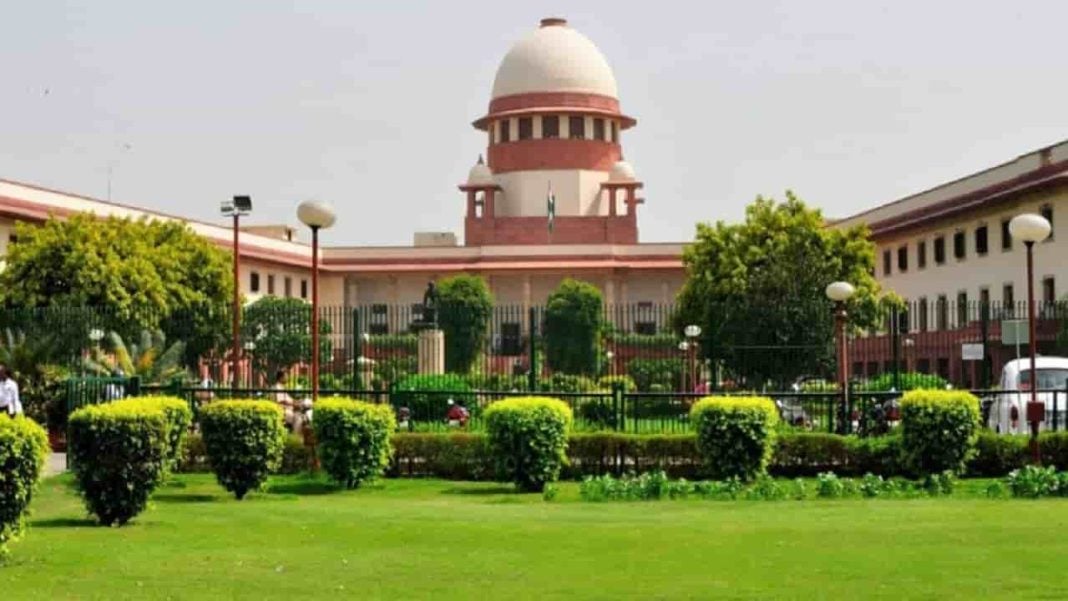
Case Name: Madhu Kudapa (formerly known as K. Madhusudhan Rao) v. M/s Lodha Healthy Constructions and Developer Private Limited (LHCPL) & Another, with connected appeals
Date of Judgment: 15 October 2026
Citation: 2026 INSC 1131
Bench: Justice Pamidighantam Sri Narasimha and Justice Alok Aradhe.
Held: The Supreme Court held that, in a housing transaction financed through a tripartite arrangement, the purchaser cannot receive the entire consideration refunded by the builder while the housing loan remains outstanding and the lender’s recovery claim is unresolved. A contractual provision treating direct disbursement to the builder as disbursement to the borrower creates a repayment obligation; it does not transform unpaid borrowed funds into the purchaser’s own money. Releasing the entire refund to the purchaser in such circumstances would amount to unjust enrichment.
The Court confined the purchaser’s entitlement in his own right to ₹1,27,34,726, comprising payments made from his own funds to the builder and amounts paid to the lender, with simple interest at 12% per annum from the respective payment dates until payment. It separately awarded ₹15 lakh as consolidated compensation and upheld the ₹2 lakh compensation imposed on the lender for disbursing funds without establishing compliance with its obligation to verify construction progress. The lender’s recovery rights and the borrower’s objections to liability were left for adjudication in the pending High Court appeal.
Summary: The Supreme Court modified an NCDRC order directing refund of the entire apartment consideration to a homebuyer, holding that the refund must account for the distinct financial contributions of the purchaser and the housing lender.
The dispute arose from an apartment booked in 2009 in the “Lodha Bellezza” project at Kukatpally, Hyderabad, for ₹2,30,73,876. The purchaser paid ₹51,11,576 directly to the builder. Housing Development Finance Corporation Limited sanctioned a ₹2 crore loan and disbursed ₹1,68,80,531 directly to the builder in thirteen tranches under a tripartite arrangement. Although approximately 95% of the consideration had been received, possession was delayed. The purchaser declined an offer of possession for fit-outs and sought clarification concerning the occupancy certificate and fire clearance.
In July 2022, the NCDRC directed refund of the consideration with 9% interest, subject to an enhanced rate on non-compliance. It also found the lender deficient in service and awarded ₹2 lakh against it, but did not address the purchaser’s additional claims for rent and compensation. The builder accepted the order and deposited ₹4,43,24,510, which, with accrued interest, stood at ₹5,65,43,411 on 8 October 2026.
Examining the distribution of this deposit, the Supreme Court applied the principle that restitution restores value without conferring a windfall. Besides his direct contribution to the builder, the purchaser had paid ₹76,23,150 to the lender, bringing his total out-of-pocket payments to ₹1,27,34,726. The Court held that he could receive this amount in his own right, but could not also take the unpaid loan-funded component while the lender’s claim remained disputed.
The Court enhanced the applicable interest to 12% per annum, relying particularly on the contractual provision governing the builder’s failure to deliver possession. It rejected the demand for 18% interest, explaining that a builder’s rate for delayed payments cannot automatically be applied reciprocally without considering the contract and circumstances.
On compensation, the Court declined to award the enlarged rental claim introduced for the first time before it without adequate supporting evidence. It also held that separate rental reimbursement, in addition to interest compensating the same deprivation, would duplicate compensation on these facts. Nevertheless, considering the prolonged uncertainty, deprivation of both the apartment and funds, and loss of the benefit of property-price escalation, it awarded ₹15 lakh in full and final satisfaction of the purchaser’s claims against the builder for rent, mental agony, harassment and litigation expenses.
The lender’s challenge to the finding of service deficiency also failed. The purchaser had repeatedly questioned construction progress and sought inspection reports. Although the lender claimed that engineers inspected the project before each disbursement, it produced no inspection reports before the NCDRC. The Court held that matching payments to the builder’s demands did not establish verification of construction progress as contractually required.
The Court declined to determine the lender’s recovery claim within the consumer proceedings. Its recovery suit had been dismissed on maintainability grounds, and the resulting appeal remained pending before the High Court.
Decision: The appeals were disposed of by modifying the NCDRC’s order. The Commission was directed to release ₹1,27,34,726 to the purchaser with simple interest at 12% per annum from the respective dates of his payments to the builder and lender until payment. A further ₹15 lakh was ordered to be released from the deposit as compensation within one month. The remaining deposit must be retained in an interest-bearing account pending the outcome of the lender’s High Court appeal. The ₹2 lakh compensation against the lender was upheld. The High Court must decide the recovery appeal independently on its merits, with all contentions concerning loan liability left open.