Yes Bank AT-1 Bond Write-Down Was Beyond Administrator’s Authority: Supreme Court Upholds Bombay High Court Ruling, Says RBI’s Regulatory Power Could Not Be Assumed
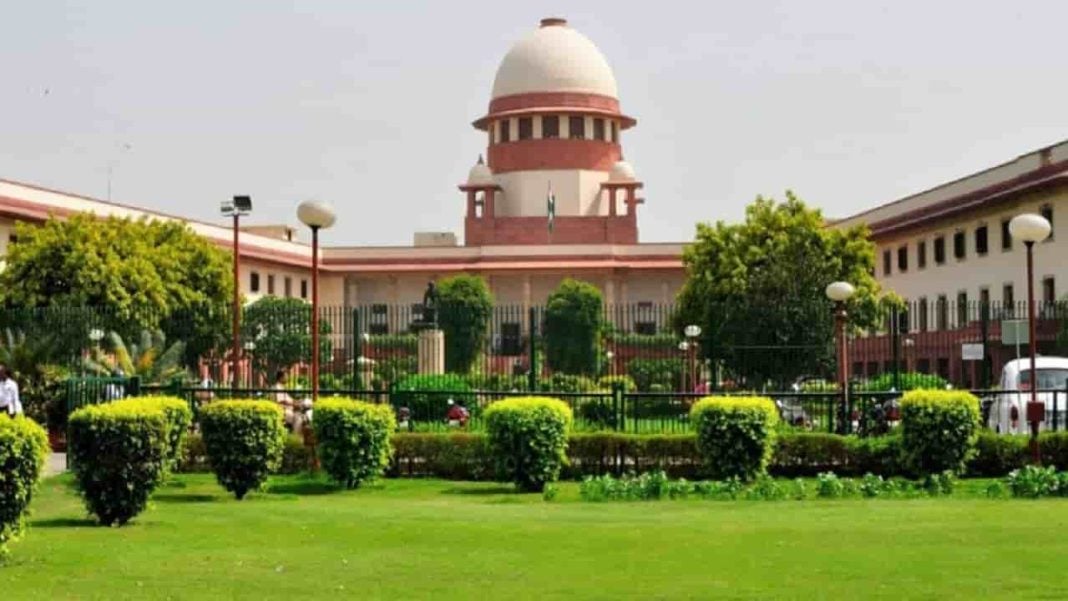
Case Name: Yes Bank Limited & Another v. Axis Trustee Services Limited & Others, with connected appeals by Yes Bank Limited, the Reserve Bank of India and the Union of India
Date of Judgment: 15 October 2026
Citation: 2026 INSC 1132
Bench: Justice Dipankar Datta and Justice Augustine George Masih.
Held: The Supreme Court held that Yes Bank’s Administrator lacked authority to write down its Additional Tier-1 bonds on 14 March 2020. The final Yes Bank Limited Reconstruction Scheme, 2020, had consciously omitted the draft provision providing for their permanent write-down. The Administrator could not reverse that decision by relying on a general clause preserving existing contractual instruments and obligations.
The Court further held that an Administrator appointed under Section 36ACA of the Banking Regulation Act, 1949, substitutes for the bank’s Board of Directors and does not acquire the Reserve Bank of India’s distinct regulatory powers. Under the applicable RBI Master Circular and bond terms, the power governing loss absorption at the Point of Non-Viability rested with the RBI. The Administrator could not assume that role. The financial necessity of reconstruction did not excuse departure from the prescribed legal mechanism.
Summary: The Supreme Court dismissed appeals challenging the Bombay High Court’s judgment setting aside the write-down of Yes Bank’s AT-1 bonds. The ruling turned on the Administrator’s legal authority and the procedure followed, rather than whether such instruments could ever be subjected to loss absorption under the Basel III framework.
Yes Bank issued AT-1 bonds worth ₹3,000 crore in December 2016 and a further ₹5,415 crore in October 2017, with Axis Trustee Services Limited acting as trustee. Following a steep deterioration in the bank’s financial position, the Central Government imposed a moratorium on 5 March 2020, and the RBI superseded its Board and appointed an Administrator.
A draft reconstruction scheme published on 6 March 2020 provided for the AT-1 instruments to be permanently written down in full. Bondholders and the trustee objected, including by proposing conversion into equity. The final reconstruction scheme, notified on 13 March 2020, omitted the write-down provision. Nevertheless, the Administrator wrote down the bonds the following day and communicated that action to the stock exchanges.
The Court held that the omission reflected a conscious decision following consideration of stakeholder objections. The Administrator’s subsequent action could not dismantle that deliberative process. Although the final scheme preserved existing instruments, its general savings clause did not independently confer the specific authority required to write down the bonds after reconstruction.
Examining the RBI’s Basel III Master Circular and the Information Memoranda, the Court distinguished between loss absorption at a pre-specified capital trigger and at the Point of Non-Viability. The former contemplated action by the bank in accordance with the applicable terms; the latter involved the RBI’s regulatory determination. Once non-viability was triggered, the Administrator could not exercise a power reserved to the RBI merely because he had been appointed by it.
The Court rejected the argument that the combined effect of writing down the bonds and injecting fresh capital justified the action. Even if both measures were financially necessary, necessity could not replace compliance with the prescribed procedure. It also declined to determine legality by reference to Yes Bank’s subsequent financial recovery, holding that the administrative action had to be tested against the facts and law prevailing when it was taken.
The judgment sharply criticised the handling of the exercise by the RBI, the Administrator and Yes Bank. It observed that investors should not bear the consequences of administrative lapses and questioned the regulatory response as the bank’s Common Equity Tier-1 ratio deteriorated. The Court also expressed concern over the offering of these high-risk instruments to individual investors and emphasised the need for closer scrutiny.
Decision: The appeals were dismissed, leaving intact the Bombay High Court’s judgment setting aside the Administrator’s write-down decision. Any interim order stood vacated. The Supreme Court directed that annual coupon payments remain unaffected by the outcome and be made according to the Information Memoranda.