Lower Bid Than Previous Contract Is Not Enough to Cancel Fresh Auction: Supreme Court Restores Madhya Pradesh Sand Tenders, Rejects Retrospective Disqualification of Surrendering Operators
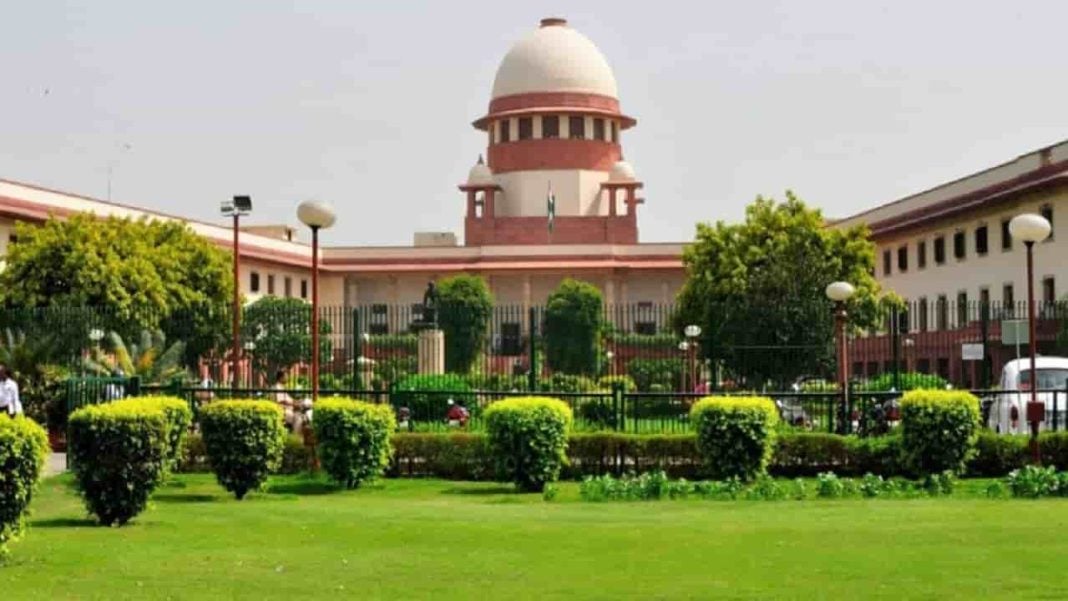
Case Name: M/s Dhanlaxmi Merchandise Pvt. Ltd. v. State of Madhya Pradesh & Others, with Sahakar Global Ltd. v. State of Madhya Pradesh & Others
Date of Judgment: 14 October 2026
Citation: 2026 INSC 1125
Bench: Justice Aravind Kumar and Justice Vipul M. Pancholi.
Held: The Supreme Court held that a public authority cannot reject the outcome of a competitive auction merely because the successful bidders, after surrendering earlier contracts for the same resource, have offered substantially lower amounts in the fresh process. An earlier bid may be relevant, but does not become an immutable measure of current market value. The authority must establish a rational basis for concluding that the fresh bids are inadequate; the numerical difference alone does not establish loss to the exchequer.
The Court reiterated that the highest bidder has no indefeasible right to allotment and that an offer above the reserve price need not invariably be accepted. Nevertheless, contractual powers to reject bids or cancel tenders remain subject to Article 14. Their exercise must rest on relevant material reasonably supporting the decision. The Court also held that the participation restriction introduced by the amendment dated 30 January 2026 could not retrospectively disqualify bidders who were eligible under the rules governing the completed 2025 auction.
Summary: The Supreme Court allowed appeals by Dhanlaxmi Merchandise Private Limited and Sahakar Global Limited against cancellation of fresh sand-mining auctions for the Katni and Shahdol groups in Madhya Pradesh. Both companies had previously operated the respective groups, surrendered their contracts under the applicable rules and subsequently emerged as the highest bidders when those groups were re-tendered.
Sahakar’s earlier annual bid for Shahdol was ₹68,84,25,999, while its successful bid in the October 2025 auction was ₹48,20,40,000. Dhanlaxmi’s earlier annual bid for Katni was ₹64,77,66,000, compared with its fresh successful offer of ₹54,07,41,111. The new bids exceeded the notified reserve prices of ₹44 crore and ₹50 crore respectively. The Corporation nevertheless cancelled the process, principally relying on the reductions from the companies’ previous bids. The Madhya Pradesh High Court upheld that decision.
Reversing the High Court, the Supreme Court emphasised that the rules prevailing in 2025 expressly permitted surrender and did not prohibit the surrendering operator from participating again. Nor did they require such an operator to match or exceed its earlier bid. The Corporation knew the surrender history when it issued the fresh tender, accepted the companies’ technical eligibility and permitted them to compete.
The auctions attracted actual competition, with seven technically qualified bidders for Shahdol and five for Katni. The Board identified no cartelisation, collusion, manipulation or procedural defect. Although these circumstances did not compel acceptance, rejection required supporting material explaining why the competitive outcome was commercially unacceptable.
The Court found no contemporaneous valuation or comparable current auction material establishing that the fresh bids fell below the revenue reasonably obtainable in October 2025. The Board had demonstrated that the bids were lower than the earlier offers, but had not established that they were lower than current market value. It could not equate those distinct propositions.
The Court also recognised the differences between the earlier contracts. Sahakar’s Shahdol agreement had already generated litigation concerning the availability of mines with statutory permissions. Dhanlaxmi’s Katni surrender arose against a different commercial background. Neither circumstance, however, justified treating the earlier bid as a binding minimum for a fresh contractual tenure.
The subsequent amendment barring surrendering operators and specified associated persons from participating in the same group for three years was prospective. Its validity was not questioned, but it could not govern the completed 2025 process retrospectively. Likewise, higher initial offers received in a later Shahdol tender under an altered regulatory regime could not retrospectively validate the cancellation.
Declining remand, the Court held that the completed auction had already been evaluated and the identified reason for rejecting it had failed judicial scrutiny. Remand could not merely enable reconsideration of that comparison or discovery of entirely new grounds for rejecting the same bids. Restoration remained conditional upon the appellants honouring their final offers and satisfying the outstanding tender requirements.
Decision: The appeals were allowed. The Supreme Court set aside the High Court’s common judgment and quashed the Board’s decision, communicated on 5 December 2025, insofar as it cancelled the Shahdol and Katni auctions.
The September 2025 tender process was restored. Within two weeks, Sahakar and Dhanlaxmi must communicate unconditional willingness to honour their respective annual bids of ₹48,20,40,000 and ₹54,07,41,111. The Corporation must identify the outstanding deposits, securities and formalities within a further two weeks. Upon compliance, it must complete the consequential approval and allotment process, including the necessary instrument and agreement, within six weeks thereafter.
The Corporation cannot reject the bids afresh on the grounds of earlier surrender, lower offers than the previous contracts or retrospective application of the January 2026 restriction. The subsequent tender dated 10 February 2026 cannot proceed for these two groups, and participants’ deposits and bank guarantees must be returned or released within four weeks, subject to independently arising liabilities. Earlier contractual dues and disputes remain open, and all statutory mining permissions remain necessary.