Bonded Labour Rehabilitation Cannot Wait for Criminal Proceedings: Supreme Court Directs Immediate Aid Ordinarily Within Seven Days of Release Certificate, Nationwide SOP Implementation
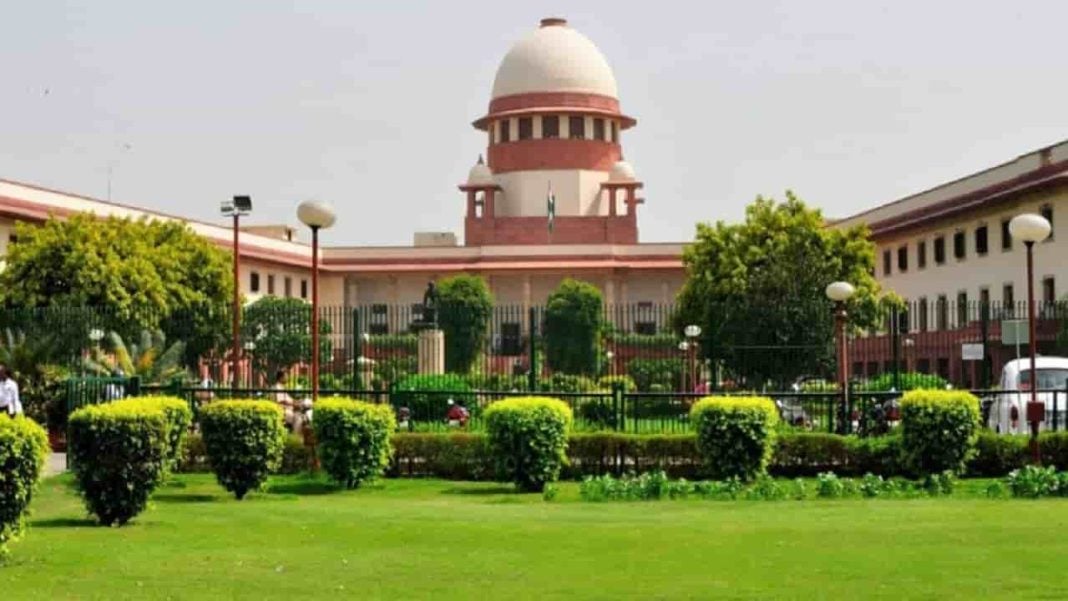
Case Name: Surendra Manjhi & Anr. v. Union of India & Ors., with the connected petition filed by the National Campaign Committee for the Eradication of Bonded Labour and others.
Date of Judgment: 2 November 2026.
Citation: 2026 INSC 1185
Bench: Justice Vikram Nath and Justice Aparesh Kumar Singh.
Held: The State’s constitutional obligation towards bonded labourers does not end with their rescue or release. Identification, release and rehabilitation form interconnected stages of a continuing responsibility under Articles 21 and 23 of the Constitution. Immediate financial assistance, subject to the applicable scheme’s identification and verification requirements, cannot be withheld merely because an investigation or criminal prosecution remains pending. The Court directed that such assistance should ordinarily be disbursed within seven days of issuance of the release certificate and that individual rehabilitation plans be prepared and applicable rehabilitation measures initiated within 90 days of rescue.
Summary: The Supreme Court issued nationwide directions to address delays and administrative failures in the identification, release and rehabilitation of bonded labourers. The proceedings arose from two petitions under Article 32, including one instituted by bonded labour survivor Surendra Manjhi.
Manjhi and several other labourers were rescued from a brick kiln in Shahjahanpur, Uttar Pradesh, on 28 February 2019, repatriated to Bihar and issued release certificates. However, Manjhi received immediate financial assistance only in 2022, nearly three years after his rescue. According to the petitioners’ submissions, of the 42 labourers issued release certificates, only 25 had received assistance of ₹20,000 each, while 17 remained unpaid. Difficulties also arose over the format of release certificates issued in Uttar Pradesh and their acceptance for processing benefits in Bihar.
The Bench observed that the principal problem was ineffective implementation of the existing legal framework. Referring to Bandhua Mukti Morcha v. Union of India, (1984) , and Neeraja Chaudhary v. State of Madhya Pradesh, (1984) , it emphasised that release without meaningful rehabilitation leaves survivors vulnerable to renewed exploitation. As the Court put it, “rehabilitation delayed may, in substance, amount to rehabilitation denied.”
The Court directed nationwide implementation of the revised Standard Operating Procedure dated 14 May 2026. Complaints concerning bonded labour must ordinarily be verified within 24 hours, followed by expeditious rescue wherever warranted. After the necessary inquiry and determination of bonded labour, release certificates should ordinarily be issued within 24 hours. A uniform certificate format must be recognised across States and Union Territories, and information concerning release and rehabilitation entitlements must be provided in a language understood by the rescued person.
Addressing inter-State cases, the Bench assigned responsibility to the rescuing State for timely issuance and transmission of records and to the receiving State for facilitating verification and rehabilitation. Administrative differences or disputes over responsibility for payment cannot delay assistance to an eligible beneficiary. Every State and Union Territory must designate a nodal officer and establish an effective coordination mechanism within six months.
The directions also require functioning district and sub-divisional Vigilance Committees, adequate district rehabilitation funds, regular updates on the NAVJIVAN Portal and monthly reviews by State-level Monitoring Committees. District grievance officers must ordinarily resolve complaints within 30 days. Rehabilitation must be periodically reviewed for at least one year after release, with particular attention to preventing re-exploitation. Separate directions address child protection, officer training, recovery of unpaid wages and examination of unjustified failures to discharge statutory duties.
Decision: The Union must issue supplementary guidelines in consultation with the National Human Rights Commission within three months and decide proposed revisions to the Rehabilitation Scheme within the same period. These proposals include enhanced immediate assistance and interim subsistence support; the Court did not itself increase the assistance amount. Until revisions take effect, the existing scheme continues to govern disbursement.
Uttar Pradesh and Bihar must jointly verify the assistance status of the 17 labourers within one month. Outstanding assistance found payable must be disbursed preferably within three months and, in any event, within six months of the judgment.
The Union must file a compliance affidavit within four months. States and Union Territories must comply within six months and file affidavits within two weeks thereafter, with the Union also submitting a consolidated status report.