After Merger, a Princely Ruler’s Private Properties Do Not Pass Only to the Eldest Son by Primogeniture but Devolve Under Personal Succession Law
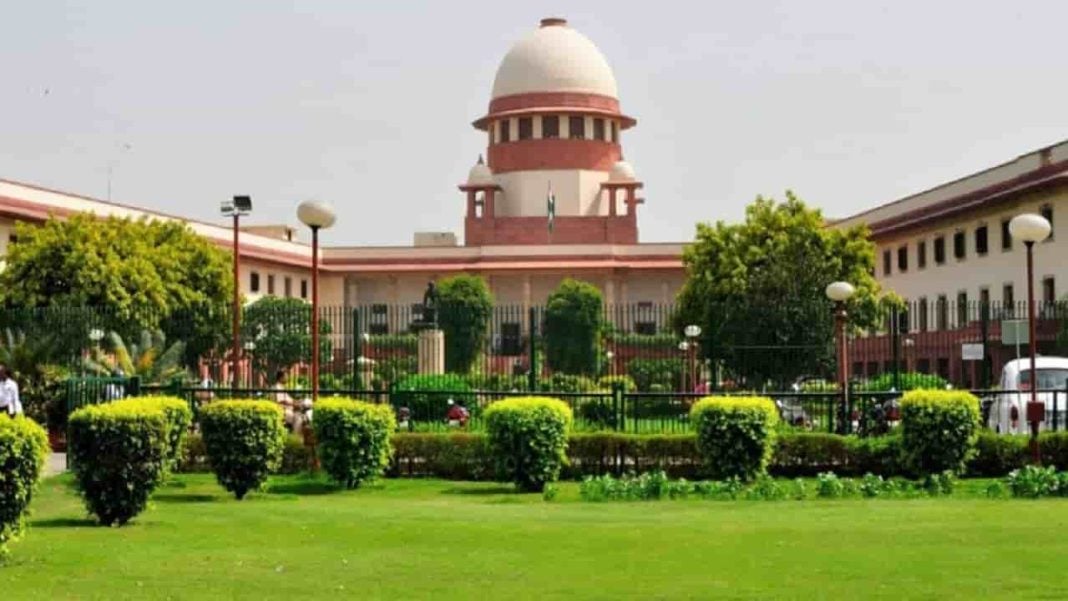
Case Name: Tikka Shatrujit Singh & Ors. v. Sukjit Singh & Anr.
Citation: 2026 INSC 571
Date of Judgment/Order: May 27, 2026
Bench: Justice Pankaj Mithal and Justice S.V.N. Bhatti
Held: The Supreme Court held that although there is a general presumption that succession to the estate or rulership of a princely State was historically governed by the rule of male lineal primogeniture, the position changed after the merger covenant. After the ruler of Kapurthala signed the merger agreement and declared certain properties as his private personal properties, the rule of primogeniture survived only for succession to the Gaddi, throne, personal rights, privileges and titles, and not for succession to the ruler’s private properties. Such private properties became ordinary private properties of the ruler and were to devolve according to the ruler’s personal law, including Hindu Law or the Hindu Succession Act, and not automatically upon the eldest male heir alone. The Court further held that the Division Bench decision in Trijugi Narain could not prevail over the three-Judge Bench decisions in the Travancore, Rampur and Faridkot cases.
Summary: The dispute arose within the erstwhile royal family of Kapurthala between Brigadier Sukjit Singh, recognised as the ruler of Kapurthala, and the family branch led by his estranged wife, Smt. Gita Devi, their sons and daughters. The Brigadier claimed that the disputed properties had devolved upon him exclusively by the rule of primogeniture and were his absolute personal properties, not liable to partition. The other side claimed partition, asserting that the properties were ancestral, coparcenary and private family properties governed by Hindu Law. The Supreme Court examined the covenant of merger dated 05.05.1948, Article XII concerning private properties, Article XIV concerning succession to the Gaddi and personal privileges, and the declarations made by Maharaja Jagatjit Singh on 11.08.1948 and 11.04.1949. The Court held that once sovereignty ended and the ruler declared certain properties as private properties, such properties did not remain attached to the throne for purposes of primogeniture. The Mussoorie declaration was especially important because it stated that the properties would descend to the Maharaja’s “heirs and successors”, showing an intention that they should not pass to one single heir by primogeniture. The Court also noted that some properties were held in joint names or acquired from sale proceeds of earlier private properties and therefore were open to division between the joint holders.
Decision: The Supreme Court partly allowed the appeal and set aside the judgment dated 19.11.2010 of the Division Bench of the High Court. The Court held that three immovable properties standing in joint names were liable to division between their respective joint holders, while the Mussoorie property comprising Kapurthala Chateau and St. Helens was the private property that would devolve under Hindu Law and was divisible among the family members. The Court directed that a preliminary decree of partition be drawn in accordance with the shares described in the judgment: the surviving son would be entitled to 5/8th share in the Mussoorie property, while the Brigadier and the two daughters would each be entitled to 1/8th share. The appeal succeeded in part with no order as to costs.