Banks Cannot Blacklist Advocates Through IBA Caution List for Professional Negligence; Bar Councils Alone Have Jurisdiction Over Professional Misconduct
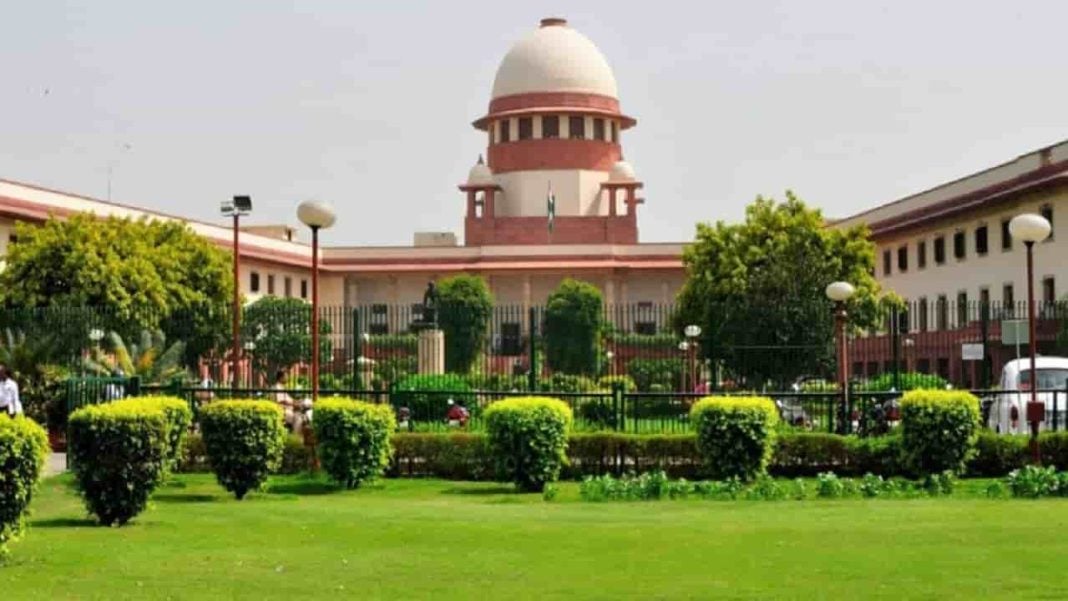
Case Name: Ajay Vijh v. Indian Banks Association & Ors.
Date of Judgment: 07 July 2026
Citation: 2026 INSC 670 | Civil Appeal arising out of SLP (C) Diary No. 10787 of 2024
Bench: Hon’ble Mr. Justice Pamidighantam Sri Narasimha and Hon’ble Mr. Justice Alok Aradhe
Held: The Supreme Court held that banks and the Indian Banks’ Association (IBA) cannot include an advocate’s name in the IBA Caution List merely on allegations of professional negligence or an erroneous legal opinion. The Court ruled that the Caution List under RBI guidelines is intended only for cases involving fraud, dishonesty, criminality or deliberate misconduct affecting the banking system. It further held that issues relating to professional misconduct or negligence of advocates fall exclusively within the disciplinary jurisdiction of the Bar Councils under the Advocates Act, 1961. The Court also held that a writ petition under Article 226 is maintainable against such action as it directly affects an advocate’s fundamental right to practice the profession under Article 19(1)(g) of the Constitution.
Summary: The appellant, an advocate empanelled with Canara Bank, had rendered a legal opinion in 2015 regarding the title of immovable property offered as security for a loan. Subsequently, the Bank alleged that the opinion failed to detect prior sale transactions relating to a portion of the property, thereby exposing the Bank to financial risk. Although the appellant explained that his opinion was based on official records and the search certificate issued by the Sub-Registrar, the Bank removed him from its panel and forwarded his name to the Indian Banks’ Association for inclusion in its Caution List. His name was thereafter circulated among banks with remarks stating that he had given a wrong legal opinion and had acted negligently, exposing the Bank to financial loss.
The Allahabad High Court dismissed the advocate’s writ petition on the ground that the Indian Banks’ Association was not a “State” within the meaning of Article 12 of the Constitution. Challenging that decision, the appellant contended before the Supreme Court that the inclusion of his name in the Caution List had severely damaged his professional reputation and resulted in the loss of empanelment with several banking institutions without any finding of fraud or misconduct and without following the principles of natural justice.
Allowing the appeal, the Supreme Court held that the High Court had adopted an unduly narrow approach while examining the maintainability of the writ petition. The Court observed that Article 226 is not confined only to authorities falling within Article 12 and extends to bodies performing public functions whose actions affect legal or fundamental rights. Since inclusion in the Caution List directly affected the appellant’s professional reputation and his fundamental right to practice law under Article 19(1)(g), the writ petition was clearly maintainable.
On merits, the Court examined the RBI circulars governing the IBA Caution List and held that the regulatory framework was intended only to caution banks against persons involved in fraud or deliberate wrongdoing. It observed that professional negligence or an erroneous legal opinion, in the absence of fraud, collusion or dishonest intent, cannot be equated with fraudulent conduct. While banks are free to discontinue empanelment of advocates if dissatisfied with their services, they have no authority to circulate adverse remarks portraying an advocate as professionally incompetent before all banking institutions through the IBA Caution List.
The Court further held that allegations relating to professional negligence or misconduct of advocates fall exclusively within the disciplinary framework established under the Advocates Act, 1961. It emphasised that the independence of the legal profession is founded upon self-regulation through the Bar Councils, and permitting banks or other institutions to virtually blacklist advocates would undermine that statutory framework. If a bank believes an advocate has committed professional misconduct, its remedy is to approach the appropriate State Bar Council rather than creating a parallel disciplinary mechanism.
Recognising the need for greater accountability within the legal profession, the Supreme Court also directed the Bar Council of India to undertake a comprehensive performance audit of its disciplinary mechanism and to examine issues relating to pendency, transparency and efficiency of disciplinary proceedings. The Court further directed the Bar Council of India to institutionalise Continuing Legal Education (CLE) for advocates and to consider establishing a National Legal Academy for capacity building and professional development of lawyers across the country.
Decision: The Supreme Court allowed the appeal, set aside the judgment of the Allahabad High Court, declared the inclusion of the appellant’s name in the IBA Caution List to be illegal and without jurisdiction, and directed the immediate removal of his name from the Caution List. The Court also directed the Bar Council of India to constitute committees for conducting a performance audit of its disciplinary system and for examining the establishment of a National Legal Academy and a framework for Continuing Legal Education. The matter was directed to be listed on 31 August 2026 for further consideration of those institutional reforms.