Can an Agreement to Sell Be Specifically Enforced Even If It Only Provides for Refund of Earnest Money on Default?
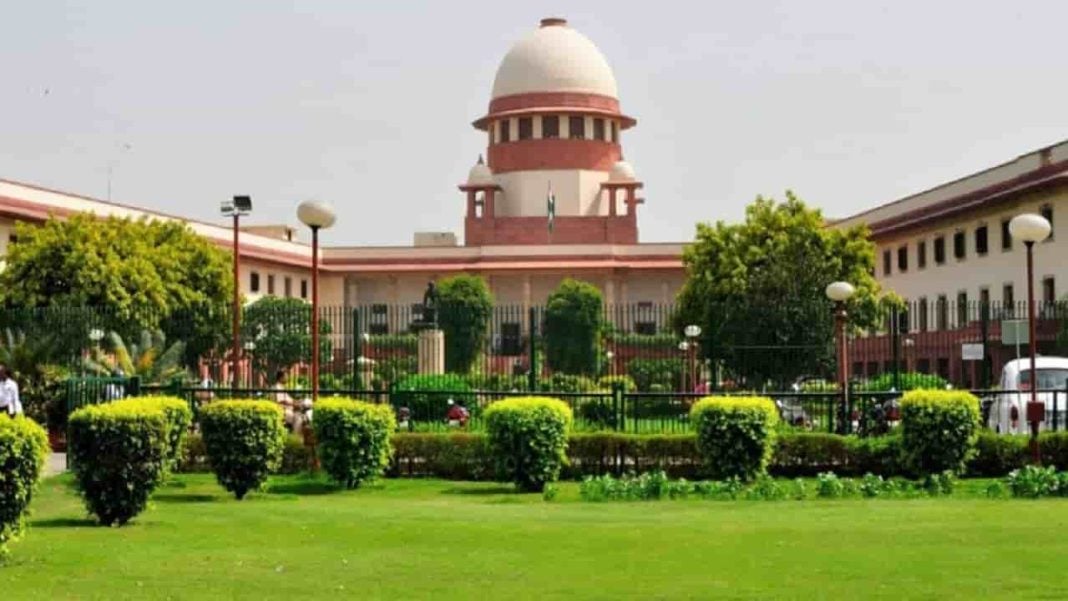
Case Name: Jaspal Singh v. Ashwani Kumar
Date of Judgment: 14 July 2026
Citation: 2026 INSC 700; Civil Appeal Nos. 2448–2449 of 2023
Bench: Justice Alok Aradhe and Justice K.V. Viswanathan
Held: The Supreme Court held that a clause in an agreement to sell providing for refund of earnest money if the sale deed is not executed does not, by itself, bar a decree for specific performance. Such a clause merely secures performance unless the contract expressly gives the defaulting party an option to pay money instead of completing the sale. The Court further reiterated that the High Court, while exercising jurisdiction under Section 100 of the Code of Civil Procedure, cannot reappreciate evidence or disturb concurrent findings of fact in the absence of perversity. Since the agreement, its extensions, and the purchaser’s readiness and willingness had been concurrently proved, the High Court erred in reversing the decree for specific performance.
Summary: The dispute arose from an agreement to sell executed in June 2003 under which the respondent agreed to sell his half share in an industrial property in Jalandhar for ₹12.50 lakh. The appellant paid ₹9 lakh as earnest money, and the parties subsequently extended the date for execution of the sale deed twice. When the respondent failed to appear before the Sub-Registrar despite the purchaser’s readiness to complete the transaction, the appellant instituted a suit seeking specific performance. The respondent denied the transaction and alleged that the documents had been fabricated from blank papers signed in connection with a separate arrangement to facilitate his travel abroad.
The Trial Court accepted that the agreement had been validly executed and that the purchaser had always been ready and willing to perform his obligations. However, it declined specific performance on the ground that the agreement only required refund of the earnest money if the sale could not be completed. The First Appellate Court reversed this finding and decreed specific performance, holding that the absence of an express enforcement clause did not defeat the purchaser’s statutory right. During the pendency of the second appeal before the High Court, the sale deed was executed in favour of the appellant pursuant to the appellate decree. Nevertheless, the High Court restored the Trial Court’s decree by relying on alleged suppression of a collateral financial transaction and other surrounding circumstances.
Allowing the appeals, the Supreme Court held that the High Court had exceeded the limited jurisdiction conferred under Section 100 of the Code of Civil Procedure. Referring to Section 23 of the Specific Relief Act, 1963 and earlier precedents, the Court observed that merely providing for refund of earnest money does not give the vendor an option to avoid the contract unless the agreement expressly provides for such an election. The Court also held that the High Court impermissibly reappreciated evidence despite accepting the concurrent findings regarding execution of the agreement, payment of consideration and the purchaser’s readiness and willingness. It further rejected the High Court’s reliance on the joint ownership of the property, alleged suppression of a separate financial transaction and the extensions granted for execution of the sale deed, holding that none of these circumstances justified interference with concurrent findings of fact.
Decision: The Supreme Court allowed the appeals, set aside the Punjab and Haryana High Court’s judgment dated 8 February 2019 and its order dismissing the review petition, and restored the First Appellate Court’s decree granting specific performance of the agreement to sell. The Court held that the earnest money clause did not preclude enforcement of the contract and that the High Court had acted beyond the permissible scope of a second appeal by reopening settled findings of fact without recording any finding of perversity. No order as to costs was passed.