Can the Supreme Court Modify a Motor Accident Compensation Judgment to Correct Apportionment of Compensation?
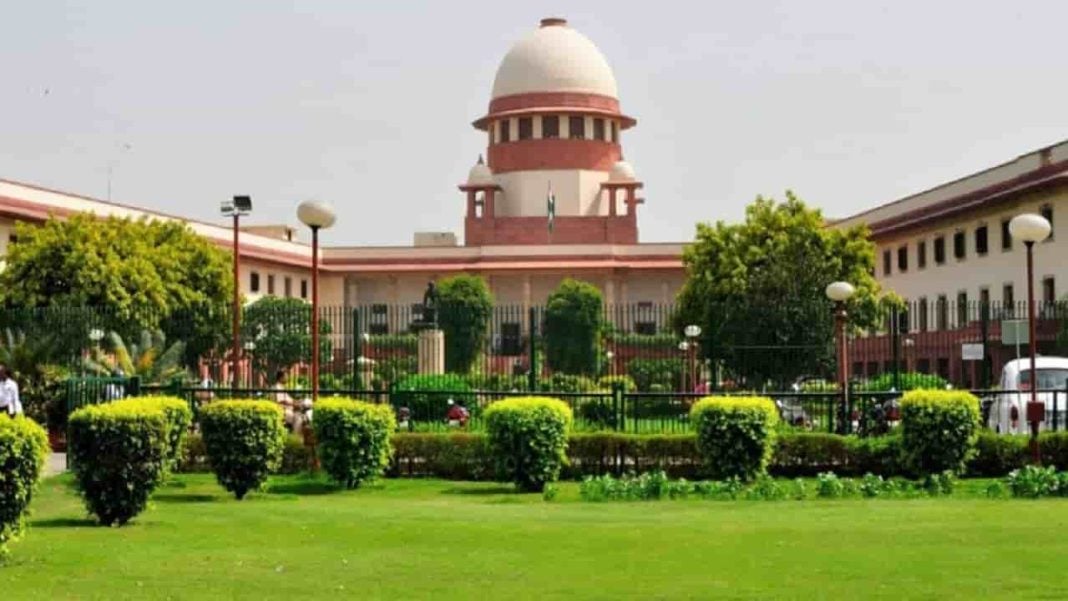
Case Name: M. Sabitha & Ors. v. Brahma Swamulu & Anr.
Date of Judgment: 13 July 2026
Citation: 2026 INSC 704; Miscellaneous Application No. 748 of 2026 in Civil Appeal No. 5706 of 2025
Bench: Justice J.B. Pardiwala and Justice K. Vinod Chandran
Held: The Supreme Court allowed a miscellaneous application seeking correction of its earlier judgment, which had enhanced the compensation payable in a motor accident claim but had inadvertently omitted to apportion the enhanced amount among the claimants. The Court held that such an omission required rectification, particularly since one of the original claimants, the deceased’s mother, had passed away during the pendency of the proceedings. It clarified the manner in which the enhanced compensation would be distributed among the surviving claimants and the legal representatives of the deceased claimant. The Court also directed release of the entire compensation as the deceased’s children had attained majority.
Summary: The miscellaneous application was filed by the claimants in a motor accident compensation case after the Supreme Court had enhanced the compensation awarded in the appeal. While increasing the total compensation from ₹17,42,875 to ₹36,38,750, the earlier judgment had inadvertently failed to specify how the enhanced amount was to be apportioned among the widow, two children and the mother of the deceased. During the pendency of the proceedings before the Supreme Court, the mother had also passed away, giving rise to further issues regarding distribution of her share among her legal heirs.
The applicants also pointed out that the High Court had earlier permitted only 50% of the compensation to be withdrawn and that both children of the deceased had since attained majority. Considering these circumstances, the Supreme Court examined the apportionment made by the High Court and adopted the same proportion while distributing the enhanced compensation. The Court allocated ₹15,58,750 to the widow, ₹8,20,000 each to the two children, and ₹4,40,000 to the deceased’s mother. Since the mother had already withdrawn ₹2,00,000 during her lifetime, only the enhanced portion of ₹2,40,000 remained to be distributed among her legal representatives.
The Court directed that out of the mother’s enhanced share, ₹20,000 each should be paid to the two grandchildren, being the children of her predeceased son, while the remaining ₹2,00,000 should be equally divided among her surviving five children at ₹40,000 each. The Court further clarified that the two children of the deceased would receive an additional ₹20,000 each from their grandmother’s estate. Considering that the accident had occurred in 2010 and both children had attained majority, the Court directed that the entire compensation amount be released to the beneficiaries without any further restriction.
Decision: The Supreme Court allowed the miscellaneous application and modified its earlier judgment by specifying the apportionment of the enhanced compensation among the claimants and the legal representatives of the deceased claimant. It directed the insurer to deposit the balance amounts with interest at 7% per annum within two months, as ordered by the High Court. The Court also ordered that the entire compensation be disbursed to the widow, the two children, and the legal representatives of the deceased mother, bringing the matter to a final conclusion.