Arbitration Award With Patent Error Can Be Modified to Do Complete Justice Instead of Sending Parties Back to Fresh Litigation
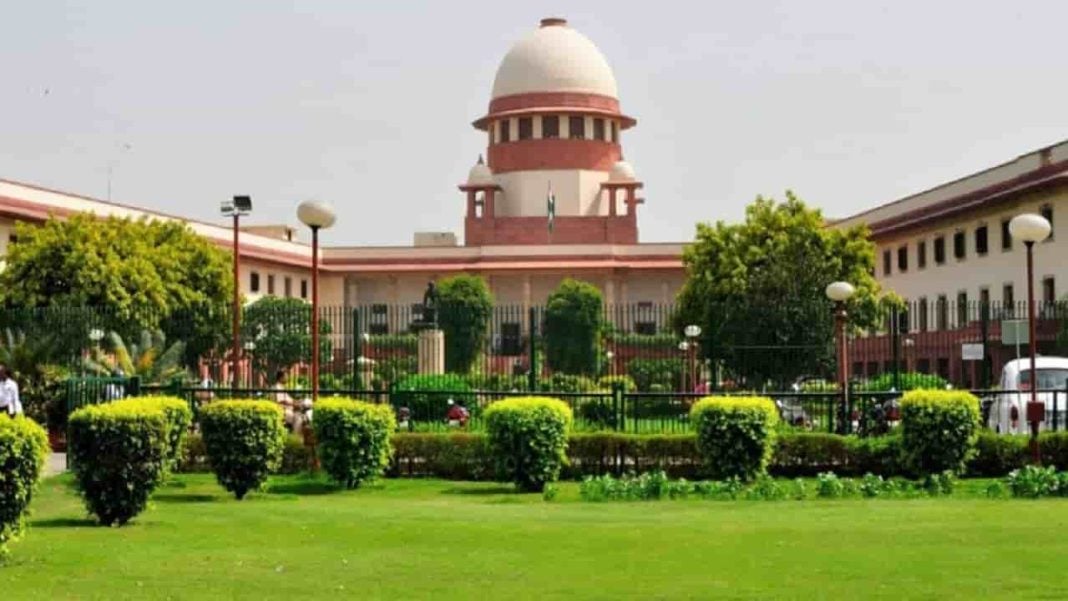
Case Name: Bhupesh Bhayana and another v. Kunal Seth and another
Citation: 2026 INSC 546
Date of Judgment/Order: 26 May 2026
Bench: Justice Sanjay Kumar and Justice K. Vinod Chandran
Held: The Supreme Court held that where an arbitral award suffers from patent illegality because the arbitrator has wrongly applied clear contractual clauses, the Court is not always bound to set aside the entire award and send the parties back to fresh proceedings. If the dispute has already remained pending for many years and setting aside the award would only restart litigation, the Court may, within the limits recognised in Gayatri Balasamy, modify the award to bring finality and do complete justice. The Court also clarified that when a contract itself fixes a daily penalty for delay, the party claiming that contractual penalty need not separately prove actual loss for that agreed delay period, because the contract has already treated delay as compensable.
Summary: The dispute arose from a reconstruction agreement dated 09.04.2010 between the property owners and the builder. The builder was required to reconstruct the owners’ property and, in return, was to retain the second floor without roof rights, besides paying INR 64,00,000 to the owners. Clause 7 of the agreement fixed the construction period as 12 months from handing over of vacant land, with a further two-month grace period, and provided a penalty of INR 10,000 per day for delay. Clause 13 separately provided that if the builder committed breach, the earnest money and compensation paid by him would stand forfeited. The builder paid INR 45,00,000 but abandoned construction in August 2011 after only partial work. The owners terminated the agreement on 11.11.2011. The arbitrator found that the builder had breached the agreement, but instead of allowing both contractual consequences, he awarded delay penalty to the owners under Clause 7 and directed refund of the builder’s INR 45,00,000 along with construction cost, holding that forfeiture under Clause 13 would amount to double punishment. The Supreme Court held that this interpretation was legally wrong because Clause 7 and Clause 13 dealt with different consequences: one compensated delay, and the other dealt with breach. However, since the owners had not filed a Section 34 challenge against the refund/forfeiture part of the award, that part had attained finality and could not be reopened.
Decision: The Supreme Court disposed of the appeals by modifying the financial outcome instead of setting aside the award and sending the parties back to another round of proceedings. The Court held that the owners were entitled to delay penalty only from 09.09.2011, when the contractual period including grace period expired, until 11.11.2011, when the owners terminated the agreement. At INR 10,000 per day for 63 days, the owners were held entitled to INR 6,30,000. The builder’s entitlement to INR 81,92,400, comprising refund of INR 45,00,000 and construction cost of INR 36,92,400, was left undisturbed because the owners had not challenged that part of the award. After deducting INR 6,30,000 payable to the owners, the net amount payable to the builder was fixed at INR 75,62,400. Since INR 50,00,000 had already been disbursed during the Supreme Court proceedings, the balance payable by the owners to the builder was fixed at INR 25,62,400. No interest was awarded to either side, the parties were left to bear their own costs, and all pending applications were disposed of.