Extra-Judicial Confession Cannot Sustain Conviction Without Corroboration: Supreme Court Acquits Man After 16 Years, Finds ‘Last-Seen’ Chain and Police Recovery Unreliable
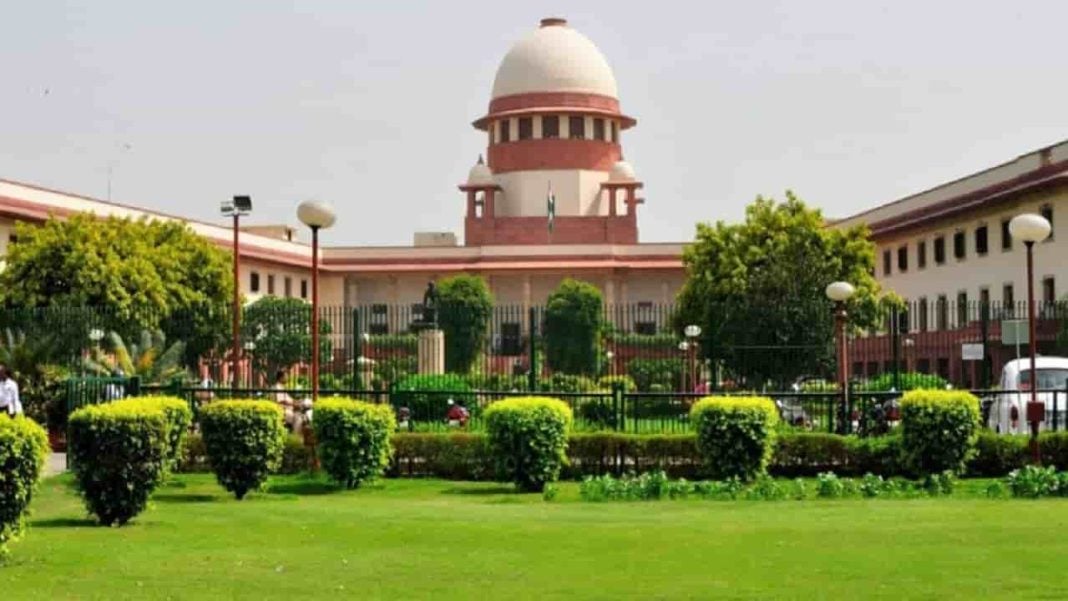
Case Name: Sahab Singh alias Sat Pal v. State of Haryana
Date of Judgment: 2 September 2026
Citation: 2026 INSC 945
Bench: Justice Sanjay Kumar and Justice Sanjeev Sachdeva
Held: The Supreme Court held that an extra-judicial confession is inherently a weak piece of evidence and cannot, without independent and cogent corroboration, constitute the sole basis of conviction. Where the prosecution case rests entirely on circumstantial evidence, every circumstance must be conclusively established and the resulting chain must point only towards the guilt of the accused. A disclosure statement is admissible under Section 27 of the Indian Evidence Act, 1872 only to the extent that it leads to the discovery of a previously unknown fact. Identification of a place already known to the police, or purported recovery of a body discovered before the disclosure statement was recorded, cannot be treated as a discovery under Section 27. The prosecution must first establish foundational facts and cannot shift the burden upon the accused merely because semen was found on his underwear, particularly when no DNA examination was conducted to connect it with the biological material recovered from the deceased.
Summary: The appellant, Sahab Singh alias Sat Pal, was convicted under Sections 302, 201 and 377 of the Indian Penal Code for the sexual assault and murder of a six-year-old child whose body was recovered from a village well. The prosecution had no direct evidence and relied principally upon the theory that the appellant was last seen with the child, an alleged extra-judicial confession made before the village Sarpanch, a disclosure statement identifying the places connected with the offence, the recovery of an open packet of namkeen from the spot, and forensic evidence showing the presence of semen on the appellant’s underwear and in the rectal swab of the deceased. The Trial Court convicted the appellant and sentenced him to life imprisonment, while the Punjab and Haryana High Court affirmed the conviction.
The Supreme Court found several fundamental breaks in the prosecution’s chain of circumstances. The shopkeeper from whom the appellant allegedly purchased namkeen and cold tablets did not state that the deceased child was accompanying him. Another witness mentioned the child’s presence only during cross-examination, although this crucial fact was absent from his earlier police statement, making it an apparent improvement intended to support the prosecution case. The Court also noted that the packet of namkeen was of a commonly available brand sold in thousands across the village, and no evidence connected the recovered packet with the one allegedly purchased by the appellant. Significantly, the packet had been seized on 12 March 2007, whereas the prosecution’s story regarding its purchase allegedly emerged only through the appellant’s confession on 14 March 2007. The Court observed that the seizure appeared to have been used to create a link supporting the last-seen theory.
The alleged extra-judicial confession was also found doubtful. There was no plausible reason why the appellant would confess to the Sarpanch when neither he nor the deceased shared any special relationship or confidence with him. The prosecution witnesses further stated that the appellant had been brought by the police to the shop on 12 March 2007, two days before he was supposedly produced before the police following his confession on 14 March 2007. This was not a minor discrepancy but a contradiction striking at the foundation of the prosecution’s version.
The Supreme Court found the High Court’s treatment of the disclosure statement factually untenable. The High Court had repeatedly observed that the appellant’s disclosure led to the recovery of the child’s body, although the body had already been recovered on 12 March 2007 and the disclosure statement was recorded only on 14 March 2007. The places subsequently identified by the appellant were already known to the police and had been included in a site plan prepared two days earlier. Consequently, no new fact was discovered and the statement was inadmissible under Section 27 of the Evidence Act.
The forensic evidence also failed to connect the appellant with the offence. Although semen was detected on the appellant’s underwear and in the rectal swab taken from the deceased, no DNA test was conducted to establish that the samples had a common source. In the absence of such foundational evidence, the Trial Court and High Court could not presume that the samples matched or require the appellant to explain their presence. The prosecution was required to establish the connection affirmatively and could not reverse the burden of proof.
The Court concluded that the prosecution failed to prove that the deceased was last seen with the appellant, that the appellant was present at the place of occurrence, or that he had any demonstrable connection with the crime. Since the circumstances did not form a complete and unbroken chain, the appellant was entitled to the benefit of doubt.
Decision: The Supreme Court allowed the appeal and set aside the Punjab and Haryana High Court judgment dated 18 October 2022, as well as the Trial Court’s judgment of conviction dated 24 April 2010 and order on sentence dated 26 April 2010. The appellant, who had undergone more than sixteen years and seven months of incarceration, was acquitted by extending the benefit of doubt. The Court reaffirmed its earlier direction dated 29 July 2026 ordering his immediate release unless his continued custody was lawfully required in any other case.