Long Non-Payment of Salaries and Retiral Dues Violates Dignity; Supreme Court Accepts Time-Bound Settlement Framework for Bihar Corporation Employees
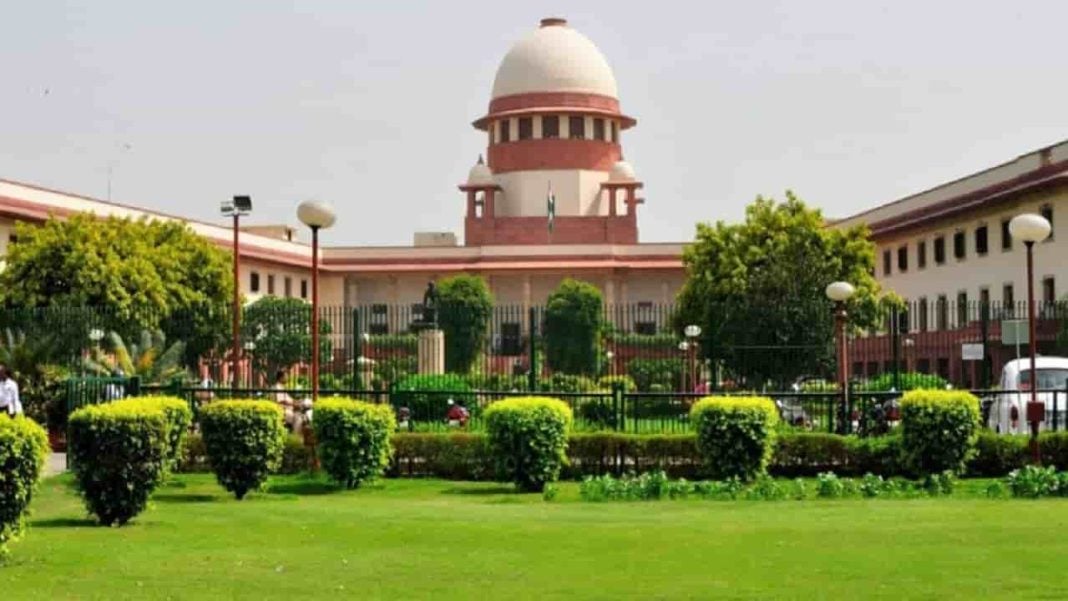
Case Name: Bihar State Ardh Sarkari Arapjati Karamchari Maha Sangh and Ors. v. State of Bihar and Ors.
Citation: 2026 INSC 607
Date of Judgment/Order: May 29, 2026
Bench: Justice Vikram Nath and Justice Sandeep Mehta
Held: The Supreme Court held that prolonged non-payment of salaries, retiral dues and lawful emoluments to employees of State-owned Corporations is not merely an inter-State financial adjustment dispute, but a serious constitutional and human rights concern affecting livelihood and dignity under Article 21. The Court substantially accepted the final report of the Committee headed by Justice Dinesh Maheshwari, Judge (Retd.), Supreme Court of India, and approved the framework for apportionment of liabilities between Bihar and Jharkhand, verification of employees/legal heirs, and disbursal of lawful dues. The Court further held that subsequent Pay Revision Commission benefits cannot be claimed unless such revisions were formally adopted by the concerned Corporation before it became defunct, while provident fund dues remain protected statutory retiral benefits that must be paid through a structured mechanism.
Summary: The proceedings concerned thousands of employees of five State-owned Corporations, namely Bihar State Construction Corporation Ltd., Bihar State Industrial Development Corporation Ltd., Bihar State Electronic Development Corporation Ltd., Bihar State Forest Development Corporation Ltd., and Bihar State Panchayati Raj Financial Corporation Ltd. After the bifurcation of Bihar and creation of Jharkhand under the Bihar Reorganisation Act, 2000, apportionment of assets and liabilities remained unresolved for nearly two and a half decades, resulting in prolonged non-payment of salaries, retiral dues and other admissible benefits. The Court noted grave humanitarian consequences, including deprivation, destitution, alleged starvation deaths and suicides. A Committee headed by Justice Dinesh Maheshwari was constituted to fix proportional liabilities, identify employees and legal heirs, determine service tenures, and examine entitlement to salary and retiral benefits. The Committee held 25 meetings and submitted a final report dated April 30, 2026. Its data showed that out of 2,274 verified employees/workmen, lawful dues had already been disbursed to 2,017, while 24 cases awaited document verification, 231 employees remained untraceable, and 2 payments were in process.
Decision: The Supreme Court accepted substantial parts of the Committee’s final report. It directed that inter se liability of Bihar and Jharkhand would stand resolved in terms of the allocation and computation reflected in the Union of India’s affidavit dated December 22, 2023 and the Committee’s report, and both States would remain bound to discharge their respective liabilities. It held that Pay Revision Commission benefits would be confined only to those revisions formally adopted by the concerned Corporations before they became defunct. It further directed that Employees’ Provident Fund contributions and allied statutory benefits be computed and disbursed in accordance with the structured mechanism recommended by the Committee. However, the Court kept open residual issues relating to remaining employee/legal heir verification, entitlement of daily-wage workmen and deceased employees’ families to lump-sum compensation or other support, and interest on delayed payments. The matter was directed to be listed as part-heard on September 1, 2026, with Bihar and Jharkhand required to file compliance affidavits.