Employer Cannot Use Its Own Wrongful Discharge to Deny Career Progression for Missing ACRs: Supreme Court Grants Selection and Super Time Scales to Judicial Officer
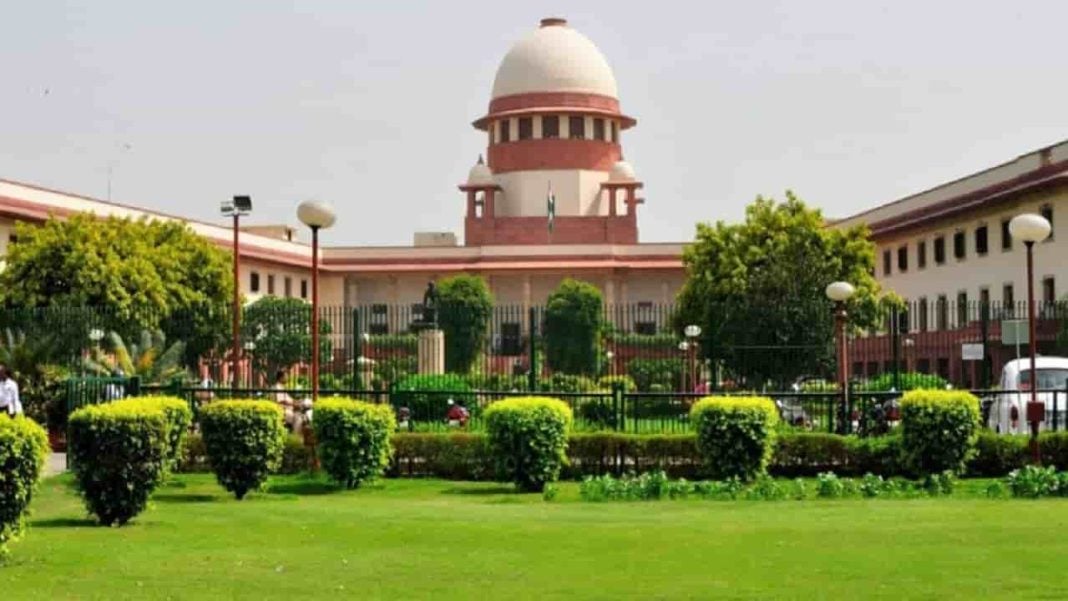
Case Name: High Court of Judicature for Rajasthan v. Abhay Jain
Date of Judgment: 29 July 2026
Citation: 2026 INSC 762
Bench: Justice J.B. Pardiwala and Justice Manoj Misra
Held: The Supreme Court held that an employer cannot rely upon the absence of ACRs caused by its own wrongful action to deny an employee Selection Scale, Super Time Scale, promotion or other consequential career benefits. Where an employee was unlawfully kept out of service and consequently could not earn the requisite number of ACRs, his eligibility must be assessed on the basis of the remaining valid ACRs. The Court further reiterated that an uncommunicated ACR cannot be used to the detriment of an employee for promotion, pay scale or career advancement. Since Abhay Jain’s discharge had earlier been quashed and he had been reinstated with continuity of service, seniority and consequential benefits, the missing ACRs for the period of wrongful discharge could not be held against him.
Summary: Abhay Jain was appointed to the District Judge Cadre of the Rajasthan Judicial Service in 2013 and discharged in 2016. In 2022, the Supreme Court quashed the discharge, holding it unsustainable, and directed his reinstatement with continuity of service, seniority, all consequential benefits and 50% back wages. After reinstatement, however, the Rajasthan High Court faced difficulty while considering him for Selection Scale and Super Time Scale because six of the seven preceding years had no ACRs—the direct consequence of his having been kept out of service from 2016 to 2022.
The Rajasthan High Court’s Full Court subsequently found him unsuitable for Selection Scale and Super Time Scale, referring to the ACR criteria contained in Rules 49 and 50 of the Rajasthan Judicial Service Rules, 2010 and its 2011 Resolution. The applicable criteria ordinarily required specified numbers of “Good”, “Very Good” or “Outstanding” entries over the preceding seven years. The central question before the Supreme Court therefore became whether the consequential benefits already awarded could include these higher scales despite the absence of the prescribed number of ACRs.
The Supreme Court held that the reason for non-availability of the ACRs was decisive. Jain did not fail to earn the reports through any default of his own; they did not exist because the High Court had wrongfully removed him from service. Relying on K.V. Jankiraman, Central Bank of India v. Dragendra Singh Jadon, Prabhu Dayal Khandelwal and R.K. Jibanlata Devi, the Court held that an employer cannot create an impediment through an unlawful act and then use the resulting deficiency to deny an employee benefits that would otherwise have accrued. His case therefore had to be judged from the valid available service record.
The Court also excluded the 2015 ACR, since it had not been communicated and the earlier Supreme Court judgment had already held its non-communication arbitrary. It therefore assessed Jain on his valid ACRs for 2013 and 2014, in which he had been graded “Very Good”, “Very Good” and “Good”, with no integrity issue. On that record, and giving full effect to the earlier order granting continuity of service, the Court held him entitled to Selection Scale from the date he completed five years of service and to Super Time Scale after completing the requisite three years notionally in Selection Scale.
Decision: The Supreme Court held that Abhay Jain is entitled to Selection Scale and Super Time Scale. The Rajasthan High Court was directed to re-fix his pay, revise all consequential benefits and disburse the resulting arrears within three months. The arrears were to be calculated consistently with the earlier 2022 judgment limiting his back wages for the period of wrongful exclusion to 50%.