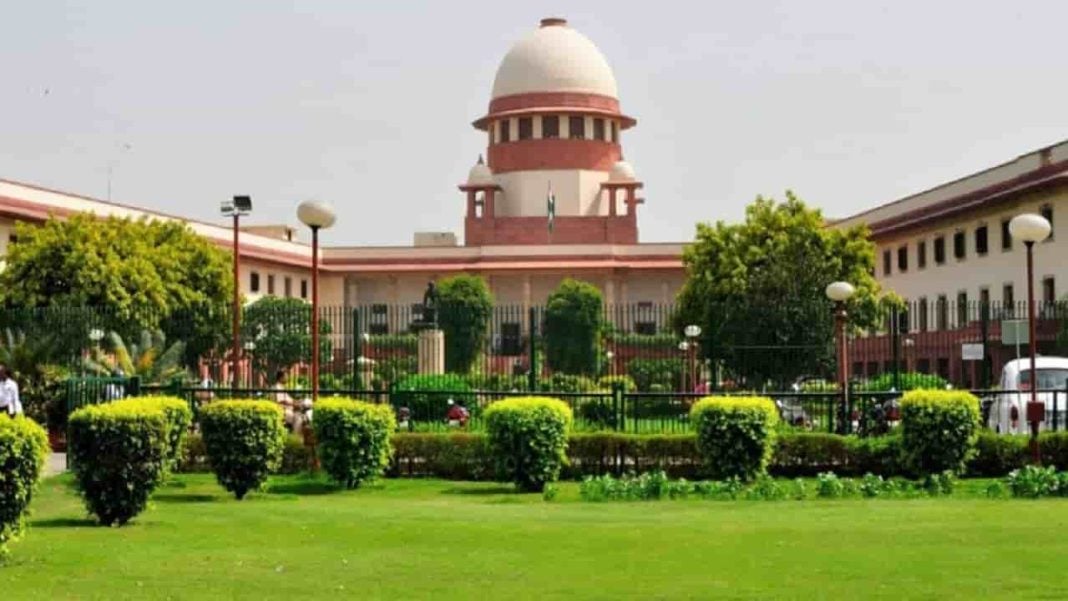
Case Name: Jagdish Prasad and Others v. P.M. Manoj Kumar and Others
Citation: 2026 INSC 572
Date of Judgment/Order: May 27, 2026
Bench: Justice Pankaj Mithal and Justice S.V.N. Bhatti
Held: The Supreme Court held that promotions must be considered under the recruitment rules in force on the date when the promotion process is actually considered or initiated, and not under the old rules merely because the vacancies arose earlier. The Court applied the later binding position in State of Himachal Pradesh v. Raj Kumar, which overruled the earlier broad principle in Y.V. Rangaiah that old vacancies must always be filled under old rules. The Court further held that ad hoc promotions made subject to pending litigation do not create any vested right, seniority right, or completed transaction in favour of the ad hoc promotees, especially when the promotion order itself states that the promotion is temporary and subject to the result of the case.
Summary: The dispute concerned promotion from Head Constable to Assistant Sub-Inspector (Executive) in the Andaman & Nicobar Police Department. Earlier rules had introduced a 66-2/3% selection quota requiring matriculation and a test, while 33-1/3% posts were to be filled on seniority-cum-fitness. The appellants challenged this system, seeking 100% promotion by seniority-cum-fitness without the matriculation requirement. During litigation, the Administration framed the 2016 Rules, which abolished the selection test and restored promotion on a 100% non-selection seniority-cum-fitness basis. The High Court directed that earlier accumulated vacancies should be filled under the rules prevailing when those vacancies arose, relying on Marripati Nagaraja. The Supreme Court held that this approach was legally incorrect after Raj Kumar, because there is no universal rule that vacancies must be filled under the rules existing on the date of vacancy. The Court also found that the 2014 promotions relied upon by the respondents were expressly ad hoc, for a limited period, liable to reversion, and subject to the outcome of the pending OA; hence, they could not be treated as final or protected promotions.
Decision: The Supreme Court allowed the civil appeal, set aside the Calcutta High Court judgment dated August 10, 2016, and held that the 2016 Rules govern promotion to the post of ASI-Executive. The Court noted that promotions already made pursuant to the 2016 circular and procedure were not the subject matter of the original application, and directed that existing vacancies of ASI-Executive be filled under the 2016 Rules within two months. Pending applications, if any, were disposed of accordingly.