Rule 23 Suspension Bar Applies Only to Compassionate Financial Assistance, Not Compassionate Appointment: Supreme Court
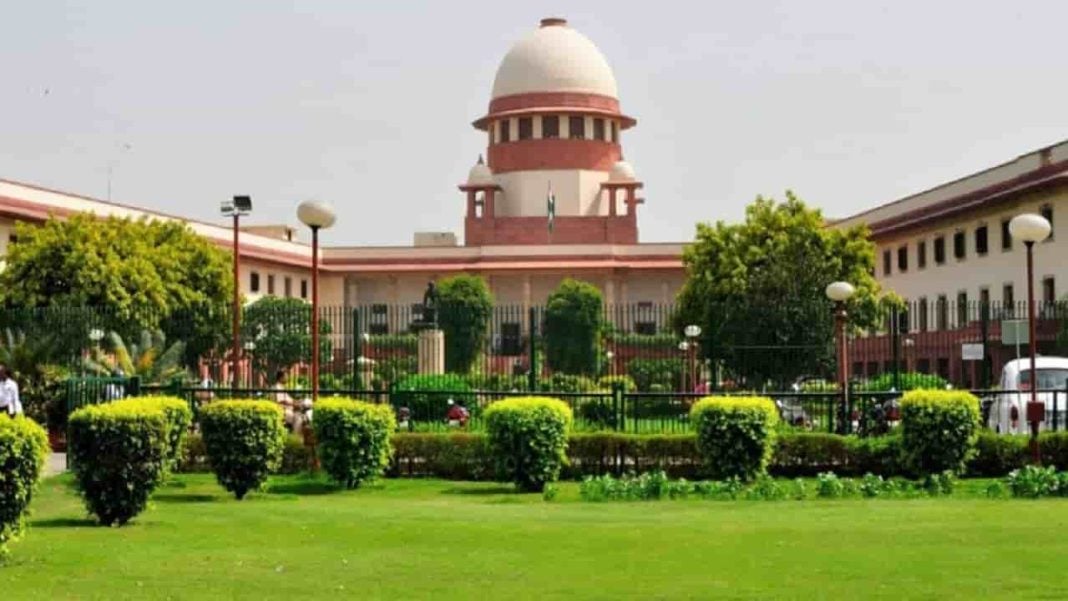
Case Name: Atul Chauhan v. State of Haryana & Ors.
Citation: 2026 INSC 640
Date of Judgment/Order: 11 June 2026
Bench: Sanjay Karol, J. and Nongmeikapam Kotiswar Singh, J.
Held: The Supreme Court held that Rule 23(1) of the Haryana Civil Services (Compassionate Financial Assistance or Appointment) Rules, 2019 applies only to compassionate financial assistance and cannot be extended to claims for compassionate appointment. The Court held that the Rules of 2019 consciously maintain a structural distinction between compassionate financial assistance and compassionate appointment, with separate definitions, eligibility provisions, procedure and competent authorities. Therefore, a claim for compassionate appointment cannot be kept in abeyance merely by invoking Rule 23(1), even where a family member is facing or has faced criminal proceedings relating to the death of the Government employee. However, the Court upheld the constitutional validity of Rule 23(1), holding that it is preventive and regulatory in nature and has a rational nexus with the object of protecting compassionate financial assistance from being received by a person accused of murdering or abetting the murder of the deceased employee.
Summary: The appellant’s father, a Government teacher in Haryana, died in 2021 in suspicious circumstances, and the appellant’s mother was prosecuted under Section 302 IPC on allegations of conspiracy in his murder. The appellant sought compassionate appointment under the Rules of 2019. The authorities kept the claim in abeyance and later declined it by relying on Rule 23(1), which suspends compassionate financial assistance where an eligible family member is charged with murdering or abetting the murder of the Government employee. The mother was acquitted by the trial court on benefit of doubt, but an appeal against acquittal remained pending before the Punjab and Haryana High Court. The High Court upheld Rule 23(1), treated the pending criminal appeal as continuation of trial, and held that the appellant’s claim was premature because the widow’s claim had priority. Reversing this approach, the Supreme Court held that Rule 23(1), by its plain language, heading and placement, refers only to compassionate financial assistance and not to compassionate appointment. The Court also held that the sequential priority structure under Rule 5(1)(f) applies to financial assistance, whereas Rule 5(1)(g), governing compassionate appointment, contains no similar cascading “failing” language; therefore, the appellant’s claim could not be automatically barred merely because the widow was alive or because her claim had not been conclusively determined, especially when she had stated that she did not intend to claim compassionate appointment.
Decision: The Supreme Court allowed the civil appeal and set aside the judgment dated 12.05.2025 passed by the Punjab and Haryana High Court in CWP No. 13053 of 2025. The respondents were directed to consider and decide the appellant’s claim for compassionate appointment on its own merits within three months, strictly in accordance with the eligibility conditions, procedures and requirements under the Rules of 2019, uninfluenced by Rule 23(1), which has no application to compassionate appointment. The Court clarified that no opinion was expressed on the merits of the pending criminal appeal against the appellant’s mother’s acquittal, and that the direction to consider the claim does not confer any absolute right to appointment. The Court also observed that the Rules of 2019 contain an anomaly because the lesser relief of financial assistance carries an express suspension clause while the greater relief of appointment does not, and stated that it is desirable for the State of Haryana to address this legislative lacuna by appropriate amendment. Pending applications were disposed of.