No Appeal Lies Under Section 374 CrPC Against First-Time Conviction by Sessions Court While Reversing Acquittal; Remedy Is Revision: Supreme Court
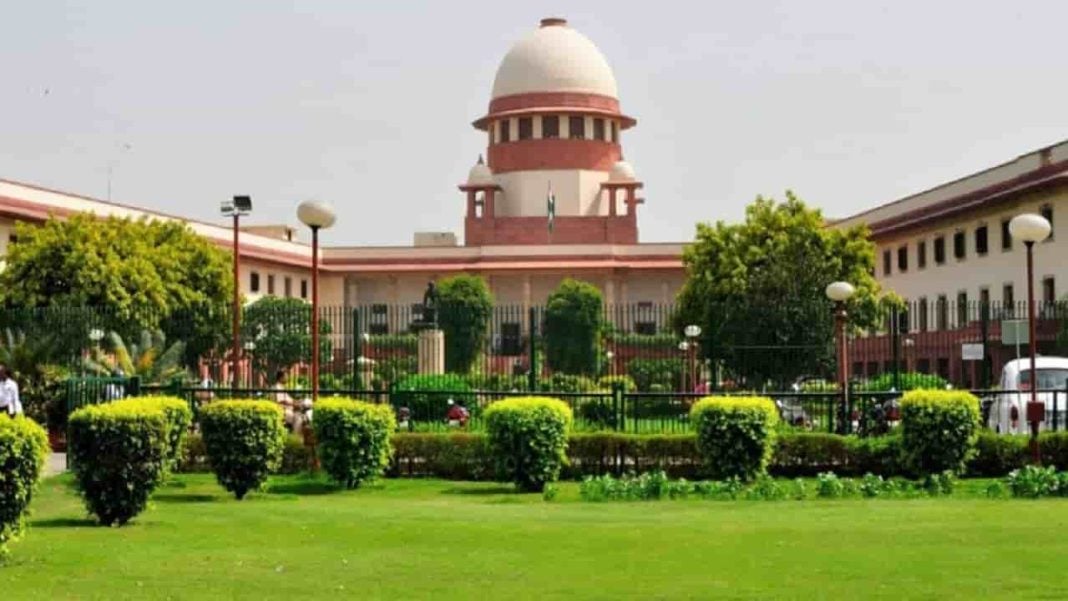
Case Name: Vishnu Kumar Gupta v. State of Madhya Pradesh & Anr.
Date of Judgment: 30 July 2026
Citation: 2026 INSC 770
Bench: Justice Aravind Kumar and Justice Prasanna B. Varale
Held: The Supreme Court held that an appeal under Section 374 CrPC, corresponding to Section 415 BNSS, is not maintainable against a conviction recorded by a Sessions Court while exercising appellate jurisdiction and reversing an acquittal passed by the Trial Court. The expression “convicted on a trial held by” in Section 374 refers to a conviction by the court which itself conducted the trial; a Sessions Court deciding an appeal against acquittal exercises appellate and not trial jurisdiction. Neither the principle that an appeal is a continuation of the original proceedings nor the doctrine of merger changes the character of that jurisdiction. The statutory remedy in such a case is therefore revision under Sections 397 read with 401 CrPC, corresponding to Sections 438 read with 442 BNSS. However, because such an accused has never had a statutory appeal against his first conviction, the High Court should exercise revisional jurisdiction more liberally and carefully, and can scrutinise the evidentiary record and, where legally warranted, set aside the conviction and acquit the accused.
Summary: The appellant and his parents were prosecuted for offences including Section 498-A IPC and Sections 3 and 4 of the Dowry Prohibition Act. The Judicial Magistrate First Class, Bhind, acquitted all the accused on 20 December 2024. On the complainant’s appeal, however, the Seventh Additional Sessions Judge reversed the acquittal insofar as the appellant was concerned and convicted him under Section 498-A IPC and Section 4 of the Dowry Prohibition Act, sentencing him to three years and two years’ rigorous imprisonment respectively, with the sentences directed to run separately.
The appellant then approached the Madhya Pradesh High Court by an appeal under Section 415 BNSS/Section 374 CrPC. The High Court dismissed it as not maintainable, holding that the Code does not provide a further appeal against a conviction recorded by a Sessions Court while deciding an appeal against acquittal and that the appropriate remedy was revision. The Supreme Court was therefore called upon to decide whether a person acquitted at trial but convicted for the first time by the Sessions Court in appellate jurisdiction nevertheless had a statutory appeal to the High Court.
The Supreme Court focused on the words “on a trial held by” appearing throughout Section 374. It held that these words contemplate the court which itself conducted the trial from its commencement to conclusion. A Sessions Judge hearing an appeal against acquittal does not conduct that trial but exercises a separate appellate jurisdiction. Therefore, even though an appeal is legally regarded as a continuation of the original proceedings and the trial court judgment ultimately merges into the appellate judgment, neither doctrine converts the appellate court into the court that “held” the trial. The Court consequently overruled the contrary view of the Himachal Pradesh High Court in Arun Sharma v. State of Himachal Pradesh.
Importantly, the Court recognised the practical disadvantage faced by an accused whose first conviction itself occurs in an appeal against acquittal. It clarified that revision is not confined to abstract jurisdictional errors: the High Court may examine the entire record to determine whether the conviction suffers from perversity, misreading of evidence, patent illegality or miscarriage of justice. It may also set aside an unsustainable conviction and acquit the accused. Such revisions stand on a different footing from revisions against concurrent convictions and warrant a more liberal and careful exercise of revisional powers.
Decision: The Supreme Court dismissed the appeal and upheld the conclusion that no appeal under Section 374 CrPC/Section 415 BNSS lies against a conviction recorded by the Sessions Court while reversing a trial-court acquittal. It granted Vishnu Kumar Gupta liberty to approach the High Court by way of criminal revision under Sections 397 and 401 CrPC/the corresponding BNSS provisions against the Sessions Court judgment.