Accused Cannot Be Made to Prove Innocence: Supreme Court Restores Section 409 IPC Acquittal, Faults Missing Records, Doubtful Seizure and Absence of Sentencing Hearing
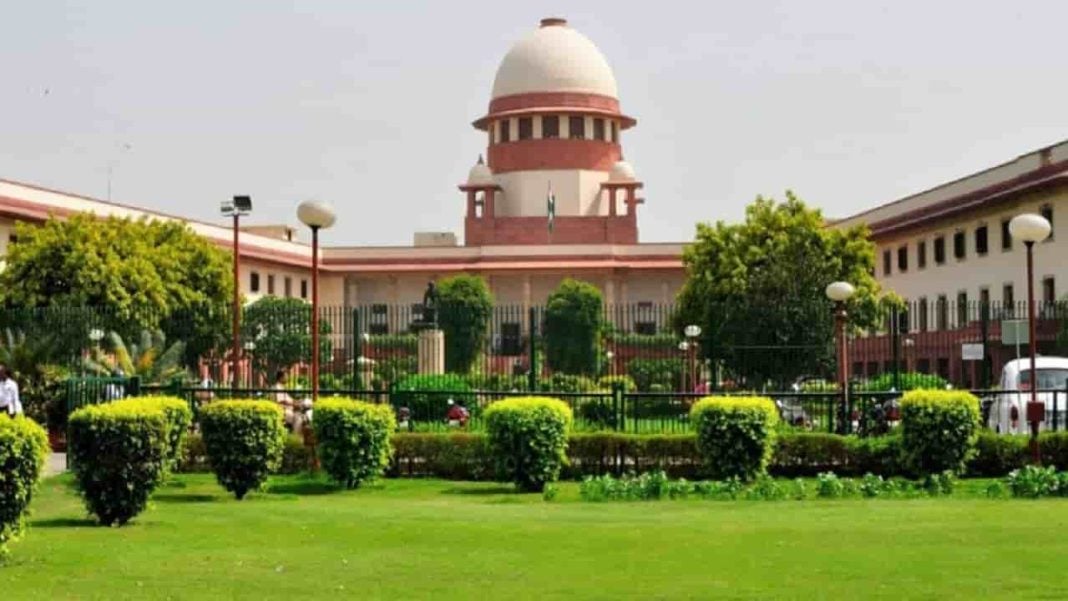
Case Name: Ramkrushna Prahllad Dongardive v. The State of Maharashtra.
Date of Judgment: 8 October 2026.
Citation: 2026 INSC 1099.
Bench: Justice Ujjal Bhuyan and Justice Atul S. Chandurkar.
Held: The Supreme Court held that conviction for criminal breach of trust under Section 409 IPC requires proof of entrustment or dominion over property and dishonest misappropriation, conversion, use or disposal. The prosecution cannot overcome deficiencies in that proof by requiring the accused to establish innocence or explain circumstances that have not themselves been reliably proved. Restoring the appellant’s acquittal, the Court found that essential financial records were withheld, the alleged seizure suffered from serious evidentiary infirmities, and dishonest intention was not established. It also reiterated that an appellate court convicting an accused for the first time after reversing an acquittal must hear the accused on sentence before imposing punishment.
Summary: The Supreme Court set aside a Bombay High Court judgment that had reversed the acquittal of a Cashier-cum-Counter Clerk employed in the Telephone Department at Aurangabad. The prosecution alleged that, between 1 July and 9 October 1993, Ramkrushna Prahllad Dongardive collected ₹8,73,737 in telephone charges, deposited ₹3,88,035 belatedly and failed to deposit ₹4,75,702. The trial court acquitted him, but the High Court convicted him under Section 409 IPC and imposed one year’s rigorous imprisonment and a fine of ₹5,000.
Examining the evidence, the Supreme Court found that the prosecution had not produced the original cashbook, daily register, audit report and other records necessary to establish collection and subsequent non-deposit of the alleged amounts. The investigating officer admitted that these documents had not been supplied despite his requests to departmental officials. The appellant had also repeatedly sought production of the daily cash handover register and the receipt-book stock register in support of his defence that the collections had been handed over.
The Court upheld the trial court’s adverse inference under Section 114(g) of the Indian Evidence Act against the prosecution for withholding relevant departmental records. It rejected the High Court’s reasoning that the appellant should have produced the registers to prove that he deposited or handed over the money. Those records were in the Department’s custody, and their absence could not justify shifting the prosecution’s burden onto the accused.
The documents actually produced did not repair that evidentiary gap. No documentary record established that the receipt books relied upon had been supplied to the appellant. A ten-page printed statement of alleged payments and outstanding amounts bore neither his signature nor his handwriting, and there was nothing connecting him with its figures. The prosecution therefore failed to establish the necessary chain from receipt of money to short deposit or non-deposit.
The Court also examined the alleged seizure of 46 documentary articles from the appellant’s residence. Both seizure witnesses failed to support the prosecution and stated that police had obtained their signatures in circumstances unconnected with witnessing the search. The seizure documentation contained further shortcomings, including the absence of the appellant’s signature and an unexplained failure to furnish him the list of seized articles. In the circumstances, the investigating officer’s testimony alone did not sufficiently establish the disputed seizure.
Importantly, the Court clarified that non-compliance with Section 100 Cr.P.C. does not automatically invalidate a seizure or vitiate the prosecution. Such irregularities affect the assessment of evidence and must be considered alongside prejudice and other deficiencies. Here, their cumulative effect strengthened the doubts already arising from the missing financial records.
Reaffirming the principles governing appeals against acquittal, the Court emphasised the weight due to the trial court’s assessment of witness credibility, the continuing presumption of innocence and the accused’s entitlement to reasonable doubt. It found that the High Court had overlooked these considerations and relied on insufficient material to reverse the acquittal.
The Court separately identified a sentencing defect: after reversing the acquittal, the High Court imposed punishment without hearing the appellant on its quantum. Relying on Mukesh Kumar Yadav v. The State (UT of Andaman & Nicobar Islands), 2026 INSC 559, it reiterated that the appellate court must itself hear the newly convicted accused and impose an appropriate sentence. This defect did not require separate corrective proceedings because the conviction itself was unsustainable.
Decision: The Supreme Court allowed the appeal and set aside the Bombay High Court’s judgment .