Section 62 IBC Limitation Runs from NCLAT’s Pronouncement, Not Later Collection of Certified Copy: Supreme Court Dismisses CGST Appeal Beyond 60-Day Ceiling
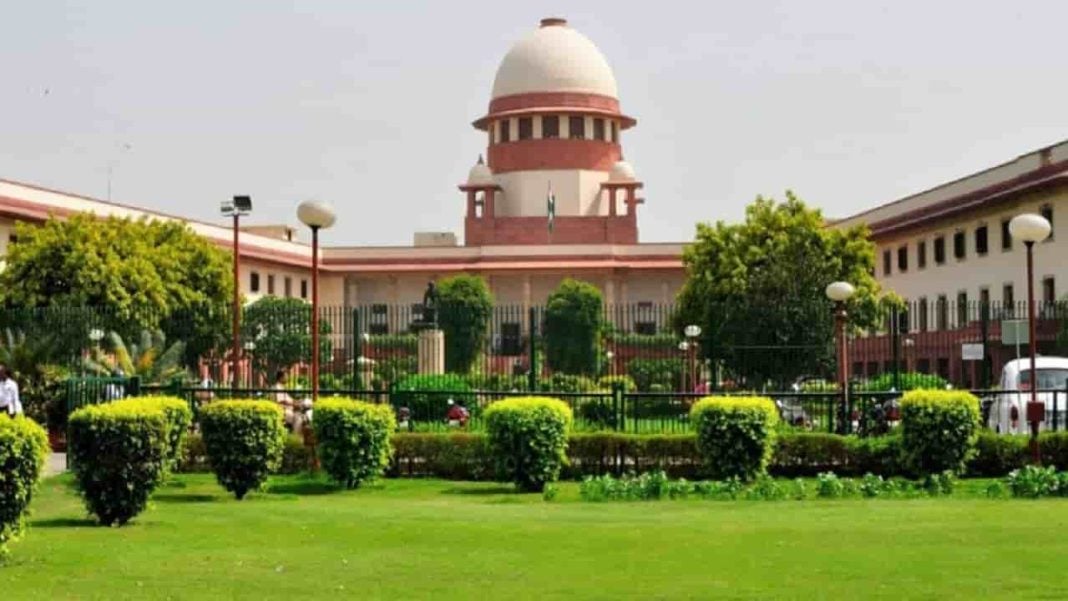
Case Name: The Assistant Commissioner of Central Tax, CGST Division v. Sreenivasa Rao Ravinuthala and Another
Date of Judgment: 14 October 2026
Citation: 2026 INSC 1121
Bench: Justice S.V.N. Bhatti and Justice N.V. Anjaria.
Held: The Supreme Court held that limitation for an appeal under Section 62 of the Insolvency and Bankruptcy Code, 2016, commences when the NCLAT pronounces its order. The expression “from the date of receipt of such order” cannot permit a litigant to postpone limitation by choosing when to apply for or collect a certified copy.
The Court distinguished exclusion of time under Section 12(2) of the Limitation Act, 1963, from condonation of delay under Section 62(2) of the IBC. The time requisite for obtaining a certified copy is excluded, but inaction before applying for it counts towards limitation. Section 62 prescribes 45 days for filing an appeal, with a further extension of no more than 15 days upon sufficient cause. Once the appeal falls beyond that statutory ceiling after permissible exclusions, the Supreme Court lacks jurisdiction to condone the delay.
Summary: The Supreme Court dismissed the Central Tax Department’s appeal against approval of a resolution plan for Samyu Glass Private Limited, sustaining a preliminary objection that the appeal was filed beyond the maximum period permitted under Section 62 of the IBC.
The Department had initiated excise recovery proceedings against the company and subsequently submitted a claim of ₹22,60,32,948 during its insolvency proceedings. The NCLT approved the resolution plan on 13 August 2021, providing ₹1,34,657 towards the Department’s excise arrears. The NCLAT affirmed that order on 2 August 2023. The Department approached the Supreme Court on 21 November 2023.
Opposing the limitation objection, the Department argued that the statutory period began only on 11 October 2023, when it received the certified copy. On that basis, it maintained that its appeal, filed 41 days later, was within time.
Rejecting that construction, the Supreme Court held that the IBC’s time-bound appellate framework could not depend upon a litigant’s convenience in obtaining a copy. Rule 91 of the NCLAT Rules, 2016, recognises pronouncement in open court, including the reading of the operative portion. Compliance with that rule starts the limitation clock. The obligation to apply for and produce a certified copy requires diligence; it does not suspend limitation until physical receipt.
The Court relied on Sagufa Ahmed v. Upper Assam Plywood Products Private Limited, V. Nagarajan v. SKS Ispat and Power Limited and CA Ramchandra Dallaram Choudhary v. Adani Infrastructure and Developers Private Limited. It reiterated that the IBC is a self-contained code whose specific appellate timelines cannot be enlarged through the Companies Act, general limitation provisions or procedural rules.
Applying these principles, the Court counted the 35 days between pronouncement on 2 August 2023 and the certified-copy application on 6 September 2023 against the Department. It excluded the 35-day period during which the copy application remained pending until delivery on 11 October 2023. The Department consequently had ten days remaining within the ordinary limitation period, followed by the maximum discretionary extension of 15 days.
The appeal filed on 21 November 2023 was 16 days beyond that deadline even after allowing the copy-preparation exclusion. The Court held that treating receipt of the copy as a fresh starting point would make limitation indefinite and undermine the statutory distinction between excluded time and condonable delay.
Decision: The preliminary objection was sustained, and Civil Appealwas dismissed as barred by limitation. The Court did not examine the merits of the Department’s challenge to the resolution plan.