Bald ‘Security Cheque’ Plea Cannot Secure Unconditional Leave to Defend: Punjab and Haryana High Court Upholds ₹16.53 Lakh Security Condition in Order XXXVII Suit
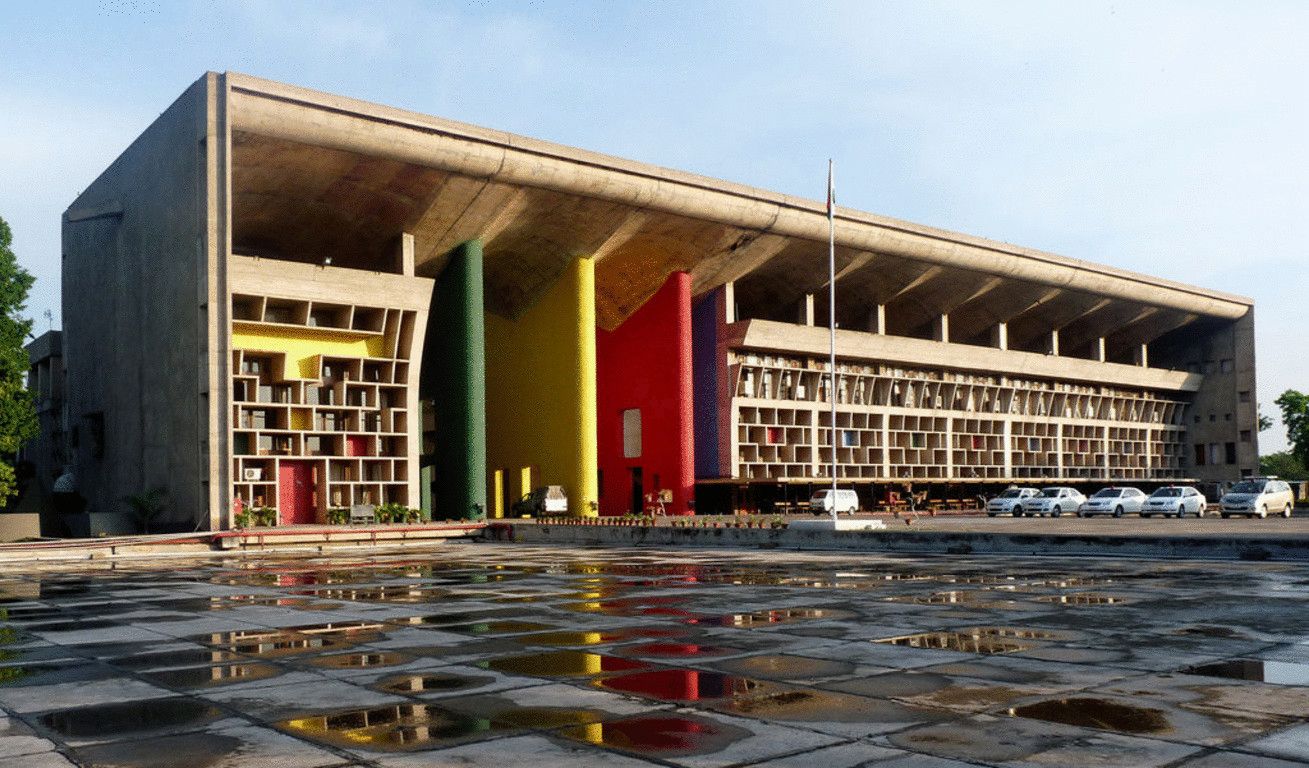
Case Name: Rajat Kumar and Another v. Gurinder Kaur through General Power of Attorney
Date of Judgment: 3 September 2026
Citation: CR No. 6606 of 2026
Bench: Hon’ble Mr. Justice Harsh Bunger
Held: The Punjab and Haryana High Court held that merely describing a signed cheque as a “security cheque” or alleging manipulation of accounts does not create a substantial defence or genuine triable issue entitling a defendant to unconditional leave to defend an Order XXXVII summary suit. Where the plaintiff’s claim is prima facie supported by acknowledged supplies, ledger entries, electronic communications and a corresponding cheque, while the defendant’s objections remain unsupported by bank statements, account reconciliations, written protests, stop-payment instructions or other documentary evidence, the trial court may grant leave to defend subject to furnishing adequate security. Order XXXVII Rule 3(5) of the Code of Civil Procedure expressly permits the court to grant leave either unconditionally or upon such terms as appear just. Accordingly, the High Court upheld the direction requiring the defendants to furnish a bank guarantee or fixed deposit of ₹16,53,428, representing the entire principal amount claimed.
Summary: The respondent-plaintiff instituted a summary suit under Order XXXVII of the Code of Civil Procedure for recovery of ₹17,19,565, comprising a principal amount of ₹16,53,428 and interest of ₹66,137 calculated at two per cent per month. The suit was founded upon a cheque allegedly issued by petitioner No. 1, the proprietor of petitioner No. 2, M/s Rihaan Vihaan Transport Company, towards payment for diesel, petrol, lubricants and related supplies purchased from the respondent.
The defendants were initially proceeded against ex parte on 3 November 2025. The ex parte proceedings were subsequently set aside, following which the defendants applied under Order XXXVII Rule 3 CPC for unconditional leave to defend the recovery suit.
The defendants alleged that the respondent had obtained several blank signed cheques as security and had misused the cheque forming the basis of the suit. They further claimed that the accounts of petitioner No. 1’s father and brother had wrongly been merged with their account. Reliance was also placed upon an alleged earlier incident involving another blank cheque, which was claimed to have been filled for ₹17,87,745 and later discussed before a panchayat. The defendants additionally alleged that payments of ₹1,50,000 and ₹2,00,000 made in February and March 2025 had not been credited in the respondent’s books.
The Trial Court found that the parties’ underlying commercial relationship and the defendants’ purchase of fuel and lubricants on cash and credit were admitted. The plaintiff had produced material showing acknowledged supplies, a running ledger account, WhatsApp group communications concerning the supplies, amounts and vehicle numbers, and the cheque corresponding with the outstanding amount. The WhatsApp communications were supported by the requisite electronic evidence certificate.
In contrast, the defendants did not produce any written demand seeking the return of the alleged security cheques, any protest against their alleged misuse, stop-payment instructions, complaint or settlement document. The alleged panchayat intervention was unsupported by any writing, affidavit or independent material. Similarly, the claimed payments of ₹1,50,000 and ₹2,00,000 were not supported by bank statements, card statements, transaction references or account confirmations. The allegation that different family accounts had been improperly combined was also unsupported by separate books of account, reconciliation statements, invoices or tax records.
Although the Trial Court considered the defendants’ pleas to be bald and unsupported, it granted them an opportunity to contest the suit because leave to defend is ordinarily the rule and its outright refusal is an exception. However, the leave was made conditional upon furnishing a bank guarantee or fixed deposit of ₹16,53,428, representing the principal amount claimed. The defendants challenged only this condition before the High Court under Article 227 of the Constitution.
The High Court referred to the principles governing leave to defend laid down by the Supreme Court in Mechalec Engineers & Manufacturers v. Basic Equipment Corporation, AIR 1977 SC 577. A defendant who establishes a good, fair or bona fide defence raising a genuine triable issue is ordinarily entitled to unconditional leave. However, where the defence is illusory, sham or practically moonshine, the court may refuse leave or permit the defence to proceed only upon deposit or security of the claimed amount.
The Court also relied upon V.K. Enterprises v. Shiva Steels, 2010 (4) RCR (Civil) 365, which explains that the summary procedure under Order XXXVII enables the expeditious recovery of clear and undisputed monetary claims. Although a plausible defence should ordinarily result in leave being granted, an unsupported allegation that an admitted cheque was issued merely as security does not, against cogent documentary and ledger evidence, necessarily raise a genuine triable issue.
Applying these principles, the High Court found that the Trial Court had properly balanced the defendants’ opportunity to contest the suit with the need to protect the plaintiff’s monetary claim. Since the defence was based upon unsupported assertions and the plaintiff had produced a coherent commercial chain consisting of supplies, electronic communications, ledger entries and the corresponding cheque, the condition requiring security for the principal amount was neither arbitrary nor unjust.
The High Court further noted that the defendants had been directed to furnish the security by 21 August 2026, whereas the civil revision petition challenging that condition was filed only on 31 August 2026, after the stipulated period had already expired.
Decision: The High Court dismissed the civil revision petition and declined to interfere with the Trial Court’s order granting conditional leave to defend. The requirement that the defendants furnish a bank guarantee or fixed deposit of ₹16,53,428 was upheld as a valid and just condition under Order XXXVII Rule 3(5) CPC.