Earlier Licence Agreement Providing for Arbitration in Korea Does Not Bar Mumbai Arbitration Under Later Agreements; Arbitrator to Decide Non-Signatory Subsidiary’s Objection: Supreme Court
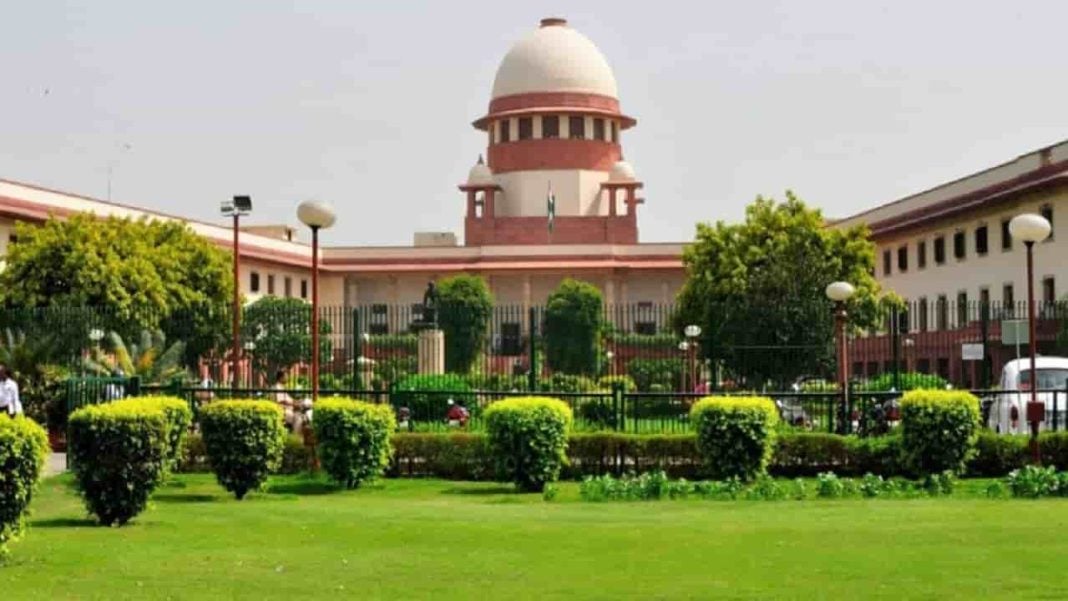
Case Name: Shubham Equipment Private Limited & Anr. v. Rothwell Water Company Limited & Ors.
Date of Judgment: 8 October 2026.
Citation: 2026 INSC 1098.
Bench: Chief Justice Surya Kant, Justice Joymalya Bagchi and Justice V. Mohana.
Held: The Supreme Court held that an earlier licence agreement providing for arbitration in Korea did not preclude reference of disputes under a subsequent Joint Venture Agreement and Memorandum of Understanding containing their own arbitration clauses providing for arbitration in Mumbai. The three agreements prima facie operated in different fields, and the later agreements expressly superseded prior agreements concerning their respective subject matters. Once the prima facie existence of the arbitration agreements was established, objections concerning overlapping claims under the earlier agreement could not justify refusing reference under Section 11 of the Arbitration and Conciliation Act, 1996. The objection that a subsidiary was a non-signatory and therefore not bound by the arbitration agreements was also left to the arbitrator for adjudication.
Summary: Shubham Equipment Private Limited and Rothwell Water Company Limited, a Korean company, entered into a Technical Collaboration Licence Agreement on 30 January 2019 concerning patented wastewater treatment technology. That agreement provided for arbitration in Seoul under Korean law. A subsequent Joint Venture Agreement dated 1 October 2021 established Rothwell Water (India) Private Limited for sewage treatment and related business activities. Separately, an MoU dated 1 February 2023 required Shubham Equipment to provide liaison, customs clearance, logistics and other services on Rothwell’s behalf. Both later agreements provided for arbitration in Mumbai.
Disputes arose after Shubham Equipment alleged that Rothwell had incorporated its wholly owned subsidiary, Rothwell Business International Private Limited, to compete with the joint venture in breach of the non-compete covenant. It also alleged delays in technological inputs and unpaid amounts under the MoU. Through notices dated 11 October 2024, Shubham Equipment claimed ₹20 crore for business loss and ₹4,24,35,647 towards costs, taxes, liabilities and interest incurred on Rothwell’s behalf. These were disputed claims, not amounts awarded by the Court.
Following invocation of the arbitration clauses, the respondents contended that the 2019 licence agreement was the “mother agreement” and that its Korean arbitration clause governed the disputes under the subsequent arrangements. They also objected that the subsidiary was a non-signatory. Court-referred mediation did not result in a settlement.
Rejecting the objection to reference, the Supreme Court distinguished the subject matters of the agreements: the licence agreement concerned technology licences, the JVA concerned the joint venture’s business, and the MoU concerned services rendered by Shubham Equipment. Article 25 of the JVA and Clause 10.8 of the MoU further supported their independent operation by superseding earlier agreements concerning the same subject matter. Applying the limited inquiry under Section 11(6-A), the Court held that alleged overlap with claims pursued through Korean arbitration was a matter for the arbitrator to examine when determining the scope of the reference.
Decision: Both arbitration petitions were allowed. The Court appointed Justice Ramesh Deokinandan Dhanuka, former Chief Justice of the Bombay High Court, as sole arbitrator, with liberty to determine his remuneration and fees.