Supreme Court Declares Split Multiplier Impermissible Under Motor Vehicles Act—Full Compensation Restored Using Sarla Verma Method
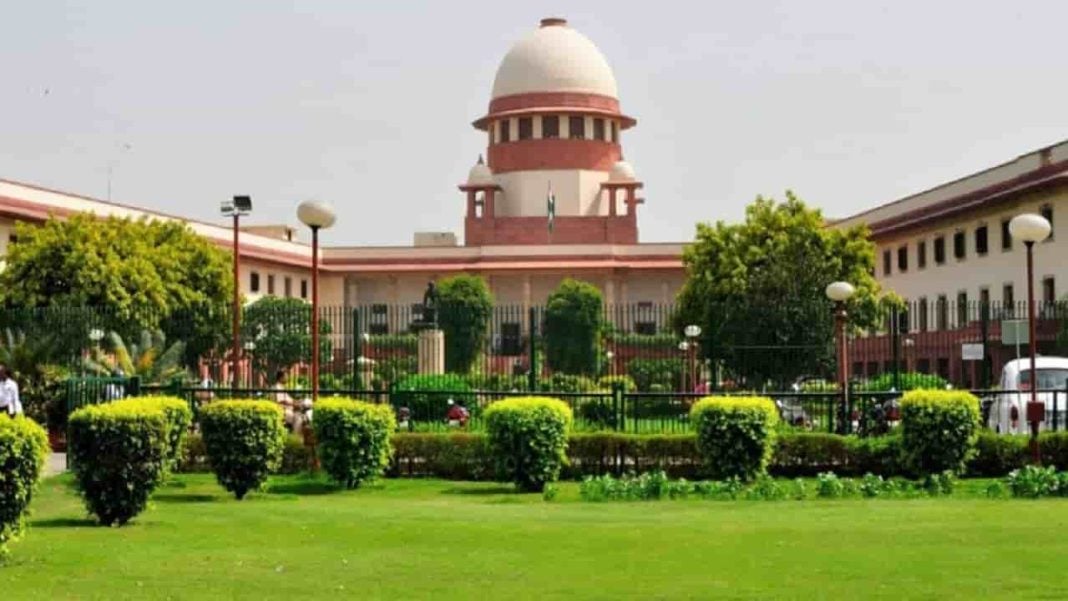
Case Name: Preetha Krishnan & Ors. v. United India Insurance Co. Ltd. & Ors.
Citation: 2025 INSC 1293
Date of Judgment/Order: 06 November 2025
Bench: Hon’ble Mr. Justice Sanjay Karol and Hon’ble Mr. Justice Prashant Kumar Mishra
Held: The Supreme Court held that the “split multiplier” method is not recognized under the Motor Vehicles Act and cannot be applied by Tribunals or High Courts except in truly exceptional and cogently justified circumstances which retirement or reduction in post-retirement income does not constitute. Reaffirming Sarla Verma, Pranay Sethi, N. Jayasree, and Sumathi, the Court declared that age alone governs the applicable multiplier and that future prospects, conventional heads, and total compensation must be computed strictly as per binding precedent. Accordingly, the High Court erred in applying a split multiplier and reducing the dependency compensation.
Summary: The deceased, aged 51, was an Assistant Engineer earning ₹47,860 per month. His legal heirs filed a claim seeking ₹60 lakh. The Tribunal awarded ₹44,04,912 adopting the Sarla Verma multiplier of 11, adding 15% future prospects, deducting ¼ for personal expenses, and granting conventional heads. The insurer and claimants filed cross-appeals. The High Court reduced the loss of dependency by applying a split multiplier on the assumption that post-retirement income would reduce by approximately 50%, although it enhanced certain conventional heads. The claimants’ review petitions were dismissed. On appeal, the Supreme Court undertook a detailed examination of conflicting High Court decisions across India on split multiplier application, noting significant intra-court and inter-court inconsistencies causing uncertainty in compensation awards. The Court emphasized that the multiplier system was introduced to ensure uniformity and predictability and that permitting split multipliers would reintroduce arbitrariness. The Court held that income at the time of death must be taken, that 15% future prospects for age 51 is mandatory, and that conventional heads must receive 10% enhancement every three years as mandated in Pranay Sethi. Recalculating compensation, the Court fixed the total at ₹47,76,794, which is higher than both the Tribunal’s and High Court’s awards.
Decision: The Supreme Court allowed the appeals, set aside the High Court’s reduction based on the split multiplier, and recalculated the compensation at ₹47,76,794 by strictly applying the Sarla Verma multiplier of 11, adding future prospects and revising conventional heads as required under Pranay Sethi and United India Insurance v. Satinder Kaur. The Court restored uniformity by declaring the split multiplier wholly impermissible under the MV Act and directed that its ruling would operate prospectively. It further ordered that the awarded amount be directly remitted to the claimants’ bank accounts before 30 November 2025, with interest as granted by the Tribunal, and directed circulation of the judgment to all High Courts and Motor Accident Tribunals for consistent application.