‘Blatant Breach of Judicial Discipline’: Supreme Court Sets Aside APTEL Review Restricting DVC’s Tariff Recovery, Imposes Costs on Maithan Alloys and SAIL
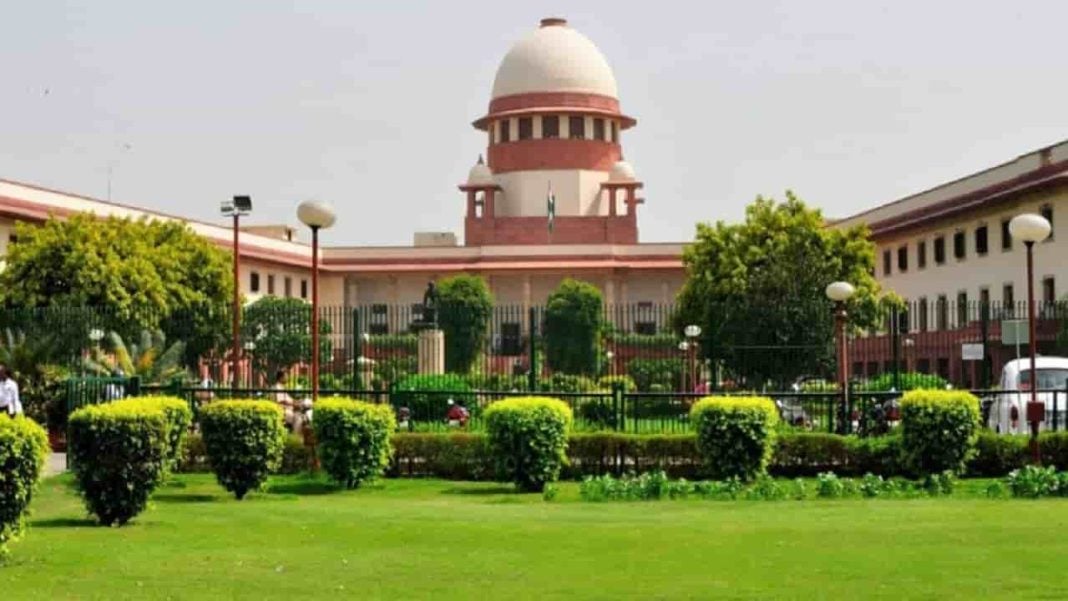
Case Name: Damodar Valley Corporation v. Maithan Alloys Limited & Ors.
Date of Judgment: 30 October 2026.
Citation: 2026 INSC 1178.
Bench: Justices J.B. Pardiwala and K. Vinod Chandran.
Held: The Supreme Court held that the Appellate Tribunal for Electricity exceeded its review jurisdiction and violated judicial discipline and Article 141 of the Constitution by reopening an issue settled by the Court in Bhaskar Shrachi Alloys Limited v. Damodar Valley Corporation, (2018) 8 SCC 281. The Tribunal could not use review proceedings to disallow the simultaneous recognition of depreciation and sinking fund contributions in DVC’s tariff determination when their permissibility under the statutory framework had already been upheld.
The Court affirmed that Section 40 of the Damodar Valley Corporation Act, 1948, read with Regulation 43 of the CERC Tariff Regulations, 2009, permits depreciation and funds established under Section 40 to be recognised for tariff purposes. General accounting principles could not override this specific statutory treatment. It reiterated that review cannot become an appeal in disguise: an alleged error requiring prolonged reasoning is not an error apparent on the face of the record.
Summary: The dispute concerned DVC’s electricity tariff for 2009–2014 and the treatment of contributions to a sinking fund maintained for redemption of its bonds. The Central Electricity Regulatory Commission’s tariff determination was upheld by APTEL on 17 May 2019, including on the strength of the Supreme Court’s binding decision in Bhaskar Shrachi Alloys. No appeal was filed against that appellate order. Maithan Alloys instead sought review, which APTEL allowed in 2024 after the petition had remained pending for approximately five years.
In review, APTEL accepted the contention that allowing depreciation on assets financed through bonds, alongside recovery of sinking fund contributions through tariff, resulted in duplication or a double allowance. It consequently required DVC to claim either the relevant sinking fund contribution or depreciation on the assets created using the bond proceeds.
DVC challenged the review order, arguing that both components were statutorily permissible and that APTEL had reopened a question already concluded by binding precedent. Maithan Alloys and intervenor Steel Authority of India Limited contended that the sinking fund represented an appropriation of profits rather than an expense and that allowing both components imposed an unjustified burden on consumers.
Rejecting those submissions, the Supreme Court explained that Section 40 provides a specific departure from ordinary accounting principles by requiring provision for depreciation, reserves and other prescribed funds before determination of net profits. Regulation 43 expressly recognises depreciation at the stipulated rate and permits funds established under Section 40 to be recovered through tariff. The Court also noted DVC’s statutory responsibilities beyond electricity operations, including flood control, irrigation and regional development.
The Bench found that both the earlier Supreme Court judgment and APTEL’s original decision had addressed the relevant treatment of depreciation and sinking fund contributions. APTEL therefore could not reopen the issue by asserting that the alleged duplication had escaped consideration. Describing the review as “clearly illegal” and “totally misplaced”, the Court strongly criticised the departure from binding precedent and emphasised the constitutional obligation to follow Supreme Court decisions under Article 141.
Decision: The Supreme Court allowed DVC’s appeal, set aside APTEL’s review decision and restored its original order dated 17 May 2019. Finding an abuse of process, it imposed exemplary costs of ₹2 lakh on Maithan Alloys and ₹1.5 lakh on SAIL. These amounts must be paid to DVC within one month, failing which interest at 18% per annum will apply.