Can a Doubtful FIR Sustain a Murder Conviction? Supreme Court Answers with Acquittal After 49 Years.
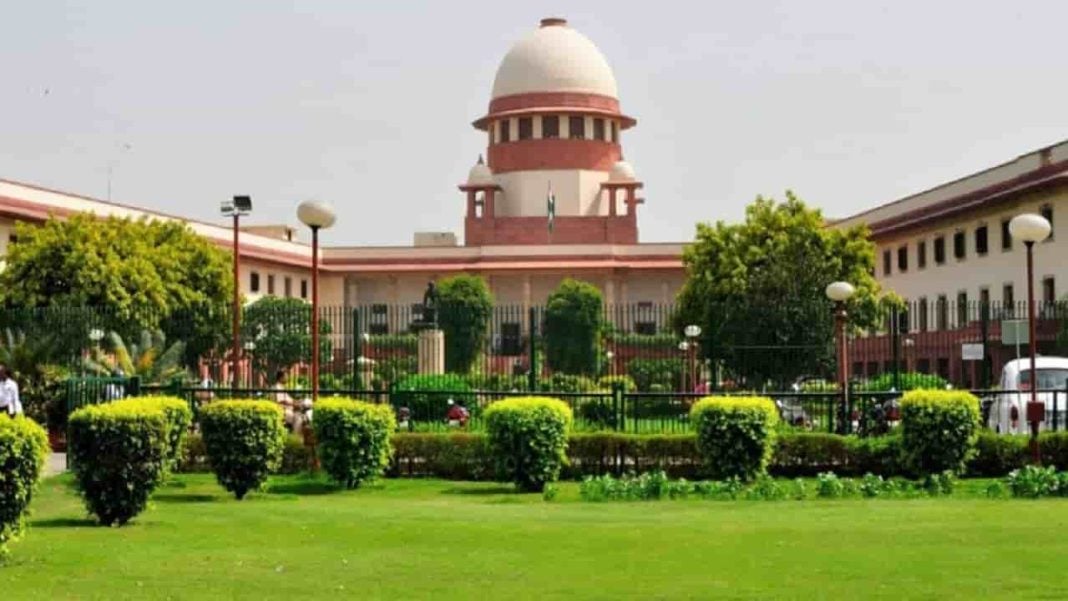
Case Name: Deo Prasad & Anr. v. State of Uttar Pradesh (along with connected criminal appeals)
Date of Judgment: 15 July 2026
Citation: 2026 INSC 707
Bench: Justice Vikram Nath and Justice Sandeep Mehta
Held: The Supreme Court held that a criminal conviction cannot be sustained where the prosecution’s case is clouded by serious doubts regarding the authenticity of the FIR, unexplained delays in investigation, contradictory documentary evidence, unnatural conduct of witnesses, and unreliable ocular testimony. Since the prosecution failed to establish guilt beyond reasonable doubt, the accused were entitled to the benefit of doubt and acquittal.
Summary: In a murder case arising from a 1977 incident, the appellants had been convicted under Sections 147, 148 and 302 read with Section 149 of the IPC by the Trial Court, and their convictions were affirmed by the Allahabad High Court. The Supreme Court undertook a detailed reappreciation of the evidence and found multiple fatal infirmities in the prosecution’s case.
The Court noticed that although the FIR was allegedly lodged promptly, the conduct of both the investigating agency and the deceased’s relatives was highly unnatural. The dead body remained unattended throughout the night despite the police station being only a short distance away. The inquest was delayed until the following day, while the post-mortem examination was conducted nearly two days after the alleged occurrence without any satisfactory explanation.
The Court further found material contradictions between the oral testimony of prosecution witnesses and the contemporaneous General Diary entries regarding who actually accompanied the complainant to the police station. Significantly, the FIR also reached the jurisdictional Magistrate after an unexplained delay, creating serious suspicion regarding its timing and authenticity.
Although the prosecution relied upon three eye-witnesses, the Supreme Court held that their evidence could not be accepted as wholly reliable in light of inconsistencies, omissions, prior enmity between the parties, and contradictions with documentary evidence. The alleged recovery of bicycles and other circumstances also failed to conclusively establish the involvement of the accused.
Holding that these cumulative defects struck at the root of the prosecution case, the Court ruled that the prosecution had failed to prove guilt beyond reasonable doubt. Consequently, the surviving accused were acquitted by extending the benefit of doubt. Since the appeals succeeded on merits, the Court found it unnecessary to decide the plea of juvenility raised by one of the appellants.
Decision: The Supreme Court allowed the surviving criminal appeals, set aside the judgments of the Trial Court and the Allahabad High Court, and acquitted the surviving accused of all charges by extending the benefit of doubt. Bail bonds of the appellants on bail were discharged, while no further directions were required for the appellant who had already been released pursuant to remission.