Mandatory Means Mandatory: SC Rules CCI Approval Must Precede CoC Nod in Insolvency Resolutions
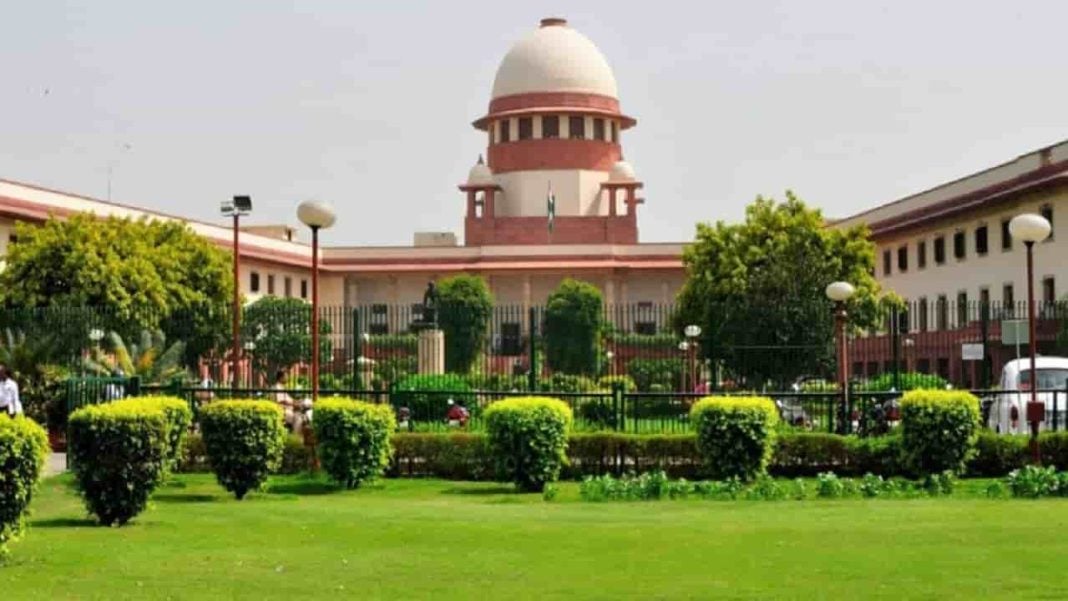
Case Name: Independent Sugar Corporation Limited v. Girish Sriram Juneja
Citation: 2025 INSC 124
Date of Judgment: 29 January 2025
Bench: Justice Hrishikesh Roy, Justice Sudhansu Dhulia, Justice SVN Bhatti
Held: The Supreme Court held that prior approval of the Competition Commission of India (CCI) is mandatory before the Committee of Creditors (CoC) considers and approves a Resolution Plan under the Insolvency and Bankruptcy Code, 2016 (IBC). The Court rejected the National Company Law Appellate Tribunal’s view that such approval was only directory and clarified that the proviso to Section 31(4) of the IBC requires compliance in strict terms. A Resolution Plan lacking CCI approval at the stage of CoC voting is legally invalid.
Summary: The case concerned the insolvency proceedings of Hindustan National Glass and Industries Ltd. (HNGIL), a key company in the glass packaging sector. Competing Resolution Plans were submitted by Independent Sugar Corporation Ltd. (INSCO) and AGI Greenpac Ltd. The CoC, with 98% voting, approved AGI Greenpac’s plan on 28 October 2022 despite the absence of prior CCI approval for the proposed combination. INSCO challenged the approval, arguing that the proviso to Section 31(4) of the IBC mandates CCI clearance before CoC approval. NCLAT upheld AGI Greenpac’s plan, reasoning that while CCI approval was mandatory, the timing of such approval was directory.
The Supreme Court set aside NCLAT’s ruling and held that statutory interpretation and legislative intent both demanded that CCI approval must precede CoC approval. The Court stressed that the plain meaning of Section 31(4) leaves no ambiguity: when a Resolution Plan involves a combination under the Competition Act, prior clearance from the CCI is a condition precedent. To interpret it as directory would defeat the provision’s purpose and reduce it to a mere formality. The Court observed that without CCI approval, the CoC cannot exercise its commercial wisdom on the basis of complete regulatory information, leading to the risk that later CCI modifications may never be scrutinised by creditors.
The Court also analysed the timelines under the IBC and the Competition Act, concluding that no real conflict arises. The CCI normally grants approval within 21 working days and never beyond 120 days, which is compatible with the 330-day deadline under the IBC. With the 2023 amendment further reducing CCI timelines, the concern of delays was found to be theoretical. The Court examined the procedural lapses in AGI Greenpac’s case, noting that the CCI had initially required a Form II filing and later approved the combination with modifications, including divestment of an HNGIL plant. However, the mandatory show-cause notice to the target company under Section 29(1) of the Competition Act had not been issued, undermining the transparency of the process. Regulation 25(1A) of the Combination Regulations, which requires the participation of both the acquirer and the target company in approving voluntary modifications, was not complied with. The absence of HNGIL’s active participation, particularly in decisions involving divestment of its assets, vitiated the CCI approval.
Justice SVN Bhatti, in his dissenting opinion, favoured a flexible interpretation. He emphasised that while CCI approval is essential, it need not precede CoC voting. According to him, reading the proviso literally would hamper resolution efficiency by excluding viable applicants. He relied on precedents such as Essar Steel India Ltd. v. Satish Kumar Gupta (2020) 8 SCC 531 to highlight the primacy of CoC’s commercial wisdom and suggested that consequences of non-compliance with CCI requirements should be assessed at the stage of adjudication by the NCLT, not at CoC voting.
The majority, however, rejected this reasoning and maintained that statutory compliance must not be compromised in the name of expediency. The IBC and Competition Act must operate in harmony, ensuring both effective insolvency resolution and protection of market competition.
Decision: The Supreme Court allowed the appeal, set aside the NCLAT judgment, and declared that the Resolution Plan approved in favour of AGI Greenpac was legally invalid as it lacked mandatory CCI approval at the stage of CoC voting. The matter was remanded to the NCLT for reconsideration of the Resolution Plans in strict compliance with the IBC and Competition Act.