Supreme Court Dismisses Rajasthan’s Claim Over Khetri Estate, Rules No Locus Standi in Probate Matters
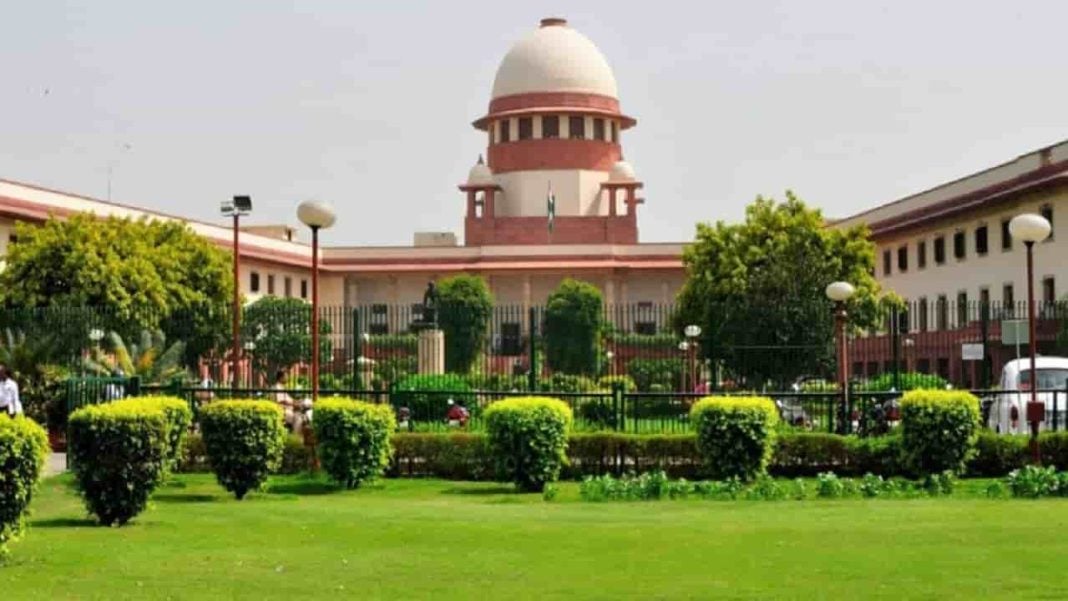
Case Name: State of Rajasthan vs. Ajit Singh & Ors.
Date of Order: 01.09.2025.
Citation: SLP (C) Nos. 14721-14723 of 2024.
Bench: Justice B.V. Nagarathna, Justice Satish Chandra Sharma (DB)
Held: The Supreme Court dismissed the Special Leave Petitions filed by the State of Rajasthan as well as the connected petition by alleged agnates of the deceased testator, Raja Bahadur Sardar Singh of Khetri. The Court held that the State had no locus standi to challenge the grant of probate to the legatees of the Will, since probate had already been granted by the Delhi High Court and succession was testamentary, not intestate. Section 29 of the Hindu Succession Act, 1956 (escheat to the State) was held inapplicable. As regards the petition by the agnates, the Court dismissed it on two grounds: (i) suppression of material facts regarding their withdrawal of a parallel civil suit challenging the Will, and (ii) estoppel, since they had earlier withdrawn objections to probate and could not “blow hot and cold.” Costs of ₹1,00,000/- each were imposed on the agnate-petitioners for suppression.
Summary: The litigation stemmed from the estate of Raja Bahadur Sardar Singh of Khetri, who died in 1987 leaving behind a Will and Codicil (1985), creating the “Khetri Trust.” While the Delhi High Court Division Bench had granted probate, the State of Rajasthan challenged the decision, claiming the estate had escheated to it under the Rajasthan Escheats Regulation Act, 1956. The Court rejected this contention, clarifying that escheat under Section 29 of the Hindu Succession Act arises only upon failure of heirs in intestacy, not where a valid Will has been probated. The Court relied on principles of testamentary succession under the Indian Succession Act, 1925, holding that only potential heirs under Section 8 of the Hindu Succession Act could challenge probate via appeal or revocation under Section 263 of the Succession Act, not the State.
In the companion petition, Surendra Singh & another claimed to be agnates of the testator and sought to assail the probate. However, the Court found they had earlier withdrawn their objections to probate before the Delhi High Court and had also withdrawn Civil Case No. 1 of 2005 (which separately challenged the Will) without liberty. Their suppression of this fact before the Supreme Court was held fatal. The Court invoked principles of estoppel and discretionary jurisdiction under Article 136, dismissing their petition with exemplary costs.
Decision: In conclusion, the Supreme Court dismissed the Special Leave Petitions filed by the State of Rajasthan on the ground of lack of locus standi, holding that succession in this case was testamentary and that Section 29 of the Hindu Succession Act had no application. The Court further dismissed the Special Leave Petition filed by Surendra Singh and another on the dual grounds of suppression of material facts and absence of locus standi, observing that their prior withdrawal of objections and civil proceedings estopped them from re-agitating the issue. The Court not only refused to entertain their claims but also imposed costs of ₹1,00,000/- each on the agnate-petitioners to be deposited with the Supreme Court Mediation Centre. It was reiterated that unless there is a complete failure of heirs resulting in intestacy, the Government remains a stranger to probate proceedings, and in the present case the grant of probate to the Khetri Trust stands affirmed.