Poetry, Not Provocation: Supreme Court Quashes FIR
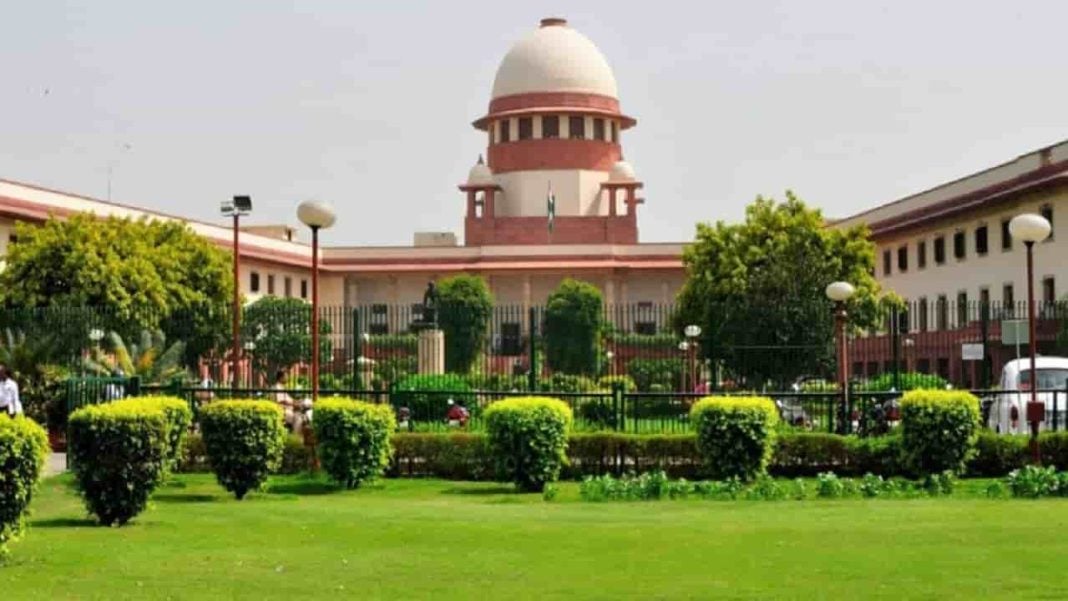
Case Name: Imran Pratapgarhi v. State of Gujarat
Citation: 2025 INSC 410
Date of Judgment: 28 March 2025
Bench: Justice Abhay S. Oka, Justice Ujjal Bhuyan
Held: The Supreme Court held that the recitation and posting of the appellant’s poem did not amount to any offence under Sections 196, 197, 299, 302, or 57 of the Bharatiya Nyaya Sanhita, 2023 (BNS). The registration of the FIR was described as a mechanical exercise undertaken without application of mind, which amounted to an abuse of process and violated the appellant’s fundamental right to freedom of speech and expression guaranteed under Article 19(1)(a) of the Constitution. The Court emphasised that speech must be judged by the standards of reasonable and strong-minded persons, not hypersensitive minds, and that free expression can only be curtailed within the narrow limits prescribed by Article 19(2).
Summary: The appellant, a Member of the Rajya Sabha, had posted on his verified X (formerly Twitter) account a video clip of a poem recited during a mass marriage ceremony. The poem, written in Urdu, metaphorically conveyed the idea of facing injustice with love and sacrifice rather than violence. A complaint was filed alleging that the poem incited enmity between communities and threatened national unity. Consequently, an FIR was registered under Sections 196, 197, 299, 302, 57 of the BNS and Section 3(5). The High Court dismissed the appellant’s plea to quash the FIR, following which the matter reached the Supreme Court.
The Court analysed both the Urdu text and its English translation and concluded that the poem bore no reference to any religion, community, or region. Instead, it propagated the values of non-violence and peaceful resilience. The invocation of Sections 196 and 197 was held untenable since the poem did not promote disharmony or hatred between groups. The allegations under Sections 299 and 302 were termed “ridiculous” and wholly unfounded as there was no attempt to outrage religious feelings. Similarly, Section 57, which relates to abetment by the public, was found irrelevant.
On the legal principles, the Court reiterated that mens rea is essential to constitute offences under Section 196, relying on Manzar Sayeed Khan v. State of Maharashtra (2007) 5 SCC 1 and Patricia Mukhim v. State of Meghalaya (2021) 15 SCC 35. No deliberate intent by the appellant to promote enmity was demonstrated. In judging alleged offensive speech, the Court invoked the classic principle laid down in Bhagwati Charan Shukla v. Provincial Government, C.P. & Berar (1946 SCC OnLine MP 5) that words must be assessed by the standards of reasonable, strong-minded individuals, not those of weak or vacillating minds.
The Court further held that the police had failed in their duty under Section 173 of the Bharatiya Nagarik Suraksha Sanhita (BNSS). While Section 173(1) permits registration of an FIR where a cognizable offence is disclosed, sub-section (3) requires a preliminary inquiry in cases punishable with three to seven years. Since the alleged offences fell within that range, the police were obliged to conduct such an inquiry before registering the FIR. This requirement becomes particularly important when allegations concern speech potentially protected under Article 19(1)(a).
The Court stressed that freedom of speech and expression is the foundation of a healthy democracy and drew strength from earlier rulings such as Shreya Singhal v. Union of India (2015) 5 SCC 1 and Anand Chintamani Dighe v. State of Maharashtra (2001 SCC OnLine Bom 891), which underscored tolerance for dissent and unpopular views as an indispensable constitutional value.
Decision: The Supreme Court allowed the appeal and quashed the FIR, holding that the registration of the FIR was an abuse of process and violated the appellant’s rights under Article 19(1)(a). The Court directed that in cases concerning speech, particularly where Article 19(1)(a) protection is implicated, police must act with caution, apply their mind carefully, and conduct preliminary inquiry as mandated under Section 173(3) BNSS. The judgment strongly reaffirmed that freedom of speech is an integral part of personal dignity and democratic life, and courts must intervene at the earliest stage to prevent misuse of criminal law to stifle constitutional freedoms.