Supreme Court Restores 436 Bighas of Gurugram Shamilat Deh to Municipal Body: Unpartitioned Village Common Land Cannot Be Converted into Private Property
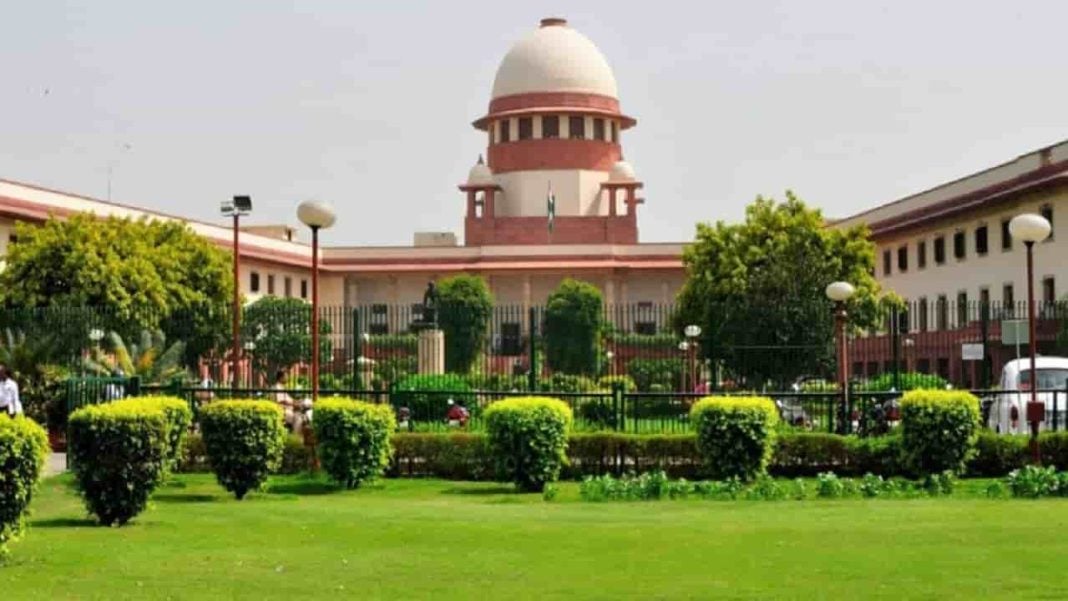
Case Name: Suraj Bhan and Others v. Ashvarya Estate Pvt. Ltd. and Others.
Date of Judgment: 03 August 2026
Citation: 2026 INSC 786
Bench: Justice Sanjay Kumar and Justice K. Vinod Chandran.
Held: The Supreme Court held that the disputed 436 Bighas 18 Biswas of land in Haiderpur, Gurugram constituted shamilat deh and vested in the Gram Panchayat, Wazirabad, whose successor-in-interest is the Municipal Corporation, Gurugram. The Court held that although the proprietors of the pattis had a right to seek partition of the common land according to their respective shares, no such partition had taken place before 26 January 1950. Consequently, the land retained its character as shamilat deh and attracted Section 2(g)(1) of the Haryana Common Lands (Regulation) Act, 1961. Once land falls within Section 2(g)(1) because it is recorded as shamilat deh, it is not necessary to separately establish that the land was actually being used for common purposes or for the benefit of the village community.
The Court further emphasised that shamilat deh remains non-exclusive common property until legally partitioned. Merely because proprietors possess a right to seek partition, or because the revenue record contains the expression makbuja malkan, it does not confer an identifiable or exclusive proprietary interest upon an individual co-proprietor.
Summary: The dispute concerned 436 Bighas 18 Biswas of valuable land situated in Haiderpur, an uninhabited (be chiraag) village in present-day Gurugram, contiguous to Wazirabad. Following the enactment of the Punjab Village Common Lands (Regulation) Act, 1953, the land was mutated in favour of Gram Panchayat, Wazirabad. Decades later, persons claiming through the pattis of Haiderpur instituted proceedings under Section 13A of the 1961 Act asserting private ownership and contending that the land was not shamilat deh.
The dispute passed through several revenue authorities. The Assistant Collector and Collector substantially accepted the private ownership claim, whereas the Commissioner restored the 1955 mutation in favour of the Gram Panchayat. The Punjab and Haryana High Court subsequently reversed the Commissioner and held that, except for the pond and pathway measuring 2 Bighas 12 Biswas, the land belonged to the three pattis. The High Court reasoned, inter alia, that there was insufficient evidence of common user of the remaining land.
The Supreme Court disagreed with this approach. Examining the historical revenue records and particularly the Sharat-wajib-ul-arz, the Court found that the pattis separately held their individual lands while the disputed 436 Bighas 18 Biswas was independently recorded as part of 444 Bighas 4 Biswas of shamilat deh. The land had never been partitioned and there was no proof that individual proprietors were in separate cultivating possession before the statutory cut-off date. The Court therefore concluded that the High Court and the authorities favouring the private claim had failed to give due legal effect to the historical revenue records.
Decision: The Supreme Court allowed all the appeals and set aside the Punjab and Haryana High Court’s common judgment dated 24 August 2007. It confirmed the mutation dated 13 September 1955 in favour of Gram Panchayat, Wazirabad, holding that the disputed 436 Bighas 18 Biswas continued to constitute shamilat deh. The benefit of the mutation would now enure to the Gram Panchayat’s successor-in-interest, Municipal Corporation, Gurugram.