Supreme Court Restores Cheque-Bounce Conviction: High Court Cannot Reappreciate Evidence in Revision Merely Because Another View Is Possible
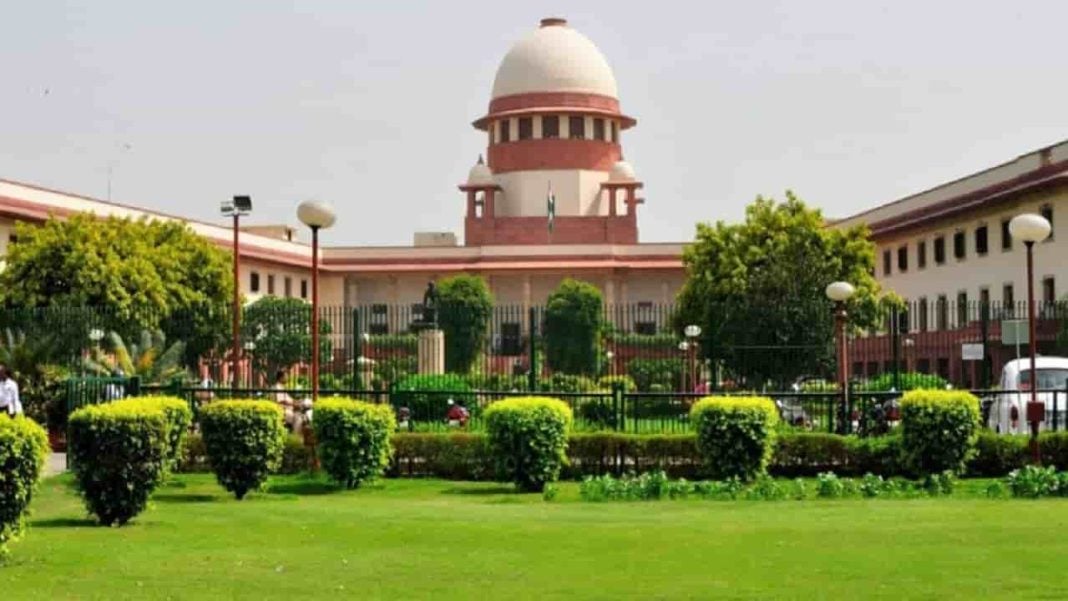
Case Name: Kuntegowda v. Thurubaiah
Date of Judgment: 04 August 2026
Citation: 2026 INSC 790
Bench: Justice B.V. Nagarathna and Justice Ujjal Bhuyan.
Held: The Supreme Court held that once the signature on a cheque is admitted or proved, the statutory presumptions under Sections 118 and 139 of the Negotiable Instruments Act, 1881 must operate in favour of the holder, and the burden shifts upon the accused to rebut those presumptions by bringing on record cogent and probable material. A bare denial, conjectures or an unsupported theory that a signed blank cheque was misused is insufficient to discharge this burden.
The Court further held that a High Court exercising criminal revisional jurisdiction cannot act as a second appellate court by undertaking a fresh and elaborate reappreciation of evidence and substituting its own view for concurrent factual findings of the Trial Court and Appellate Court. Such interference is justified only where the findings are perverse, grossly erroneous, glaringly unreasonable, legally untenable, based on irrelevant material, or suffer from non-consideration of relevant material or arbitrary exercise of discretion.
Summary: The dispute arose from a ₹4.50 lakh hand loan advanced by the complainant to the accused in December 2010 for purchasing a house site, repayable within one year with interest at 16% per annum. The accused subsequently issued a cheque dated 20 March 2013 for ₹4.50 lakh, which was dishonoured on 22 March 2013 for “funds insufficient.” A statutory demand notice was issued on 28 March 2013, followed by a complaint under Section 138 of the NI Act when payment was not made.
The Trial Court convicted the accused under Section 138 and imposed a fine of ₹9 lakh. The Sessions Court affirmed the conviction but reduced the fine to ₹6.50 lakh. The Karnataka High Court, however, exercising revisional jurisdiction, acquitted the accused primarily on the reasoning that the complainant had failed to satisfactorily establish his financial capacity to advance ₹4.50 lakh considering his monthly income of approximately ₹20,000–₹25,000.
The Supreme Court rejected this approach. Since the accused admitted his signature on the cheque and the statutory requirements of Section 138 had been fulfilled, presumptions under Sections 118 and 139 operated against him. His defence that the cheque was originally handed over blank to another person as security for a separate ₹40,000 loan was unsupported by documentary evidence. Significantly, the legal notice through which the accused first demanded return of the allegedly misused cheque was issued only in September 2014—more than a year after the Section 138 complaint had been instituted. The Supreme Court characterised this as pointing towards an “ex post facto creation of evidence,” an afterthought and an attempt to manufacture an artificial defence.
Decision: The Supreme Court allowed the complainant’s appeal, set aside the Karnataka High Court’s order dated 06 October 2023 and restored the judgments and orders of the Trial Court and Sessions Court, thereby restoring the accused’s conviction under Section 138 of the Negotiable Instruments Act and the sentence as modified by the Sessions Court.